




Ahmedabad
(Head Office)Address : 506, 3rd EYE THREE (III), Opp. Induben Khakhrawala, Girish Cold Drink Cross Road, CG Road, Navrangpura, Ahmedabad, 380009.
Mobile : 8469231587 / 9586028957
Telephone : 079-40098991
E-mail: dics.upsc@gmail.com

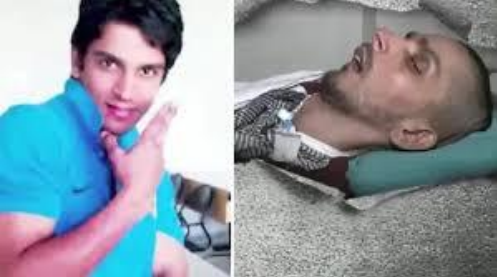
• Judicial Milestone: The Supreme Court of India recently permitted the withdrawal of life-sustaining treatment for Harish Rana, marking the first time such an order was granted for a patient in a Permanent Vegetative State (PVS) since the 2018 guidelines. • Legal Expansion: This case expands the 2018 Common Cause verdict by extending passive euthanasia protocols to patients receiving long-term care at home, rather than limiting it strictly to hospital settings. • Procedural Simplification: The ruling eases the previously stringent procedural requirements and reduces the necessity for constant court intervention, aiming to provide a \'dignified exit\' for terminally ill patients. • Distinction of Care: The court emphasized that passive euthanasia involves withholding or withdrawing medical interventions (like the PEG feeding tube in this case) while maintaining palliative and comfort care. • Socio-Economic Context: The 13-year struggle of the Rana family highlights the immense financial, emotional, and physical toll of long-term vegetative care on Indian households in the absence of a comprehensive social security net. • Future Precedent: This case serves as a definitive legal template for thousands of families across India dealing with patients in irreversible comas, balancing the \'Right to Life\' with the \'Right to Die with Dignity.\' Key Definitions • Passive Euthanasia: The act of withdrawing or withholding life-prolonging medical treatment (like ventilators or feeding tubes) to allow a terminally ill patient to die naturally. • Active Euthanasia: The intentional act of causing death through a direct intervention, such as a lethal injection. This remains illegal in India. • Permanent Vegetative State (PVS): A condition of wakeful unresponsiveness where the patient has lost higher cerebral powers but retains autonomic functions; it is generally considered irreversible after a certain period. • Living Will (Advance Medical Directive): A legal document in which a person specifies what actions should be taken for their health if they are no longer able to make decisions for themselves due to illness or incapacity. Constitutional and Legal Provisions • Article 21: The Supreme Court has interpreted the \'Right to Life\' to include the \'Right to Die with Dignity.\' Life is not mere animal existence but includes the right to a dignified procedure of death. • Common Cause v. Union of India (2018): A landmark 5-judge Bench ruling that first legalized passive euthanasia and recognized the validity of \'Living Wills\' in India. • Aruna Shanbaug Case (2011): The starting point for the euthanasia debate in India, where the SC first allowed \'passive euthanasia\' under exceptional circumstances and strict judicial monitoring. • Section 309 & 306 IPC: While the SC has decriminalized the attempt to suicide (in effect via the Mental Healthcare Act, 2017), abetment to suicide (Section 306) remains a criminal offense, distinguishing it from medical passive euthanasia. Additional Keypoints • Palliative Care: The ruling underscores that even when life support is withdrawn, the medical team must ensure the patient does not suffer pain, highlighting the role of Palliative Oncology and Anaesthesia units. • The \'Best Interests\' Test: In cases where a patient cannot express their will (and has no Living Will), the court and medical boards apply the \'best interests\' principle to decide on the withdrawal of treatment. • Medical Boards: The process requires two boards: a Primary Medical Board (at the hospital) and a Secondary Medical Board (often involving a district-level officer) to certify the irreversible nature of the condition. Conclusion The passing of Harish Rana concludes a decade-long saga that tested the limits of Indian medical ethics and jurisprudence. By allowing the withdrawal of nutrition for a patient at home, the judiciary has moved toward a more compassionate and practical application of the law, recognizing that \'prolonging life\' through artificial means can sometimes result in \'prolonging suffering.\' It reinforces the autonomy of the individual and the family over medical technology when recovery is clinically impossible. UPSC Relevance • GS Paper II: Functions and responsibilities of the Judiciary; Important Supreme Court Judgments; Issues relating to the development and management of Social Sector/Health. • GS Paper IV (Ethics): Ethical dilemmas in medical practice; Euthanasia (Active vs. Passive); Right to Life vs. Right to Die; Compassion and Empathy toward terminally ill patients. • Essays: Topics related to \'Dignity in Life and Death\' or \'The intersection of Law, Medicine, and Morality.\'


Address : 506, 3rd EYE THREE (III), Opp. Induben Khakhrawala, Girish Cold Drink Cross Road, CG Road, Navrangpura, Ahmedabad, 380009.
Mobile : 8469231587 / 9586028957
Telephone : 079-40098991
E-mail: dics.upsc@gmail.com
Address: A-306, The Landmark, Urjanagar-1, Opp. Spicy Street, Kudasan – Por Road, Kudasan, Gandhinagar – 382421
Mobile : 9723832444 / 9723932444
E-mail: dics.gnagar@gmail.com
Address: 2nd Floor, 9 Shivali Society, L&T Circle, opp. Ratri Bazar, Karelibaugh, Vadodara, 390018
Mobile : 9725692037 / 9725692054
E-mail: dics.vadodara@gmail.com
Address: 403, Raj Victoria, Opp. Pal Walkway, Near Galaxy Circle, Pal, Surat-394510
Mobile : 8401031583 / 8401031587
E-mail: dics.surat@gmail.com
Address: 303,305 K 158 Complex Above Magson, Sindhubhavan Road Ahmedabad-380059
Mobile : 9974751177 / 8469231587
E-mail: dicssbr@gmail.com
Address: 57/17, 2nd Floor, Old Rajinder Nagar Market, Bada Bazaar Marg, Delhi-60
Mobile : 9104830862 / 9104830865
E-mail: dics.newdelhi@gmail.com