






Ahmedabad
(Head Office)Address : 506, 3rd EYE THREE (III), Opp. Induben Khakhrawala, Girish Cold Drink Cross Road, CG Road, Navrangpura, Ahmedabad, 380009.
Mobile : 8469231587 / 9586028957
Telephone : 079-40098991
E-mail: dics.upsc@gmail.com

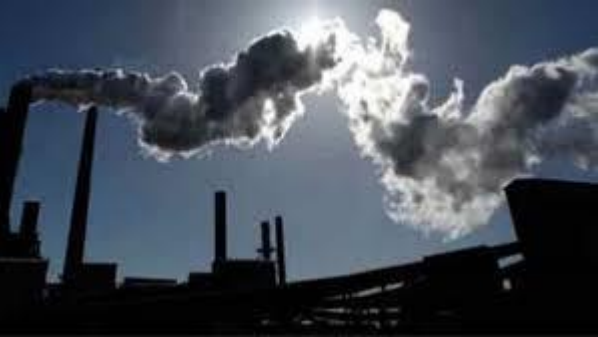
• Geographical Concentration and Risk: The Tarapur-Boisar belt in Palghar is one of Maharashtra’s largest chemical hubs; the high density of pharmaceutical and chemical units in a confined area significantly increases the \'domino effect\' risk during industrial accidents. • Primary Causes of Failure: Investigations into recent leaks, including the Oleum gas leak at Bhageria Industries, point to mechanical failures in ageing infrastructure, such as level indicator glasses, hose pipes during unloading, and faulty scrubber units. • Hazardous Material Profile: The region handles highly reactive substances like Oleum, Chlorine, and Sulphur Trioxide; these require specialized storage and stringent \'Seveso-type\' safety protocols which are often compromised by maintenance lapses. • Environmental and Public Health Impact: Toxic plumes (like Sulphur Trioxide haze) frequently necessitate large-scale evacuations of schools and residential areas, highlighting the dangerous proximity of industrial zones to human settlements. • Regulatory Oversight Gaps: Despite observations by the National Green Tribunal (NGT) and the Bombay High Court, issues persist regarding the frequency of inspections by the Directorate of Industrial Safety and Health (DISH) and the adequacy of safety audits. • Emergency Preparedness: While over 280 mock drills were conducted recently, the difficulty in identifying leak sources during dense toxic hazes suggests a need for advanced automated leak detection systems and better sensor integration. Key Definitions • Oleum (Fuming Sulphuric Acid): A solution of Sulphur Trioxide in Sulphuric Acid; it is highly corrosive and releases choking, toxic fumes upon contact with air moisture. • Scrubber Unit: An air pollution control device used to remove particulates or gases (like acid fumes) from industrial exhaust streams before they are released into the atmosphere. • Level Indicator Glass: A transparent gauge used to monitor liquid levels in high-pressure tanks; its failure is a common point of mechanical leakage in chemical plants. Constitutional & Legal Provisions • Article 21: The Supreme Court has interpreted the \'Right to Life\' to include the right to a clean and safe environment, casting a duty on the State to prevent industrial disasters. • Environment Protection Act, 1986: Enacted in the wake of the Bhopal Gas Tragedy, it grants the Central Government power to restrict industrial areas and lay down procedures for handling hazardous substances. • Factories Act, 1948 (as amended): Contains specific chapters (Section 41-A to 41-H) dealing with hazardous processes, mandating the setting up of Safety Committees and compulsory disclosure of information by occupiers. • Public Liability Insurance Act, 1991: Provides for immediate relief to persons affected by accidents occurring while handling hazardous substances through a \'no-fault\' liability framework. Additional Key Points • Urban Sprawl: The encroachment of residential colonies and schools near \'Major Accident Hazard\' (MAH) units complicates evacuation protocols and increases casualty risks. • The DISH Mandate: The Directorate of Industrial Safety and Health is the nodal agency for enforcing the Factories Act; however, manpower shortages often lead to \'reactive\' rather than \'proactive\' safety audits. • Technical Audits: The recent halting of operations pending a \'full safety audit\' reflects a shift towards more stringent compliance before resuming production in high-risk zones. Conclusion The recurring leaks in the Tarapur-Boisar belt underscore a systemic failure to balance rapid industrialization with safety infrastructure. While mock drills improve response times, they do not address the root causes: ageing equipment and inadequate regulatory pressure. Transitioning toward \'Inherently Safer Design\' (ISD) and enforcing strict buffer zones between factories and civil society are essential to prevent a large-scale industrial catastrophe. UPSC Relevance • GS Paper II: Statutory, regulatory, and various quasi-judicial bodies (NGT, DISH); Government policies and interventions for development in various sectors. • GS Paper III: Disaster and disaster management (Chemical Disasters); Environmental pollution and degradation; Infrastructure and Industrial growth. • Case Study (Ethics/Mains): Balancing economic growth/employment in industrial belts with the fundamental right to safety and environmental protection.


Address : 506, 3rd EYE THREE (III), Opp. Induben Khakhrawala, Girish Cold Drink Cross Road, CG Road, Navrangpura, Ahmedabad, 380009.
Mobile : 8469231587 / 9586028957
Telephone : 079-40098991
E-mail: dics.upsc@gmail.com
Address: A-306, The Landmark, Urjanagar-1, Opp. Spicy Street, Kudasan – Por Road, Kudasan, Gandhinagar – 382421
Mobile : 9723832444 / 9723932444
E-mail: dics.gnagar@gmail.com
Address: 2nd Floor, 9 Shivali Society, L&T Circle, opp. Ratri Bazar, Karelibaugh, Vadodara, 390018
Mobile : 9725692037 / 9725692054
E-mail: dics.vadodara@gmail.com
Address: 403, Raj Victoria, Opp. Pal Walkway, Near Galaxy Circle, Pal, Surat-394510
Mobile : 8401031583 / 8401031587
E-mail: dics.surat@gmail.com
Address: 303,305 K 158 Complex Above Magson, Sindhubhavan Road Ahmedabad-380059
Mobile : 9974751177 / 8469231587
E-mail: dicssbr@gmail.com
Address: 57/17, 2nd Floor, Old Rajinder Nagar Market, Bada Bazaar Marg, Delhi-60
Mobile : 9104830862 / 9104830865
E-mail: dics.newdelhi@gmail.com