






Ahmedabad
(Head Office)Address : 506, 3rd EYE THREE (III), Opp. Induben Khakhrawala, Girish Cold Drink Cross Road, CG Road, Navrangpura, Ahmedabad, 380009.
Mobile : 8469231587 / 9586028957
Telephone : 079-40098991
E-mail: dics.upsc@gmail.com

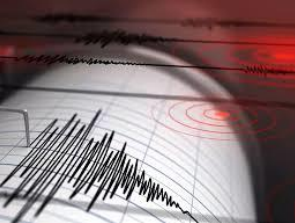
To mitigate the devastating impact of seismic disasters, India is set to drastically scale up its monitoring infrastructure. The following points summarize the strategic shift in India’s disaster management approach: • Massive Infrastructure Expansion: India plans to increase its seismometer count from the current 300 to 1,500 units. This fivefold expansion aims to create a dense grid of monitoring stations, primarily focusing on the high-risk Himalayan belt and the Indo-Gangetic plains. • Leveraging Wave Physics for Alerts: The system operates by detecting fast-moving, non-destructive Primary waves (P-waves). By identifying P-waves at the onset, authorities can issue alerts before the slower but highly destructive Secondary waves (S-waves) reach populated areas or critical assets. • Significant Lead-Time Improvement: The objective is to extend the current warning lead time from a few seconds to up to 45 seconds. While earthquakes remain unpredictable in terms of \'when\' they will strike, this brief window allows for \'Early Warning\' once the rupture has begun. • Protection of Critical Infrastructure: Even a 30 to 45-second window is sufficient to trigger automated safety protocols, such as stopping metro trains, shutting off gas pipelines to prevent fires, halting industrial machinery, and securing power grids and nuclear facilities. • Vulnerability Mapping: With 59% of India’s landmass prone to earthquakes—driven by the continuous collision of the Indian and Eurasian tectonic plates—the project addresses a critical gap in national security and economic resilience. • Economic Resilience: According to the Coalition for Disaster Resilient Infrastructure (CDRI), India loses approximately $1.73 billion annually due to earthquakes. A robust EEW system is expected to significantly reduce these fiscal and structural losses. Key Definitions • Seismometer: An instrument that measures and records the motion of the ground, including those of seismic waves generated by earthquakes, volcanic eruptions, and other seismic sources. • P-waves vs S-waves: P-waves (Primary) are compressional waves that travel fastest through the earth; S-waves (Secondary) travel slower and move the ground up and down or side to side, causing the majority of structural damage. • Hypocentre & Epicentre: The hypocentre is the actual point below the surface where the rock breaks; the epicentre is the point on the Earth\'s surface directly above the hypocentre. Constitutional & Legal Provisions • National Disaster Management Act, 2005: Provides the legal framework for the NDMA to spearhead such initiatives. Section 6 mandates the NDMA to lay down policies and guidelines for disaster management to ensure a timely and effective response. • Article 21: The Right to Life under the Constitution has been interpreted by courts to include the right to a safe environment and protection from man-made or natural disasters through state intervention. • CDRI Framework: As a founding member of the Coalition for Disaster Resilient Infrastructure, India is legally and diplomatically committed to implementing the \'Sendai Framework for Disaster Risk Reduction (2015-2030).\' Conclusion The transition from a reactive to a proactive seismic policy marks a milestone in India’s disaster governance. By investing in a dense seismological network, India is not merely installing hardware but building a \'seconds-tosave\' culture. This technological leap, combined with community-level drills, will be the difference between catastrophe and controlled management in one of the world\'s most seismically active zones. UPSC Relevance GS Paper III: Disaster and Disaster Management; Science and Technology- developments and their applications; Infrastructure (Energy, Roads, Railways). GS Paper I: Important Geophysical phenomena such as earthquakes, Tsunami, Volcanic activity etc., geographical features and their location. Prelims Focus: Seismic zones of India (Zone II to V), P and S wave characteristics, NDMA structure, and the role of the Ministry of Earth Sciences (MoES).


Address : 506, 3rd EYE THREE (III), Opp. Induben Khakhrawala, Girish Cold Drink Cross Road, CG Road, Navrangpura, Ahmedabad, 380009.
Mobile : 8469231587 / 9586028957
Telephone : 079-40098991
E-mail: dics.upsc@gmail.com
Address: A-306, The Landmark, Urjanagar-1, Opp. Spicy Street, Kudasan – Por Road, Kudasan, Gandhinagar – 382421
Mobile : 9723832444 / 9723932444
E-mail: dics.gnagar@gmail.com
Address: 2nd Floor, 9 Shivali Society, L&T Circle, opp. Ratri Bazar, Karelibaugh, Vadodara, 390018
Mobile : 9725692037 / 9725692054
E-mail: dics.vadodara@gmail.com
Address: 403, Raj Victoria, Opp. Pal Walkway, Near Galaxy Circle, Pal, Surat-394510
Mobile : 8401031583 / 8401031587
E-mail: dics.surat@gmail.com
Address: 303,305 K 158 Complex Above Magson, Sindhubhavan Road Ahmedabad-380059
Mobile : 9974751177 / 8469231587
E-mail: dicssbr@gmail.com
Address: 57/17, 2nd Floor, Old Rajinder Nagar Market, Bada Bazaar Marg, Delhi-60
Mobile : 9104830862 / 9104830865
E-mail: dics.newdelhi@gmail.com