


Ahmedabad
(Head Office)Address : 506, 3rd EYE THREE (III), Opp. Induben Khakhrawala, Girish Cold Drink Cross Road, CG Road, Navrangpura, Ahmedabad, 380009.
Mobile : 8469231587 / 9586028957
Telephone : 079-40098991
E-mail: dics.upsc@gmail.com

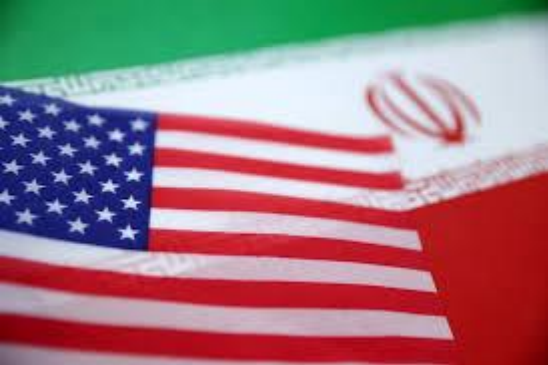
The recent high-stakes indirect talks between the United States and Iran in Geneva represent a critical juncture in West Asian geopolitics. Amidst a massive U.S. military buildup and internal domestic unrest in Iran, the negotiations aim to revive or replace the defunct nuclear framework to prevent a full-scale regional conflict. Key Highlights and Summary • Intense Indirect Diplomacy: The third round of talks in Geneva, mediated by Oman, concluded on February 26, 2026. While described as \'serious and intense,\' no final breakthrough was achieved, leading to technical-level follow-up discussions scheduled for Vienna. • Coercive Diplomacy via Military Pressure: The U.S. has deployed its largest fleet in the Middle East since 2003, including two aircraft carrier strike groups (USS Abraham Lincoln and USS Gerald R. Ford). This \'gunboat diplomacy\' is intended to pressure Tehran into accepting a \'permanent deal.\' • Conflicting Red Lines: The Trump administration demands a total halt to uranium enrichment, the dismantling of key sites (Fordow, Natanz), and curbs on ballistic missiles. Iran remains firm on its right to \'token enrichment\' for medical purposes and rejects any discussion on its defensive missile capabilities. • Domestic Crisis in Iran: Negotiations are unfolding as the Iranian regime faces significant internal pressure from nationwide protests. The U.S. views this as a strategic window to extract concessions, while Tehran seeks sanctions relief to stabilize its hobbled economy. • Regional Security Risks: Iran has warned that any U.S. or Israeli military strike would trigger a \'devastating war\' involving U.S. bases across the region, potentially destabilizing energy markets and maritime trade routes in the Strait of Hormuz. Constitutional and Legal Provisions • NPT (Non-Proliferation Treaty): Iran is a signatory, which legally obligates it to use nuclear energy only for peaceful purposes under IAEA safeguards. • UN Security Council Resolution 2231: Originally endorsed the 2015 JCPOA. Its \'snapback\' mechanism remains a point of legal contention regarding the reimposition of global sanctions. • Article 51 of the UN Charter: Pertains to the \'inherent right of individual or collective self-defence,\' often cited by both the U.S. (regarding regional assets) and Iran (regarding its missile program). • U.S. Case Law & Executive Power: Under U.S. law, the President has broad authority through the International Emergency Economic Powers Act (IEEPA) to impose unilateral sanctions, which form the core of the \'Maximum Pressure 2.0\' campaign. Key Definitions • Indirect Talks: Negotiations where the two primary parties do not meet face-to-face; instead, messages and proposals are relayed via neutral intermediaries (e.g., Oman or Switzerland). • Breakout Time: The time required for a country to produce enough weapons-grade fissile material for one nuclear device. • Maximum Pressure: A U.S. foreign policy strategy that uses extreme economic sanctions and military posturing to force a diplomatic rival to negotiate on specific terms. Conclusion The 2026 Geneva talks signify a \'last-chance\' diplomatic effort. While both sides express a preference for a deal to avoid the catastrophic costs of war, the gulf between U.S. demands for total dismantlement and Iran’s insistence on strategic autonomy remains vast. The outcome of the technical talks in Vienna will determine whether the region moves toward a revised \'JCPOA Plus\' or a preemptive military escalation. UPSC Relevance • GS Paper II: International Relations; Effect of policies and politics of developed and developing countries on India’s interests; Indian Diaspora (security of 8 million+ Indians in the Gulf). • GS Paper III: Security Challenges; Energy Security (impact on crude oil prices and the International North-South Transport Corridor). • Strategic Impact: India’s balancing act between its \'Strategic Partnership\' with the U.S. and its critical infrastructure investments in Iran (e.g., Chabahar Port).


Address : 506, 3rd EYE THREE (III), Opp. Induben Khakhrawala, Girish Cold Drink Cross Road, CG Road, Navrangpura, Ahmedabad, 380009.
Mobile : 8469231587 / 9586028957
Telephone : 079-40098991
E-mail: dics.upsc@gmail.com
Address: A-306, The Landmark, Urjanagar-1, Opp. Spicy Street, Kudasan – Por Road, Kudasan, Gandhinagar – 382421
Mobile : 9723832444 / 9723932444
E-mail: dics.gnagar@gmail.com
Address: 2nd Floor, 9 Shivali Society, L&T Circle, opp. Ratri Bazar, Karelibaugh, Vadodara, 390018
Mobile : 9725692037 / 9725692054
E-mail: dics.vadodara@gmail.com
Address: 403, Raj Victoria, Opp. Pal Walkway, Near Galaxy Circle, Pal, Surat-394510
Mobile : 8401031583 / 8401031587
E-mail: dics.surat@gmail.com
Address: 303,305 K 158 Complex Above Magson, Sindhubhavan Road Ahmedabad-380059
Mobile : 9974751177 / 8469231587
E-mail: dicssbr@gmail.com
Address: 57/17, 2nd Floor, Old Rajinder Nagar Market, Bada Bazaar Marg, Delhi-60
Mobile : 9104830862 / 9104830865
E-mail: dics.newdelhi@gmail.com