




Ahmedabad
(Head Office)Address : 506, 3rd EYE THREE (III), Opp. Induben Khakhrawala, Girish Cold Drink Cross Road, CG Road, Navrangpura, Ahmedabad, 380009.
Mobile : 8469231587 / 9586028957
Telephone : 079-40098991
E-mail: dics.upsc@gmail.com

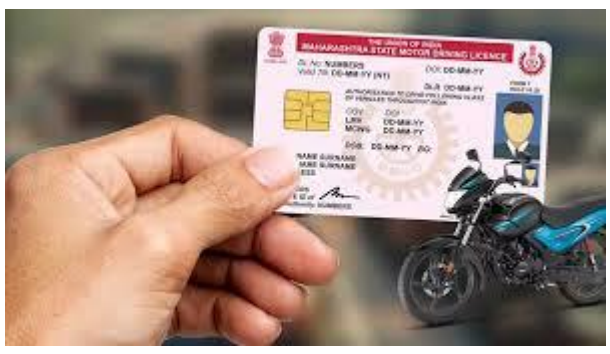
To tackle the critical issue of road fatalities, the Government of India has announced plans to implement a pointbased grading system for driving licences. This reform aims to shift the focus from mere \'penalty collection\' to \'behavioural accountability,\' ensuring that chronic traffic offenders face escalating consequences, including permanent loss of driving privileges. Key Highlights and Summary • Incentivising Responsible Driving: The proposed system will assign \'merit points\' to every driver. Infractions such as overspeeding, wrong-side driving, or mobile phone usage will lead to immediate point deductions, creating a transparent record of driver conduct. • Escalating Penalties for Repeat Offenders: Accumulating a specific number of negative points will trigger automatic consequences, ranging from temporary licence suspension (e.g., for six months) to mandatory remedial training and, in extreme cases, permanent cancellation. • Addressing the Fatality Crisis: With approximately 1.8 lakh deaths annually—72% of which involve the productive age group of 18–45 years—the government views this move as essential to curbing the \'human capital loss\' caused by preventable accidents. • Integration with Insurance: In a significant policy shift, the government is exploring the linkage of these driving grades with motor insurance premiums. Drivers with poor grades (frequent violators) may face significantly higher insurance costs, effectively penalising risky behaviour financially. • Digital Enforcement and Transparency: The system will rely on the centralized \'Sarathi\' database and e-challans to ensure real-time updates. This minimizes human interference and corruption at the RTO level while ensuring that violations in one state are reflected nationwide. • Public Welfare Integration: Alongside stricter rules, the government highlighted the PM RAHAT (Road Accident Victim Hospitalisation and Assured Treatment) scheme, providing cashless treatment up to ₹1.5 lakh for the first seven days to help save lives during the \'Golden Hour.\' Constitutional and Legal Provisions • The Motor Vehicles (Amendment) Act, 2019: Provides the primary legal framework for enhancing penalties and digitizing the licensing process. Section 19 and 20 deal with the power of licensing authorities and courts to disqualify drivers. • Article 21 of the Constitution: The Supreme Court has often interpreted the \'Right to Life\' to include the right to safe roads. This gives the state a constitutional mandate to enact stringent road safety laws. • Seventh Schedule (Concurrent List): \'Mechanically propelled vehicles\' (Entry 35) falls under the Concurrent List, allowing both the Union and States to legislate, though the Central Motor Vehicles Rules (CMVR) provide the overarching national standard. • Good Samaritan Law: Legal protection for bystanders who assist accident victims, ensuring they are not harassed by police or legal proceedings. Key Definitions • Grade-Based (Point) System: A regulatory mechanism where drivers start with a set number of points; points are deducted for each traffic violation. Reaching zero results in licence suspension. • Golden Hour: The first 60 minutes following a traumatic injury (like a road accident) during which there is the highest likelihood that prompt medical treatment will prevent death. • E-Challan: A sophisticated digital application integrated with the Vahan and Sarathi apps, used for issuing traffic violation notices and managing penalties electronically. Conclusion The transition to a grade-based licensing system marks a paradigm shift in India\'s transport policy. By moving away from one-time fines to a cumulative accountability model, the government seeks to instill a \'fear and respect for the law.\' Success will depend on the seamless integration of technology across state borders and the ability of enforcement agencies to ensure that vehicle-based violations are accurately mapped to individual driver\'s licences. UPSC Relevance • GS Paper II: Government policies and interventions for development; Governance; Issues arising out of their design and implementation. • GS Paper III: Infrastructure (Roads); Mobilization of Resources; Disaster Management (Road safety and emergency response). • Ethics (GS IV): Corporate Social Responsibility (Road safety); Public service values and ethics in law enforcement.


Address : 506, 3rd EYE THREE (III), Opp. Induben Khakhrawala, Girish Cold Drink Cross Road, CG Road, Navrangpura, Ahmedabad, 380009.
Mobile : 8469231587 / 9586028957
Telephone : 079-40098991
E-mail: dics.upsc@gmail.com
Address: A-306, The Landmark, Urjanagar-1, Opp. Spicy Street, Kudasan – Por Road, Kudasan, Gandhinagar – 382421
Mobile : 9723832444 / 9723932444
E-mail: dics.gnagar@gmail.com
Address: 2nd Floor, 9 Shivali Society, L&T Circle, opp. Ratri Bazar, Karelibaugh, Vadodara, 390018
Mobile : 9725692037 / 9725692054
E-mail: dics.vadodara@gmail.com
Address: 403, Raj Victoria, Opp. Pal Walkway, Near Galaxy Circle, Pal, Surat-394510
Mobile : 8401031583 / 8401031587
E-mail: dics.surat@gmail.com
Address: 303,305 K 158 Complex Above Magson, Sindhubhavan Road Ahmedabad-380059
Mobile : 9974751177 / 8469231587
E-mail: dicssbr@gmail.com
Address: 57/17, 2nd Floor, Old Rajinder Nagar Market, Bada Bazaar Marg, Delhi-60
Mobile : 9104830862 / 9104830865
E-mail: dics.newdelhi@gmail.com