







Ahmedabad
(Head Office)Address : 506, 3rd EYE THREE (III), Opp. Induben Khakhrawala, Girish Cold Drink Cross Road, CG Road, Navrangpura, Ahmedabad, 380009.
Mobile : 8469231587 / 9586028957
Telephone : 079-40098991
E-mail: dics.upsc@gmail.com

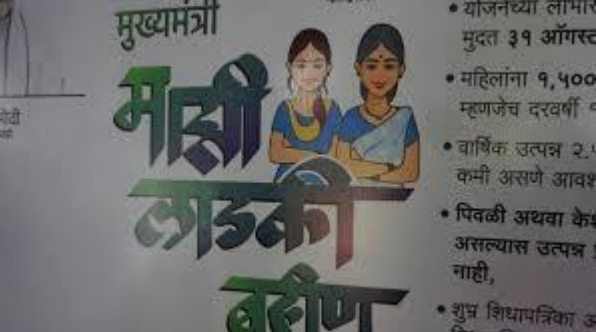
The Maharashtra state government has reaffirmed its commitment to the \'Mukhyamantri Majhi Ladki Bahin Yojana\' despite acknowledging that the massive budgetary allocation for the cash-transfer scheme is exerting significant fiscal pressure on other developmental departments, including Forestry and Rural Infrastructure. Core Summary of the Fiscal and Administrative Brief • Scheme Fundamentals: The Ladki Bahin Yojana is a flagship social welfare initiative providing monthly financial assistance of 1,500 to eligible women, aimed at enhancing female financial autonomy and nutrition. • Fiscal Crowding Out: The state leadership has admitted to \'fiscal strain,\' where high expenditure on DBT (Direct Benefit Transfer) schemes is leading to reduced liquidity for infrastructure projects in tribal and forest settlements. • Asset Monetization Strategy: To counter the fund crunch, the Forest Department proposes using 12,000 crore worth of teak plantations as collateral to secure a 6,000 crore loan for pending works and road connectivity. • Infrastructure Deficit: Concerns have been raised regarding the lack of basic \'last-mile\' connectivity in Dhangar (shepherd) and tribal hamlets, where patients often must be carried manually due to the absence of all-weather roads. • Human-Wildlife Mitigation: A portion of the new revenue generated through forest assets is slated for the voluntary relocation of villagers from core tiger reserves to reduce man-animal conflict and provide sustainable livelihoods. • Policy Continuity: Despite administrative challenges and opposition queries regarding underfunded departments, the government has officially stated there is no intention to roll back the scheme. Key Definitions • Fiscal Strain: A situation where government expenditures exceed revenue or where mandatory spending on welfare leaves insufficient capital for infrastructure and maintenance. • Core Forest Area: The innermost part of a protected area or National Park where human activity is strictly regulated to ensure a sanctum for wildlife. • Direct Benefit Transfer (DBT): A mechanism of transferring subsidies or cash directly into the bank accounts of beneficiaries to reduce leakages and delays. Constitutional and Legal Provisions • Article 15(3): Empowers the State to make \'special provisions for women and children,\' providing the constitutional bedrock for schemes like Ladki Bahin. • Article 38: Directs the State to promote the welfare of people by securing a social order in which justice—social, economic, and political—shall inform all institutions of national life. • Forest (Conservation) Act, 1980: Governs the diversion of forest land for non-forest purposes, such as building concrete roads in Dhangar settlements mentioned in the legislative debate. • FRBM Act (State Level): The Maharashtra Fiscal Responsibility and Budgetary Management Act sets limits on the state’s fiscal deficit, which is currently being tested by large-scale welfare payouts. Additional Key Points • The Dhangar Community: Predominantly a shepherd community in Maharashtra, their settlements (Wadis) in hilly forest terrains often face geographical isolation and lack of basic healthcare access. • Collateralized Forestry: The move to use teak as a financial instrument represents a shift toward innovative internal resource mobilization by state departments to bypass budgetary bottlenecks. • Relocation Dynamics: Successful relocation from forest cores depends on the \'voluntary\' nature of the move and the quality of the \'Alternative Agricultural Land\' provided under the Rehabilitation and Resettlement (R&R) policy. Conclusion: While the Ladki Bahin Yojana serves as a vital social safety net, its implementation highlights the classic economic trade-off between \'welfare spending\' and \'capital investment.\' The government’s plan to leverage forest assets suggests an evolving strategy to balance popular social schemes with the urgent need for rural and environmental infrastructure. UPSC Relevance: • GS Paper II: Welfare schemes for vulnerable sections of the population by the Centre and States and the performance of these schemes. • GS Paper III: Issues related to direct and indirect farm subsidies and minimum support prices; Public Distribution System; Government Budgeting; Environment and Biodiversity (Man-animal conflict). • Ethics (GS IV): Ethical dilemmas in governance regarding the allocation of limited resources between immediate relief (cash) and long-term development (roads/healthcare).


Address : 506, 3rd EYE THREE (III), Opp. Induben Khakhrawala, Girish Cold Drink Cross Road, CG Road, Navrangpura, Ahmedabad, 380009.
Mobile : 8469231587 / 9586028957
Telephone : 079-40098991
E-mail: dics.upsc@gmail.com
Address: A-306, The Landmark, Urjanagar-1, Opp. Spicy Street, Kudasan – Por Road, Kudasan, Gandhinagar – 382421
Mobile : 9723832444 / 9723932444
E-mail: dics.gnagar@gmail.com
Address: 2nd Floor, 9 Shivali Society, L&T Circle, opp. Ratri Bazar, Karelibaugh, Vadodara, 390018
Mobile : 9725692037 / 9725692054
E-mail: dics.vadodara@gmail.com
Address: 403, Raj Victoria, Opp. Pal Walkway, Near Galaxy Circle, Pal, Surat-394510
Mobile : 8401031583 / 8401031587
E-mail: dics.surat@gmail.com
Address: 303,305 K 158 Complex Above Magson, Sindhubhavan Road Ahmedabad-380059
Mobile : 9974751177 / 8469231587
E-mail: dicssbr@gmail.com
Address: 57/17, 2nd Floor, Old Rajinder Nagar Market, Bada Bazaar Marg, Delhi-60
Mobile : 9104830862 / 9104830865
E-mail: dics.newdelhi@gmail.com