







Ahmedabad
(Head Office)Address : 506, 3rd EYE THREE (III), Opp. Induben Khakhrawala, Girish Cold Drink Cross Road, CG Road, Navrangpura, Ahmedabad, 380009.
Mobile : 8469231587 / 9586028957
Telephone : 079-40098991
E-mail: dics.upsc@gmail.com

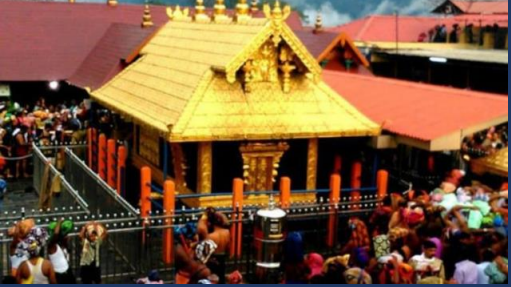
• The Travancore Devaswom Board (TDB) has submitted to the Supreme Court that the judiciary should not \'sit in judgment\' over the subjective beliefs and practices of a religious community. • This submission precedes a critical review hearing scheduled for April 7, regarding the 2018 judgment that allowed women of all ages to enter the Sabarimala shrine. • The TDB argues that the court\'s role is strictly limited to determining whether a practice is an integral part of a religion, rather than testing its rationality or social morality. • The Kerala Government has significantly moderated its previous stance, suggesting that judicial review of age-old restrictions must be guided by whether the belief is \'genuinely and conscientiously held\' by the devotees. • At the heart of the dispute is the \'Naishtika Brahmachari\' (eternal celibate) status of the deity, which formulates the basis for the restriction on women of menstrual age. • The case highlights the ongoing tension between Article 14 (Right to Equality) and Articles 25 and 26 (Freedom of Religion and Right to Manage Religious Affairs). Key Definitions and Terminology Essential Religious Practices (ERP): A judicial doctrine evolved by the Supreme Court to determine which religious practices are central to a faith and thus protected under the Constitution. Naishtika Brahmachari: A form of the deity (Lord Ayyappa at Sabarimala) characterized by absolute and eternal celibacy, which devotees claim necessitates specific entry protocols. Devaswom Board: An autonomous socio-religious body established by statute (like the Travancore-Cochin Hindu Religious Institutions Act, 1950) to manage Hindu temples and their assets. Subjective Belief: A belief held by a community based on their faith and traditions, which may not necessarily align with modern logic or scientific reasoning but is central to their identity. Constitutional and Legal Provisions Article 25: Guarantees freedom of conscience and the right to freely profess, practice, and propagate religion, subject to public order, morality, and health. Article 26: Grants every religious denomination the right to manage its own affairs in matters of religion, which is often cited by the TDB to protect temple traditions. Article 14: Ensures equality before the law and equal protection of the laws, which formed the bedrock of the 2018 judgment striking down the ban. Rule 3(b) of Kerala Hindu Places of Public Worship (Authorisation of Entry) Rules, 1965: The specific rule that previously allowed the prohibition of women at such times as \'custom and usage\' dictated; it was declared unconstitutional in the 2018 verdict. Additional Key Strategic Points • Institutional Autonomy: The TDB\'s stance emphasizes that religious institutions should have the final say in matters of ritual and tradition to preserve the \'denominational\' character of the shrine. • Evolution of State Stance: The shift in the Kerala government’s position from a rigid \'equality-first\' approach to a more nuanced \'faith-sensitive\' approach reflects the complex socio-political landscape surrounding the issue. • The \'Reason vs. Faith\' Debate: The case raises a fundamental question: Can constitutional morality override traditional religious morality in a secular state? Conclusion The Sabarimala review petition represents a watershed moment in Indian constitutional law. While the 2018 judgment prioritized individual rights (Article 25(1)) and gender equality, the TDB\'s current submissions seek to re-establish the primacy of denominational rights (Article 26) and the sanctity of long-standing religious customs. The outcome will likely redefine the boundaries of judicial intervention in matters of faith for decades to come. UPSC Relevance GS Paper II: Indian Constitution—historical underpinnings, evolution, features, and significant provisions. Structure, organization, and functioning of the Judiciary. GS Paper I: Social empowerment, communalism, and secularism; the role of tradition in a modernizing society. Essay/Ethics: Conflict between traditional values and modern constitutional ethics; the concept of \'Constitutional Morality.\'


Address : 506, 3rd EYE THREE (III), Opp. Induben Khakhrawala, Girish Cold Drink Cross Road, CG Road, Navrangpura, Ahmedabad, 380009.
Mobile : 8469231587 / 9586028957
Telephone : 079-40098991
E-mail: dics.upsc@gmail.com
Address: A-306, The Landmark, Urjanagar-1, Opp. Spicy Street, Kudasan – Por Road, Kudasan, Gandhinagar – 382421
Mobile : 9723832444 / 9723932444
E-mail: dics.gnagar@gmail.com
Address: 2nd Floor, 9 Shivali Society, L&T Circle, opp. Ratri Bazar, Karelibaugh, Vadodara, 390018
Mobile : 9725692037 / 9725692054
E-mail: dics.vadodara@gmail.com
Address: 403, Raj Victoria, Opp. Pal Walkway, Near Galaxy Circle, Pal, Surat-394510
Mobile : 8401031583 / 8401031587
E-mail: dics.surat@gmail.com
Address: 303,305 K 158 Complex Above Magson, Sindhubhavan Road Ahmedabad-380059
Mobile : 9974751177 / 8469231587
E-mail: dicssbr@gmail.com
Address: 57/17, 2nd Floor, Old Rajinder Nagar Market, Bada Bazaar Marg, Delhi-60
Mobile : 9104830862 / 9104830865
E-mail: dics.newdelhi@gmail.com