


Ahmedabad
(Head Office)Address : 506, 3rd EYE THREE (III), Opp. Induben Khakhrawala, Girish Cold Drink Cross Road, CG Road, Navrangpura, Ahmedabad, 380009.
Mobile : 8469231587 / 9586028957
Telephone : 079-40098991
E-mail: dics.upsc@gmail.com

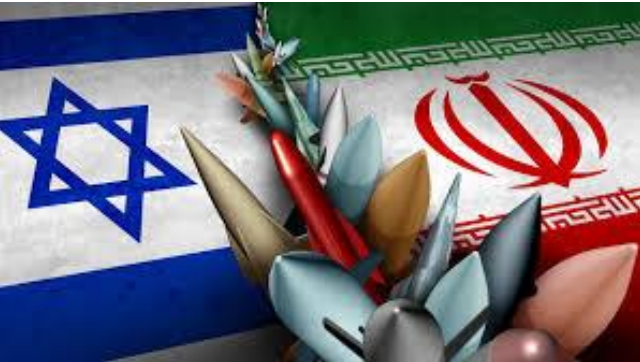
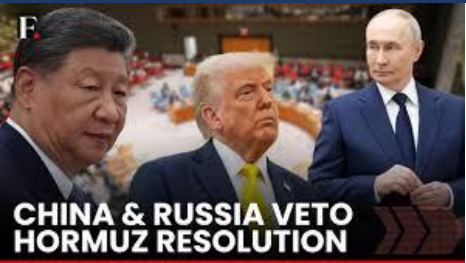
The conflict between the United States and Iran has entered a critical phase, with US President Donald Trump signaling an intensification of military operations. The rhetoric of \'broader attacks\' and the targeting of strategic infrastructure, such as bridges linking Tehran to Karaj, have dimmed hopes for an early ceasefire. As the war enters its second month, the focus of international diplomacy has shifted toward two existential issues: securing a ceasefire and ensuring the reopening of the Strait of Hormuz, a vital artery for global energy security. Core Summary of the Crisis • Escalation of Hostilities: The US executive has vowed more aggressive strikes, including threats to \'push Iran back to the Stone Ages,\' signaling a shift from tactical containment to large-scale infrastructure degradation. • Strategic Infrastructure Targeting: Recent air strikes have targeted domestic connectivity in Iran, notably the bridge linking Tehran to Karaj, indicating a move to disrupt internal logistics and exert maximum psychological pressure on the Iranian leadership. • Threat to Global Energy: The conflict centers on the Strait of Hormuz, through which approximately 1/5th of the world’s oil consumption passes. Threats of \'crushing\' retaliatory attacks from Tehran pose a direct risk to global energy supply chains and shipping. • Diplomatic Deadlock: Despite the \'death of a slew of leaders,\' Iran remains defiant, focusing on drafting monitoring protocols with neutral intermediaries like Oman rather than immediate capitulation, while the US demands a \'deal before it is too late.\' • Economic Fallout: The military intensification has led to an immediate rise in global oil prices and a decline in international share prices, highlighting the interconnectedness of regional stability and global economic health. Key Definitions • Strait of Hormuz: A narrow waterway between the Gulf of Oman and the Persian Gulf. It is the world\'s most important oil transit chokepoint. • Remission of Hostilities (Ceasefire): A temporary stoppage of a war in which each side agrees with the other to suspend aggressive actions. • Diplomatic Protocol: A formal international agreement or the specific etiquette and rules governing international relations and negotiations. International Legal Framework & Provisions • United Nations Charter (Chapter VII): Deals with the \'Action with Respect to Threats to the Peace, Breaches of the Peace, and Acts of Aggression,\' providing the framework for international intervention or sanctions. • UNCLOS (United Nations Convention on the Law of the Sea): Specifically relevant to the \'Freedom of Navigation\' in international straits like Hormuz. Under UNCLOS, all ships enjoy the right of transit passage through such straits. • Principle of Proportionality: Under International Humanitarian Law (IHL), the use of force must be proportional to the military advantage gained; targeting civilian-use infrastructure like bridges is often a subject of legal debate regarding \'dual-use\' status. Critical Keypoints: The Indian Perspective • Energy Security: India is one of the largest consumers of crude oil; any prolonged disruption in the Strait of Hormuz directly impacts India’s trade balance, inflation levels, and fiscal deficit. • Diaspora Safety: Nearly nine million Indian citizens live and work in the Gulf states. Their safety, security, and the stability of the remittance flow (a major source of foreign exchange for India) are at high stake. • Strategic Autonomy: India’s interdependence with the region necessitates a balanced diplomatic approach, advocating for de-escalation while protecting its economic interests in both the US and the Middle East. Conclusion The current US-Iran chasm represents a significant failure of regional deterrence and a shift toward highintensity warfare. While the US seeks a \'way out\' through maximum pressure, the resulting volatility in energy markets and the threat to international shipping lanes demand an urgent multilateral diplomatic intervention. For the global community, the priority remains transitioning from military \'opening bids\' to a sustainable maritime and territorial ceasefire. UPSC Relevance • GS Paper II (International Relations): Essential for studying \'Bilateral, Regional and Global Groupings and Agreements involving India,\' and the \'Effect of Policies and Politics of Developed and Developing Countries on India\'s interests.\' • GS Paper III (Security & Economy): Directly relates to \'Energy Security,\' \'Global Supply Chain Disruptions,\' and \'Strategic Chokepoints\' in maritime security.


Address : 506, 3rd EYE THREE (III), Opp. Induben Khakhrawala, Girish Cold Drink Cross Road, CG Road, Navrangpura, Ahmedabad, 380009.
Mobile : 8469231587 / 9586028957
Telephone : 079-40098991
E-mail: dics.upsc@gmail.com
Address: A-306, The Landmark, Urjanagar-1, Opp. Spicy Street, Kudasan – Por Road, Kudasan, Gandhinagar – 382421
Mobile : 9723832444 / 9723932444
E-mail: dics.gnagar@gmail.com
Address: 2nd Floor, 9 Shivali Society, L&T Circle, opp. Ratri Bazar, Karelibaugh, Vadodara, 390018
Mobile : 9725692037 / 9725692054
E-mail: dics.vadodara@gmail.com
Address: 403, Raj Victoria, Opp. Pal Walkway, Near Galaxy Circle, Pal, Surat-394510
Mobile : 8401031583 / 8401031587
E-mail: dics.surat@gmail.com
Address: 303,305 K 158 Complex Above Magson, Sindhubhavan Road Ahmedabad-380059
Mobile : 9974751177 / 8469231587
E-mail: dicssbr@gmail.com
Address: 57/17, 2nd Floor, Old Rajinder Nagar Market, Bada Bazaar Marg, Delhi-60
Mobile : 9104830862 / 9104830865
E-mail: dics.newdelhi@gmail.com