





Ahmedabad
(Head Office)Address : 506, 3rd EYE THREE (III), Opp. Induben Khakhrawala, Girish Cold Drink Cross Road, CG Road, Navrangpura, Ahmedabad, 380009.
Mobile : 8469231587 / 9586028957
Telephone : 079-40098991
E-mail: dics.upsc@gmail.com

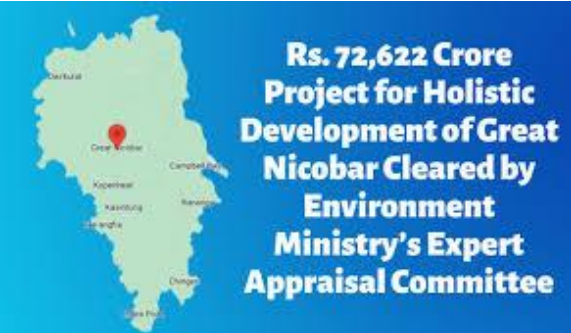
• Infrastructure vs. Conservation Conflict: The ₹72,000-crore GNI project involves a transshipment port, international airport, and a power plant. While strategically vital for India’s presence in the IndoPacific, it threatens 130 sq km of primary forest and the habitats of the indigenous Shompen and Nicobarese tribes. • Tribal Relocation and Loss of Identity: A draft \'Comprehensive Tribal Welfare Plan\' proposes the relocation of Nicobarese communities to \'ancestral lands.\' However, locals allege a lack of transparency regarding specific sites, fearing the move will sever their cultural and spiritual connection to the land they have inhabited for centuries. • Violation of Consent Procedures: The Tribal Council withdrew its No Objection Certificate (NOC) in 2022, claiming the administration suppressed information about the project\'s scale. Under the Forest Rights Act (FRA) 2006, the free, prior, and informed consent of the Gram Sabha is mandatory for the diversion of forest land. • Vulnerability of Particularly Vulnerable Tribal Groups (PVTGs): The Shompen tribe, categorized as a PVTG, are hunter-gatherers with limited contact with the outside world. Any large-scale demographic change or infrastructure activity in their biosphere reserve increases the risk of disease and cultural extinction. • Ecological Fallout and Tsunami Vulnerability: The Great Nicobar Island is located in a high-seismic zone (Zone V). Critics argue that replacing protective mangroves and rainforests with heavy infrastructure increases the island\'s vulnerability to future tsunamis and rising sea levels. • Legal Scrutiny and Judiciary’s Role: The Calcutta High Court and the National Green Tribunal (NGT) are currently reviewing petitions against the project. The core legal dispute centers on whether the administration \'manufactured\' consent and if the environmental impact assessment (EIA) adequately addressed the survival of local biodiversity. Important Keypoints & Provisions • Holistic Development of Great Nicobar Island: A project spearheaded by NITI Aayog to leverage the island’s location near the Malacca Strait. • Particularly Vulnerable Tribal Groups (PVTGs): Groups characterized by pre-agriculture level of technology, stagnant/declining population, and extremely low literacy. Shompens are one of the 75 identified PVTGs in India. • Constitutional Provision (Fifth & Sixth Schedules): While GNI is a Union Territory, the spirit of these schedules protects tribal land from alienation. • The Scheduled Tribes and Other Traditional Forest Dwellers (Recognition of Forest Rights) Act, 2006: Specifically protects the right to hold and live in forest land for habitation or self-cultivation. • The Andaman and Nicobar Islands (Protection of Aboriginal Tribes) Regulation (PANTPR), 1956: Prohibits the entry of outsiders into tribal reserves without valid passes and restricts land transfers. Definitions of Key Terms • Line Departments: Specialized administrative units (e.g., Forest, Health, Education) responsible for implementing specific aspects of a larger government plan. • Tribal Council: An indigenous representative body recognized by the government to manage internal community affairs and provide feedback on administrative policies. • Draft Comprehensive Tribal Welfare Plan: A preliminary document outlining financial outlays and logistical steps for the rehabilitation and social security of indigenous people affected by state projects. Conclusion: The Great Nicobar project represents a classic developmental dilemma between national security/economic growth and the preservation of indigenous rights and biodiversity. While the strategic location of the island is undeniable for India’s maritime security, any \'top-down\' implementation that bypasses the genuine consent of the Nicobarese and Shompen people risks violating constitutional safeguards and international standards on indigenous rights. A balanced approach requires transparent consultation, scientific reassessment of ecological risks, and a \'people-centric\' development model. UPSC Relevance • GS Paper I: Geography (A&N Islands, Sensitive Ecosystems); Social Issues (Tribal Welfare, PVTGs). • GS Paper II: Governance (Constitutional provisions for STs); International Relations (Strategic importance of Malacca Strait/Indo-Pacific). • GS Paper III: Environment (Biodiversity vs. Development); Internal Security (Strategic infrastructure).


Address : 506, 3rd EYE THREE (III), Opp. Induben Khakhrawala, Girish Cold Drink Cross Road, CG Road, Navrangpura, Ahmedabad, 380009.
Mobile : 8469231587 / 9586028957
Telephone : 079-40098991
E-mail: dics.upsc@gmail.com
Address: A-306, The Landmark, Urjanagar-1, Opp. Spicy Street, Kudasan – Por Road, Kudasan, Gandhinagar – 382421
Mobile : 9723832444 / 9723932444
E-mail: dics.gnagar@gmail.com
Address: 2nd Floor, 9 Shivali Society, L&T Circle, opp. Ratri Bazar, Karelibaugh, Vadodara, 390018
Mobile : 9725692037 / 9725692054
E-mail: dics.vadodara@gmail.com
Address: 403, Raj Victoria, Opp. Pal Walkway, Near Galaxy Circle, Pal, Surat-394510
Mobile : 8401031583 / 8401031587
E-mail: dics.surat@gmail.com
Address: 303,305 K 158 Complex Above Magson, Sindhubhavan Road Ahmedabad-380059
Mobile : 9974751177 / 8469231587
E-mail: dicssbr@gmail.com
Address: 57/17, 2nd Floor, Old Rajinder Nagar Market, Bada Bazaar Marg, Delhi-60
Mobile : 9104830862 / 9104830865
E-mail: dics.newdelhi@gmail.com