


Ahmedabad
(Head Office)Address : 506, 3rd EYE THREE (III), Opp. Induben Khakhrawala, Girish Cold Drink Cross Road, CG Road, Navrangpura, Ahmedabad, 380009.
Mobile : 8469231587 / 9586028957
Telephone : 079-40098991
E-mail: dics.upsc@gmail.com

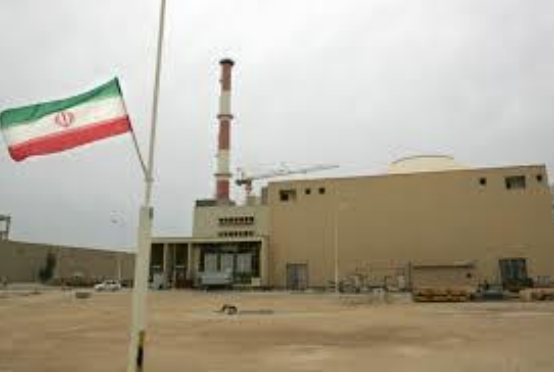
The Iranian administration has confirmed that its Parliament is formally reviewing a withdrawal from the Nuclear Non-Proliferation Treaty (NPT). This development follows a series of military escalations, including precision strikes by the U.S. and Israel on Iranian nuclear sites in June 2025 and subsequent attacks in early 2026. • Strategic Re-evaluation: Foreign Ministry spokesperson Esmail Baghaei questioned the utility of the treaty, arguing that while Iran adheres to its obligations, \'bullying parties\' continue to strike its sovereign nuclear facilities. Tehran views the NPT as failing to provide its promised \'right to peaceful energy\' while acting as a tool for international espionage. • The \'North Korea\' Precedent: If Iran withdraws, it would be the first nation to do so since North Korea in 2003. Such a move would effectively terminate the International Atomic Energy Agency (IAEA) oversight and its Comprehensive Safeguards Agreement, removing all international \'eyes\' from Iranian enrichment activities. • Shift in Nuclear Doctrine: Following the death of the previous Supreme Leader in February 2026, hawkish elements in the Iranian Parliament are pushing for a transition from a \'peaceful use\' doctrine to an \'overt weaponization\' policy as a deterrent against further airstrikes. • Erosion of Global Governance: A withdrawal would likely trigger the \'Snapback Mechanism\' of UN sanctions, which were previously suspended. However, Iranian officials suggest that since sanctions are already at a peak, the marginal economic cost of withdrawal is now lower than the perceived security benefit of nuclear ambiguity. • Impact on Regional Arms Race: Analysts warn that an Iranian exit could catalyze a \'nuclear domino effect\' in West Asia, prompting neighbors like Saudi Arabia or Turkey to reconsider their own nonproliferation commitments, fundamentally destabilizing the global energy heartland. • India’s Strategic Dilemma: For India, an Iranian NPT exit threatens the International North-South Transport Corridor (INSTC) and the Chabahar Port project. Furthermore, any resulting regional instability directly impacts India\'s energy security, as nearly 65% of its LPG and a significant portion of its crude oil transit through the nearby Strait of Hormuz. Key Definitions • NPT (Nuclear Non-Proliferation Treaty): A landmark 1970 international treaty with three pillars: nonproliferation, disarmament, and the peaceful use of nuclear energy. • IAEA (International Atomic Energy Agency): Known as the world\'s \'nuclear watchdog,\' it is an autonomous organization that seeks to promote the peaceful use of nuclear energy and inhibit its use for military purposes. • Additional Protocol: A legal document granting the IAEA expanded rights of access to information and locations in a country to verify that all nuclear material is in peaceful use. Constitutional and Legal Provisions • Article 51 of the Indian Constitution: Directs the State to promote international peace and security and maintain just and honorable relations between nations. India\'s stance remains a call for diplomatic resolution while upholding the principle of universal nuclear disarmament. • Article X of the NPT: The specific clause that allows a member state to withdraw from the treaty with three months\' notice if \'extraordinary events\' have jeopardized its supreme interests. • The Weapons of Mass Destruction (WMD) Act, 2005 (India): Provides the domestic legal framework for India to prevent the proliferation of WMDs and their delivery systems, aligning with international safety standards despite India not being a signatory to the NPT. Conclusion and UPSC Relevance The potential withdrawal of Iran from the NPT marks a terminal crisis for the 20th-century nuclear order. For India, this isn\'t just a distant diplomatic event; it is a direct threat to its \'Extended Neighborhood Policy.\' The resulting volatility in global oil markets and the risk of a regional nuclear arms race would force India to recalibrate its energy sourcing and accelerate its transition to renewable alternatives. UPSC Relevance: • GS Paper II (International Relations): Important for questions on \'Global Groupings and Agreements involving India and/or affecting India’s interests.\' The NPT and IAEA are core topics under international nuclear governance. • GS Paper III (Security & Economy): Relevant for \'Challenges to Internal Security through Communication Networks\' (cyber-threats to nuclear sites) and \'Energy Security\' (impact of West Asian wars on the Indian economy). • Prelims: Mapping of Iranian nuclear sites (Natanz, Fordow, Isfahan) and understanding the functional differences between the NPT, CTBT, and TPNW.


Address : 506, 3rd EYE THREE (III), Opp. Induben Khakhrawala, Girish Cold Drink Cross Road, CG Road, Navrangpura, Ahmedabad, 380009.
Mobile : 8469231587 / 9586028957
Telephone : 079-40098991
E-mail: dics.upsc@gmail.com
Address: A-306, The Landmark, Urjanagar-1, Opp. Spicy Street, Kudasan – Por Road, Kudasan, Gandhinagar – 382421
Mobile : 9723832444 / 9723932444
E-mail: dics.gnagar@gmail.com
Address: 2nd Floor, 9 Shivali Society, L&T Circle, opp. Ratri Bazar, Karelibaugh, Vadodara, 390018
Mobile : 9725692037 / 9725692054
E-mail: dics.vadodara@gmail.com
Address: 403, Raj Victoria, Opp. Pal Walkway, Near Galaxy Circle, Pal, Surat-394510
Mobile : 8401031583 / 8401031587
E-mail: dics.surat@gmail.com
Address: 303,305 K 158 Complex Above Magson, Sindhubhavan Road Ahmedabad-380059
Mobile : 9974751177 / 8469231587
E-mail: dicssbr@gmail.com
Address: 57/17, 2nd Floor, Old Rajinder Nagar Market, Bada Bazaar Marg, Delhi-60
Mobile : 9104830862 / 9104830865
E-mail: dics.newdelhi@gmail.com