





Ahmedabad
(Head Office)Address : 506, 3rd EYE THREE (III), Opp. Induben Khakhrawala, Girish Cold Drink Cross Road, CG Road, Navrangpura, Ahmedabad, 380009.
Mobile : 8469231587 / 9586028957
Telephone : 079-40098991
E-mail: dics.upsc@gmail.com

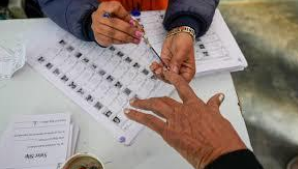
The Union Government has signaled a major legislative push to synchronize the implementation of the Women’s Reservation Act, 2023, with an early delimitation exercise. This move aims to expand the Lok Sabha\'s strength and ensure 33% representation for women by the 2029 polls. • Early Delimitation Framework: The Centre proposes a delimitation exercise based on the 2011 Census rather than waiting for the next full census. This provides a legal bypass to the freeze on seat reallocation that was originally set to expire after 2026. • Expansion of Parliamentary Strength: Under the proposed amendments, the number of Lok Sabha seats is expected to increase significantly from 543 to 816. This 50% increase across the board is designed to accommodate the new reservation quotas without reducing the absolute number of seats available for general candidates. • Implementation of Nari Shakti Vandan Adhiniyam: The primary driver for this early exercise is to operationalize the 106th Constitutional Amendment Act. With the proposed 816 seats, 273 seats (one-third) would be legally reserved for women, marking a historic shift in India’s legislative demography. • Mitigating Regional Imbalances: To address concerns from Southern States regarding population-based representation, the government intends to maintain the existing \'pro rata\' proportion of seats. This ensures that states successful in population control do not lose their relative political weightage compared to more populous Northern states. • Legislative Timeline: The government may introduce these amendments during the ongoing Budget Session or a Special Session. This urgency underscores the intent to complete the complex process of boundary redrawing and seat identification well before the 2029 electoral cycle. Key Definitions and Terminology • Delimitation: The act or process of fixing limits or boundaries of territorial constituencies in a country to reflect changes in population. • Pro Rata Basis: A Latin term meaning \'in proportion.\' In this context, it refers to increasing seats across all states at the same ratio to preserve their current relative strength in Parliament. • Freeze on Delimitation: The 42nd Amendment (1976) froze the reallocation of seats till 2001, which was further extended by the 84th Amendment (2001) until 2026 to encourage population stabilization. Constitutional and Legal Provisions • Article 82: Empowers Parliament to enact a Delimitation Act after every Census. Once the Act is in force, the Central Government constitutes a Delimitation Commission. • Article 81: Defines the composition of the Lok Sabha. The proposed increase to 816 seats will require a formal amendment to this Article. • 106th Constitutional Amendment Act, 2023: Also known as the Nari Shakti Vandan Adhiniyam, it mandates 33% reservation for women in the Lok Sabha and State Legislative Assemblies. • Article 170: Governs the composition of State Legislative Assemblies and their delimitation process, which will also be impacted by these federal changes. Critical Analysis for UPSC • The Federal Challenge: The \'North-South Divide\' remains the biggest hurdle. Southern states argue that using population as the sole criterion for seats punishes them for following national family planning goals. The \'pro rata\' increase is a strategic compromise to maintain the federal equilibrium. • Census Dependency: While the 2011 Census is being cited for \'early\' implementation, critics point out that using 15-year-old data may not accurately reflect current internal migration and urbanization patterns. • Infrastructure Readiness: The transition to 816 MPs is physically supported by the New Parliament House (Sansad Bhavan), which was designed with a seating capacity specifically to accommodate a larger House after delimitation. Conclusion and UPSC Relevance The intersection of delimitation and women’s reservation represents one of the most significant democratic reforms in independent India. For the UPSC Civil Services Exam, this topic is vital for GS Paper II (Polity & Governance) under \'Salient features of the Representation of People’s Act\' and \'Constitutional Amendments.\' It also carries weight in GS Paper I (Social Issues) regarding women\'s empowerment. The move reflects an attempt to balance gender justice with federal sensitivity. Success will depend on building a political consensus that ensures \'Representation\' does not come at the cost of \'Federal Fairness.\'


Address : 506, 3rd EYE THREE (III), Opp. Induben Khakhrawala, Girish Cold Drink Cross Road, CG Road, Navrangpura, Ahmedabad, 380009.
Mobile : 8469231587 / 9586028957
Telephone : 079-40098991
E-mail: dics.upsc@gmail.com
Address: A-306, The Landmark, Urjanagar-1, Opp. Spicy Street, Kudasan – Por Road, Kudasan, Gandhinagar – 382421
Mobile : 9723832444 / 9723932444
E-mail: dics.gnagar@gmail.com
Address: 2nd Floor, 9 Shivali Society, L&T Circle, opp. Ratri Bazar, Karelibaugh, Vadodara, 390018
Mobile : 9725692037 / 9725692054
E-mail: dics.vadodara@gmail.com
Address: 403, Raj Victoria, Opp. Pal Walkway, Near Galaxy Circle, Pal, Surat-394510
Mobile : 8401031583 / 8401031587
E-mail: dics.surat@gmail.com
Address: 303,305 K 158 Complex Above Magson, Sindhubhavan Road Ahmedabad-380059
Mobile : 9974751177 / 8469231587
E-mail: dicssbr@gmail.com
Address: 57/17, 2nd Floor, Old Rajinder Nagar Market, Bada Bazaar Marg, Delhi-60
Mobile : 9104830862 / 9104830865
E-mail: dics.newdelhi@gmail.com