




Ahmedabad
(Head Office)Address : 506, 3rd EYE THREE (III), Opp. Induben Khakhrawala, Girish Cold Drink Cross Road, CG Road, Navrangpura, Ahmedabad, 380009.
Mobile : 8469231587 / 9586028957
Telephone : 079-40098991
E-mail: dics.upsc@gmail.com

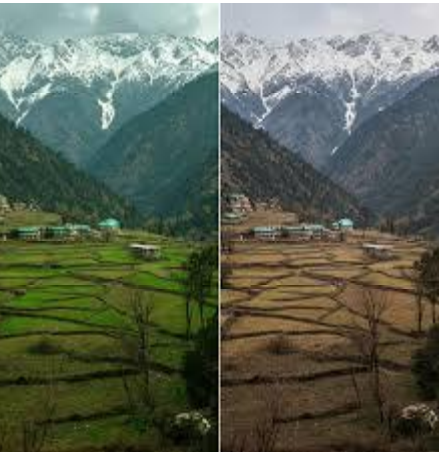
Himachal Pradesh Chief Minister Sukhvinder Singh Sukhu has highlighted the grave threat posed by climate change to the Himalayan ecosystem, emphasizing the national implications of ecological disturbances in the region. The state is witnessing a surge in extreme weather events, necessitating urgent policy interventions and inter-state cooperation regarding natural resource management. Key Highlights of the CM\'s Statement • Increasing Extreme Weather: The state is facing unprecedented occurrences of cloudbursts, flash floods, and landslides, which are direct manifestations of atmospheric instability. • Glacial Retreat: Rapidly shrinking glaciers in the Himalayan range pose a long-term threat to water security for the entire IndoGangetic plain. • Non-CO2 Emissions Focus: The release of the report \'Scientific Assessment of Tackling Non-CO2 Emissions: Pathways for Himachal Pradesh\' marks a shift toward addressing potent shortlived climate pollutants like methane and black carbon. • Inter-State Resource Disputes: The CM linked future developmental projects to the settlement of longpending arrears from the Bhakra Beas Management Board (BBMB) by neighboring states. • National Security Implications: Any ecological disturbance in the Himalayas is framed not just as a state issue but as a threat to the environmental and economic stability of India. Important Definitions • Non-CO2 Emissions: These include potent greenhouse gases and pollutants such as Methane ($CH_4$), Nitrous Oxide ($N_2O$), and Black Carbon. Although they persist in the atmosphere for shorter periods than $CO_2$, their global warming potential is significantly higher. • Cloudburst: A sudden, aggressive rainstorm falling for a short period over a small geographical area, often leading to flash floods in hilly terrains. • Black Carbon: A component of fine particulate matter (PM2.5) formed by the incomplete combustion of fossil fuels and biomass; it absorbs solar energy and accelerates glacial melting when deposited on snow. Constitutional and Legal Provisions • Article 48A (DPSP): Mandates that the State shall endeavor to protect and improve the environment and safeguard the forests and wildlife of the country. • Article 51A(g): Establishes a Fundamental Duty for citizens to protect and improve the natural environment, including forests, lakes, rivers, and wildlife. • The Environment (Protection) Act, 1986: Provides the framework for the Central and State governments to take measures for protecting and improving the quality of the environment. • Inter-State River Water Disputes Act, 1956: Relevant to the CM\'s mention of the Bhakra Beas Management Board (BBMB) and claims over water resource shares and arrears. Additional Key Insights • The \'Third Pole\' Crisis: The Himalayas are often called the \'Third Pole\'; their degradation affects the monsoon patterns and perennial river systems of South Asia. • Short-Lived Climate Pollutants (SLCPs): Reducing non-CO2 emissions is considered the \'fastest\' way to slow down Himalayan warming in the short term. • Himalayan State-Specific Vulnerability: High-altitude regions warm at a faster rate than the global average, a phenomenon known as elevation-dependent warming. Conclusion The ecological fragility of Himachal Pradesh serves as a barometer for the broader climate crisis in India. Addressing these challenges requires a dual approach: localized mitigation of non-CO2 emissions and a robust federal dialogue to resolve resource-sharing disputes. Protecting the \'Water Tower of Asia\' is indispensable for India\'s sustainable development and disaster resilience. UPSC Relevance • GS Paper I: Geographical features and their location-changes in critical geographical features (including ice-caps). • GS Paper II: Federal structure and challenges (Inter-state water and power disputes). • GS Paper III: Environmental pollution and degradation; Disaster Management (Landslides and Flash Floods). • Prelims: Specifics of Non-CO2 pollutants, BBMB jurisdiction, and Himalayan geography.


Address : 506, 3rd EYE THREE (III), Opp. Induben Khakhrawala, Girish Cold Drink Cross Road, CG Road, Navrangpura, Ahmedabad, 380009.
Mobile : 8469231587 / 9586028957
Telephone : 079-40098991
E-mail: dics.upsc@gmail.com
Address: A-306, The Landmark, Urjanagar-1, Opp. Spicy Street, Kudasan – Por Road, Kudasan, Gandhinagar – 382421
Mobile : 9723832444 / 9723932444
E-mail: dics.gnagar@gmail.com
Address: 2nd Floor, 9 Shivali Society, L&T Circle, opp. Ratri Bazar, Karelibaugh, Vadodara, 390018
Mobile : 9725692037 / 9725692054
E-mail: dics.vadodara@gmail.com
Address: 403, Raj Victoria, Opp. Pal Walkway, Near Galaxy Circle, Pal, Surat-394510
Mobile : 8401031583 / 8401031587
E-mail: dics.surat@gmail.com
Address: 303,305 K 158 Complex Above Magson, Sindhubhavan Road Ahmedabad-380059
Mobile : 9974751177 / 8469231587
E-mail: dicssbr@gmail.com
Address: 57/17, 2nd Floor, Old Rajinder Nagar Market, Bada Bazaar Marg, Delhi-60
Mobile : 9104830862 / 9104830865
E-mail: dics.newdelhi@gmail.com