


Ahmedabad
(Head Office)Address : 506, 3rd EYE THREE (III), Opp. Induben Khakhrawala, Girish Cold Drink Cross Road, CG Road, Navrangpura, Ahmedabad, 380009.
Mobile : 8469231587 / 9586028957
Telephone : 079-40098991
E-mail: dics.upsc@gmail.com

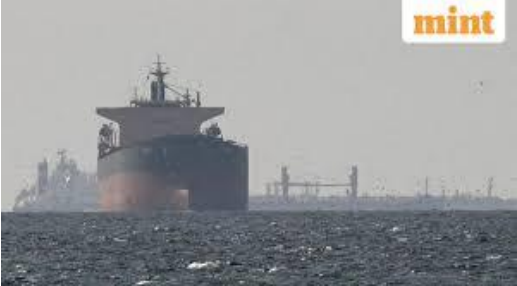
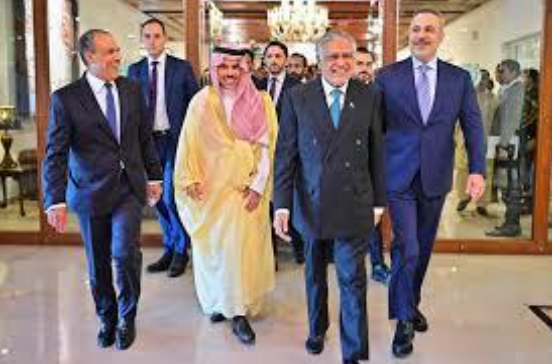
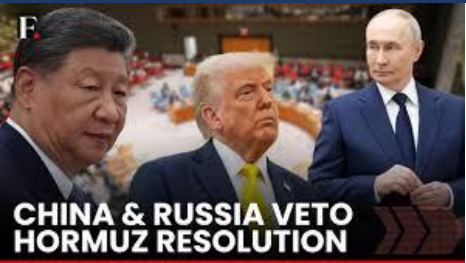
• Delay in Authorization of Force: The United Nations Security Council (UNSC) has indefinitely postponed a scheduled vote on a draft resolution that sought to authorize the use of \'defensive\' force. The proposed mandate aimed to protect international commercial shipping in the Strait of Hormuz against persistent threats and attacks attributed to Iranian forces. • Strategic Significance of the Strait: As the world\'s most critical oil transit chokepoint, the Strait of Hormuz facilitates the passage of approximately 21 million barrels of oil per day, or roughly 25% of global maritime oil consumption. Any prolonged disruption here poses a direct threat to global energy security and economic stability. • Divergence Among P5 Members: The postponement reflects deep-seated divisions within the \'Permanent Five\' (P5) members. While the U.S. and its allies advocate for a \'defensive\' naval escort mechanism, veto-wielding members like Russia and China traditionally oppose the authorization of force under Chapter VII, favoring diplomatic de-escalation instead. • Legal Ambiguity of \'Defensive Force\': The draft\'s focus on \'defensive\' force remains a point of contention. In international law, the line between defensive posturing and active combat is often blurred, leading to fears that such a resolution could inadvertently trigger a full-scale regional war between the U.S.-led coalition and Iran. • Impact on Global Energy Markets: The mere news of a delayed UNSC intervention has contributed to market volatility. For energy-importing nations like India, the inability of the UN to guarantee safe passage through the Persian Gulf increases insurance premiums (war risk surcharges) and threatens the domestic fiscal deficit. • Regional Diplomatic Maneuvering: The delay provides a temporary window for regional \'middle powers\' to pursue non-Western mediation. Initiatives like the Islamabad Quadrilateral Dialogue are being watched as potential alternatives to a UN-mandated military presence, which many regional states fear would exacerbate tensions. Constitutional & Legal Provisions • UN Charter (Chapter VII): Specifically Articles 39 to 51, which empower the Security Council to determine the existence of any threat to peace and authorize military or non-military action to restore international security. • Article 51 of UN Charter: Recognizes the inherent right of individual or collective self-defense if an armed attack occurs against a Member of the United Nations. • UNCLOS (Part III): Governs \'Straits Used for International Navigation.\' It grants ships the \'Right of Transit Passage,\' which must be continuous and expeditious. This is the legal basis for India\'s demand for unhindered trade through Hormuz. • Article 51 of the Indian Constitution: Mandates that the State shall endeavor to foster respect for international law and treaty obligations in the dealings of organized peoples with one another. Key Definitions • Strait of Hormuz: A narrow waterway connecting the Persian Gulf with the Gulf of Oman and the Arabian Sea, serving as the only sea passage from the Persian Gulf to the open ocean. • Defensive Force: Military action limited to protecting assets (ships) from immediate attack, theoretically distinct from offensive operations aimed at neutralizing enemy territory or regimes. • Chokepoint: A strategic narrow passage that can be easily blocked to stop the flow of traffic, significantly impacting global trade and military movements. Conclusion: The UNSC’s hesitation to authorize force highlights the paralysis of the current global security architecture when faced with \'Great Power\' rivalry. While a military escort might offer short-term protection to tankers, the lack of a consensus-based resolution risks turning the Strait into a permanent combat zone. For India, which relies heavily on this route for 60% of its crude requirements, the impasse necessitates a dual strategy: augmenting \'Operation Sankalp\' (the Indian Navy’s independent escort mission) while advocating for a multilateral diplomatic solution that respects maritime law without escalating to war. UPSC Relevance • GS Paper II (International Relations): Important International institutions, agencies and fora - their structure, mandate; Effect of policies and politics of developed and developing countries on India’s interests. • GS Paper III (Economy & Security): Energy security and infrastructure; Maritime security challenges in the Indian Ocean Region and the Persian Gulf. • Prelims: Mapping of the Strait of Hormuz, Persian Gulf, and Gulf of Oman; Understanding Chapter VII of the UN Charter and the role of the Strategic Forces Command in maritime protection.


Address : 506, 3rd EYE THREE (III), Opp. Induben Khakhrawala, Girish Cold Drink Cross Road, CG Road, Navrangpura, Ahmedabad, 380009.
Mobile : 8469231587 / 9586028957
Telephone : 079-40098991
E-mail: dics.upsc@gmail.com
Address: A-306, The Landmark, Urjanagar-1, Opp. Spicy Street, Kudasan – Por Road, Kudasan, Gandhinagar – 382421
Mobile : 9723832444 / 9723932444
E-mail: dics.gnagar@gmail.com
Address: 2nd Floor, 9 Shivali Society, L&T Circle, opp. Ratri Bazar, Karelibaugh, Vadodara, 390018
Mobile : 9725692037 / 9725692054
E-mail: dics.vadodara@gmail.com
Address: 403, Raj Victoria, Opp. Pal Walkway, Near Galaxy Circle, Pal, Surat-394510
Mobile : 8401031583 / 8401031587
E-mail: dics.surat@gmail.com
Address: 303,305 K 158 Complex Above Magson, Sindhubhavan Road Ahmedabad-380059
Mobile : 9974751177 / 8469231587
E-mail: dicssbr@gmail.com
Address: 57/17, 2nd Floor, Old Rajinder Nagar Market, Bada Bazaar Marg, Delhi-60
Mobile : 9104830862 / 9104830865
E-mail: dics.newdelhi@gmail.com