






Ahmedabad
(Head Office)Address : 506, 3rd EYE THREE (III), Opp. Induben Khakhrawala, Girish Cold Drink Cross Road, CG Road, Navrangpura, Ahmedabad, 380009.
Mobile : 8469231587 / 9586028957
Telephone : 079-40098991
E-mail: dics.upsc@gmail.com

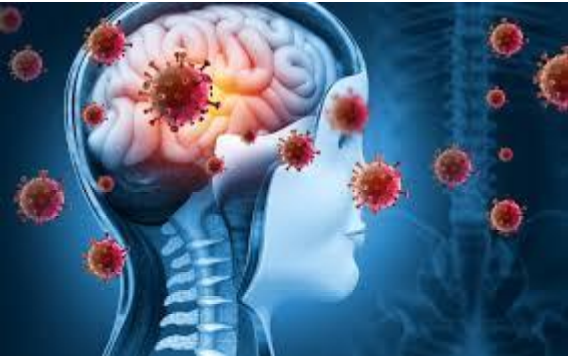
The Meghalaya government has intensified health surveillance and issued a high-priority advisory following the death of two Agniveer trainees in Shillong due to suspected meningococcal bacterial infection. An active epidemiological investigation is underway in the East Khasi Hills district to contain the spread and monitor high-risk clusters within military training centers. Core Summary of the Health Crisis • Outbreak Origin: The suspected cases emerged at the Assam Regimental Centre (ARC) in Shillong, affecting over 30 trainees, leading to two fatalities and the quarantine of the remaining batch. • Pathogen Profile: Meningococcal disease is a severe bacterial infection caused by Neisseria meningitidis, which can lead to meningitis (infection of the brain lining) and septicaemia (blood poisoning). • Epidemiological Investigation: The District Surveillance Unit has initiated \'active contact tracing\' and laboratory reviews to identify the specific strain and prevent community transmission. • Containment Measures: Health protocols include the isolation of suspected cases, administration of chemoprophylaxis to close contacts, and strengthening of the Integrated Disease Surveillance Programme (IDSP) in the region. • Public Advisory: The state has urged citizens to avoid crowded places and maintain respiratory hygiene, as the bacteria spread through respiratory droplets or throat secretions. • Current Status: While the situation is currently confined to a specific military cluster, the government is on high alert to ensure no spillover into the civilian population of East Khasi Hills. Key Definitions • Meningococcal Meningitis: A serious, life-threatening inflammation of the membranes (meninges) surrounding the brain and spinal cord, caused by the bacterium Neisseria meningitidis. • Epidemiological Investigation: The study of the distribution and determinants of health-related states or events in specified populations to control health problems. • Contact Tracing: The process of identifying, assessing, and managing people who have been exposed to a disease to prevent onward transmission. • Chemoprophylaxis: The administration of a medication (usually antibiotics) for the purpose of preventing disease or infection in those who have been exposed. Constitutional and Legal Provisions • Article 21: The Right to Life includes the Right to Health. The state’s active surveillance is a fulfillment of its constitutional obligation to protect the lives of its citizens. • Article 47 (DPSP): Directs the State to regard the improvement of public health as among its primary duties. • Epidemic Diseases Act, 1897: Provides the legal framework for the state to take special measures and prescribe regulations to prevent the outbreak or spread of dangerous epidemic diseases. • The Disaster Management Act, 2005: Can be invoked for large-scale health emergencies to coordinate resources between the Centre and State (as seen during the COVID-19 pandemic). Additional Key Points • Integrated Disease Surveillance Programme (IDSP): This is the decentralized, state-based surveillance system in India that detects and responds to such outbreaks in their early stages. • Transmission Dynamics: The disease is particularly dangerous in \'closed settings\' like dormitories, barracks, and schools where people live in close proximity. • Symptoms to Watch: High fever, headache, stiff neck, nausea, vomiting, and a characteristic dark purple rash are the primary clinical indicators of the disease. • Vaccination: While vaccines exist for certain serogroups (A, C, W, Y, and B), they are not part of India’s Universal Immunisation Programme (UIP) and are usually reserved for high-risk groups or outbreak control. Conclusion: The meningococcal outbreak in Shillong highlights the vulnerability of high-density training environments to rapid bacterial transmission. Through swift quarantine and active surveillance under the IDSP, the Meghalaya government aims to mitigate the risk. However, the incident underscores the need for robust preinduction health screening and vaccination protocols for recruits in the armed forces. UPSC Relevance: • GS Paper II: Issues relating to development and management of Social Sector/Services relating to Health; Governance and the role of State Surveillance units. • GS Paper III: Science and Technology-developments and their applications in everyday life (Microbiology and Public Health). • Prelims: Specifics of the Neisseria meningitidis bacteria, the Integrated Disease Surveillance Programme (IDSP), and the Epidemic Diseases Act.


Address : 506, 3rd EYE THREE (III), Opp. Induben Khakhrawala, Girish Cold Drink Cross Road, CG Road, Navrangpura, Ahmedabad, 380009.
Mobile : 8469231587 / 9586028957
Telephone : 079-40098991
E-mail: dics.upsc@gmail.com
Address: A-306, The Landmark, Urjanagar-1, Opp. Spicy Street, Kudasan – Por Road, Kudasan, Gandhinagar – 382421
Mobile : 9723832444 / 9723932444
E-mail: dics.gnagar@gmail.com
Address: 2nd Floor, 9 Shivali Society, L&T Circle, opp. Ratri Bazar, Karelibaugh, Vadodara, 390018
Mobile : 9725692037 / 9725692054
E-mail: dics.vadodara@gmail.com
Address: 403, Raj Victoria, Opp. Pal Walkway, Near Galaxy Circle, Pal, Surat-394510
Mobile : 8401031583 / 8401031587
E-mail: dics.surat@gmail.com
Address: 303,305 K 158 Complex Above Magson, Sindhubhavan Road Ahmedabad-380059
Mobile : 9974751177 / 8469231587
E-mail: dicssbr@gmail.com
Address: 57/17, 2nd Floor, Old Rajinder Nagar Market, Bada Bazaar Marg, Delhi-60
Mobile : 9104830862 / 9104830865
E-mail: dics.newdelhi@gmail.com