









Ahmedabad
(Head Office)Address : 506, 3rd EYE THREE (III), Opp. Induben Khakhrawala, Girish Cold Drink Cross Road, CG Road, Navrangpura, Ahmedabad, 380009.
Mobile : 8469231587 / 9586028957
Telephone : 079-40098991
E-mail: dics.upsc@gmail.com

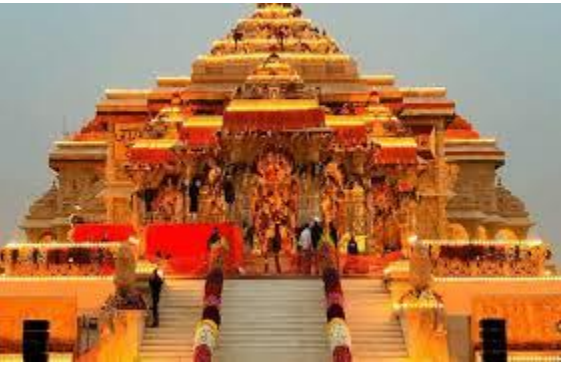
• Ecological-Religious Intersection: India’s sacred geography, including shrines, groves, and pilgrimage routes, often overlaps with ecologically sensitive habitats and Protected Areas (PAs), where traditional belief systems historically acted as a conservation tool. • Pressure of Mass Tourism: The transition from seasonal community rituals to commercialized mass tourism has placed unprecedented strain on forest ecosystems, leading to habitat fragmentation, plastic pollution, and increased human-wildlife conflict. • Legal Precedents and SCNBWL: The Standing Committee of the National Board for Wildlife (SCNBWL) recently deliberated on proposals for expanding religious structures within sanctuaries, highlighting the risk of setting a precedent for diverting forest land for nonforestry religious purposes. • The \'No-Expansion\' Principle: Experts advocate for a strict policy where no new constructions or enlargement of existing structures are permitted within core forest areas, while acknowledging sites that pre-date the notification of the protected area. • Green Pilgrimage Model: Successful pilots in reserves like Kalakad-Mundanthurai suggest that \'Green Pilgrimage\' guidelines—including caps on visitor numbers, night traffic bans, and community-led waste management—can harmonize faith with ecology. • Rights of Forest Dwellers: Any regulation of religious sites must be preceded by the recognition of rights under the Forest Rights Act (FRA), 2006, ensuring that traditional forest-dwelling communities are not marginalized in the name of conservation. Key Definitions • Sacred Groves: Communally protected forest fragments, often harboring rare flora and fauna, preserved due to religious beliefs and dedicated to local deities. • Protected Areas (PAs): Geographic spaces (National Parks, Sanctuaries) recognized and managed through legal means to achieve the long-term conservation of nature. • Standard Operating Procedure (SOP): A set of step-by-step instructions compiled by an organization to help workers carry out complex routine operations, proposed here for managing religious proposals in forests. Constitutional & Legal Provisions • Article 48A (DPSP): Mandates the State to protect and improve the environment and to safeguard the forests and wildlife of the country. • Article 51A(g): Fundamental Duty of every citizen to protect and improve the natural environment including forests, lakes, rivers, and wildlife. • Wildlife (Protection) Act, 1972: Provides the legal framework for the protection of various species of wild animals and plants and for the management of their habitats. • Forest (Conservation) Act, 1980: Prohibits the use of forest land for non-forest purposes (including religious construction) without prior approval from the Central Government. • The Forest Rights Act (FRA), 2006: Recognizes the individual and community forest rights of Scheduled Tribes and Other Traditional Forest Dwellers (OTFD) who have been residing in such forests for generations. Additional Key Points • Impact of Linear Infrastructure: Roads built to facilitate pilgrimage often lead to high \'roadkill\' rates and disturb the \'corridor\' connectivity essential for large mammals like tigers and elephants. • Stakeholder Governance: Effective management requires a \'multi-stakeholder mechanism\' involving Forest Departments, Temple Trusts, and local Gram Sabhas to ensure compliance with environmental norms. • Biotic Pressure: Unregulated waste and water use by millions of pilgrims can lead to the contamination of forest streams, which are primary water sources for wildlife. Conclusion The challenge of managing religious sites within India’s forests is a delicate balancing act between constitutional secularism, cultural rights, and ecological integrity. While a blanket ban is culturally and legally untenable, the \'Green Pilgrimage\' model offers a sustainable middle path. By enforcing a \'zero- expansion\' rule and integrating local communities into governance, India can preserve its sacred landscapes without sacrificing its biodiversity. UPSC Relevance • GS Paper I: Indian Culture (Sacred Groves and Pilgrimage); Geography (Ecologically Sensitive Zones). • GS Paper II: Government policies and interventions for development in various sectors; Issues arising out of their design and implementation. • GS Paper III: Conservation, environmental pollution, and degradation; Environmental Impact Assessment (EIA); Disaster Management. • Mains Perspective: \'Can religion be a tool for conservation in the 21st century?\' or \'The conflict between developmental/religious needs and the Wildlife Protection Act.\'


Address : 506, 3rd EYE THREE (III), Opp. Induben Khakhrawala, Girish Cold Drink Cross Road, CG Road, Navrangpura, Ahmedabad, 380009.
Mobile : 8469231587 / 9586028957
Telephone : 079-40098991
E-mail: dics.upsc@gmail.com
Address: A-306, The Landmark, Urjanagar-1, Opp. Spicy Street, Kudasan – Por Road, Kudasan, Gandhinagar – 382421
Mobile : 9723832444 / 9723932444
E-mail: dics.gnagar@gmail.com
Address: 2nd Floor, 9 Shivali Society, L&T Circle, opp. Ratri Bazar, Karelibaugh, Vadodara, 390018
Mobile : 9725692037 / 9725692054
E-mail: dics.vadodara@gmail.com
Address: 403, Raj Victoria, Opp. Pal Walkway, Near Galaxy Circle, Pal, Surat-394510
Mobile : 8401031583 / 8401031587
E-mail: dics.surat@gmail.com
Address: 303,305 K 158 Complex Above Magson, Sindhubhavan Road Ahmedabad-380059
Mobile : 9974751177 / 8469231587
E-mail: dicssbr@gmail.com
Address: 57/17, 2nd Floor, Old Rajinder Nagar Market, Bada Bazaar Marg, Delhi-60
Mobile : 9104830862 / 9104830865
E-mail: dics.newdelhi@gmail.com