

Ahmedabad
(Head Office)Address : 506, 3rd EYE THREE (III), Opp. Induben Khakhrawala, Girish Cold Drink Cross Road, CG Road, Navrangpura, Ahmedabad, 380009.
Mobile : 8469231587 / 9586028957
E-mail: dics.upsc@gmail.com


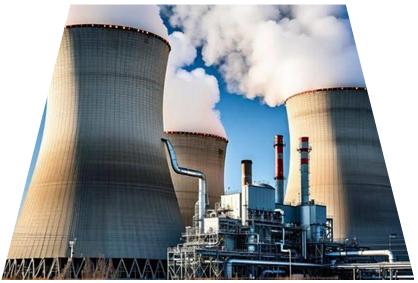
Following the recent U.S. intervention in Venezuela and the capture of President Nicolás Maduro in early 2026, the global energy landscape is facing a potential re-entry of Venezuelan oil into the mainstream market. While a new India-U.S. trade agreement suggests a shift toward American and potentially Venezuelan crude, Indianrefiners remain cautious due to significant technical, logistical, and political hurdles associated with the South American nation\'s \'heavy\' oil. • Technical Compatibility Barriers: Venezuelan crude is characterized by high viscosity (resistance to flow) and a high acid number, which can corrode refinery infrastructure like pipes, valves, and pressure vessels. It is also rich in metals and nitrogen, requiring complex secondary processing. • Refining Constraints: Most Indian public sector refineries are not optimized for \'bottom-heavy\' Venezuelan grades. To process it, the crude must be co-blended with lighter varieties at a ratio of 10- 15%. Only complex refineries, such as Reliance\'s Jamnagar, can currently handle heavy and extra-heavy crude at scale. • Economic Viability and Discounts: According to SBI Research (February 2026), India could save up to $3 billion annually by switching to Venezuelan oil, provided it is offered at a discount of $10-12 per barrel to offset the high logistics and handling costs. • Logistical Hurdles: Venezuela is geographically distant, with shipping routes roughly twice as long as those from Russia and five times those from the Middle East. This increases freight rates, insurance costs, and delivery times, challenging the \'just-in-time\' supply chains of Indian firms. • Political and Strategic Risk: Despite U.S. assurances, the unilateral \'takeover\' of Venezuelan assets has been met with global condemnation. This creates a \'pall of legal uncertainty\' for Indian investments and long-term contracts, especially if sanctions are inconsistently applied or contested internationally. • Historical Context and Shift: Venezuela’s share in India\'s crude basket dropped from 12% in 2015 to nearly zero during previous sanction regimes. While imports briefly revived in 2023-24, they currently represent only 1-2% of the total basket as India prioritizes stability and diversified sourcing. Key Definitions & Concepts • Viscosity: A measure of a fluid\'s resistance to flow. High-viscosity oil is \'sticky\' and requires more energy to transport through pipelines. • Acid Number: An indicator of the quantity of acidic components in the oil; a high number signifies a greater risk of corrosion to refinery equipment. • Bottom-Heavy Crude: Crude oil that yields a higher percentage of heavier products like bitumen and fuel oil rather than high-value petrol or diesel. • Co-blending: The process of mixing heavy, low-quality crude with lighter, high-quality crude to create a feedstock that existing refinery units can process. Constitutional & Legal Context • Article 73: Extends the executive power of the Union to international treaties and agreements. The India-U.S. trade agreement of February 2026 falls under this mandate. • Energy Security Policy: India’s quest for strategic autonomy involves diversifying its \'Crude Oil Basket\' to minimize the impact of regional conflicts or sanctions. • UNSC and Sovereignty: India traditionally follows UN-mandated sanctions rather than unilateral ones. The current U.S. control over Venezuelan oil raises questions under international law regarding state sovereignty and resource control. Refinery Capacity & Complexity

Conclusion The prospect of Venezuelan oil flowing into Indian refineries is an economic opportunity clouded by technical and geopolitical friction. While private giants like Reliance are well-equipped to leverage discounted heavy crude, the state-run refiners face an uphill task in recalibrating their infrastructure. For India, the decision to import from Venezuela remains a \'commercial merit\' choice rather than a political obligation, as it seeks to balance its burgeoning energy needs with the volatility of a U.S.-led transition in Caracas. UPSC Relevance • GS Paper II: Bilateral, regional and global groupings and agreements involving India; Effect of policies and politics of developed and developing countries on India’s interests. • GS Paper III: Energy security; Changes in industrial policy and their effects on industrial growth; Infrastructure (Energy sector). • Economic Geography: Distribution of key natural resources (Oil) across the world; Factors responsible for the location of refineries.


Address : 506, 3rd EYE THREE (III), Opp. Induben Khakhrawala, Girish Cold Drink Cross Road, CG Road, Navrangpura, Ahmedabad, 380009.
Mobile : 8469231587 / 9586028957
E-mail: dics.upsc@gmail.com
Address: A-306, The Landmark, Urjanagar-1, Opp. Spicy Street, Kudasan – Por Road, Kudasan, Gandhinagar – 382421
Mobile : 9723832444 / 9723932444
E-mail: dics.gnagar@gmail.com
Address: Tithi Commercial Complex, 401/402 Productivity Road, Opp. Productivity House, Alkapuri, Vadodara, Gujarat – 390007
Mobile : 9725692037 / 9725692054
E-mail: dics.vadodara@gmail.com
Address: 403, Raj Victoria, Opp. Pal Walkway, Near Galaxy Circle, Pal, Surat-394510
Mobile : 8401031583 / 8401031587
E-mail: dics.surat@gmail.com
Address: 303,305 K 158 Complex Above Magson, Sindhubhavan Road Ahmedabad-380059
Mobile : 9974751177 / 8469231587
E-mail: dicssbr@gmail.com
Address: 57/17, 2nd Floor, Old Rajinder Nagar Market, Bada Bazaar Marg, Delhi-60
Mobile : 9104830862 / 9104830865
E-mail: dics.newdelhi@gmail.com