


Ahmedabad
(Head Office)Address : 506, 3rd EYE THREE (III), Opp. Induben Khakhrawala, Girish Cold Drink Cross Road, CG Road, Navrangpura, Ahmedabad, 380009.
Mobile : 8469231587 / 9586028957
Telephone : 079-40098991
E-mail: dics.upsc@gmail.com

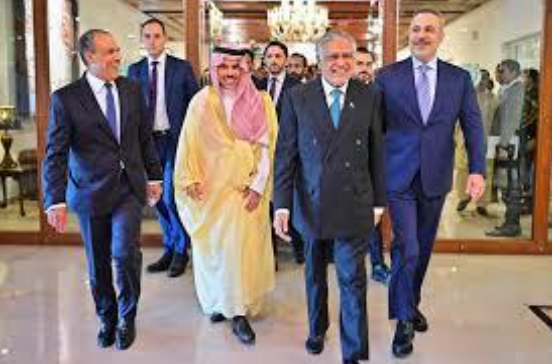
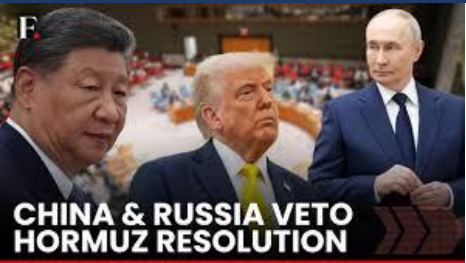
Key Summary Points • From Balancing to Decisive Engagement: India has transitioned from its traditional \'balancing act\' to a \'hard diplomacy\' approach, prioritizing bilateral interests and strategic convergence over the \'pleaseall\' mantras of the past. • Economic and Diaspora Pillars: The Gulf Cooperation Council (GCC) has emerged as India’s largest socio-economic partner, with bilateral trade exceeding $160 billion and a 10 million-strong diaspora providing significant inward remittances and soft power. • De-hyphenation and Security Ties: A major achievement of the past decade is the successful dehyphenation of India’s relations with Pakistan in the region, alongside growing defense cooperation and India’s recognition as a \'status quo\' power. • Response to Regional Turmoil: In the wake of recent Iran-Israel hostilities and threats to the Strait of Hormuz, India has prioritized the stability of Gulf monarchies, acknowledging their search for security paradigms beyond the traditional \'Pax Americana.\' • The \'GCC+1\' Opportunity: As regional instability shakes the GCC’s image as an \'oasis of stability,\' India has a historic opportunity to position itself as a viable alternative hub for capital and talent through proactive eco-diplomacy. • Strategic Autonomy: India’s refusal to cite third-party dictates or \'balance\' views on sensitive issues like the two-state solution or Iran’s nuclear program reflects growing confidence as a credible, autonomous global power. Constitutional & Legal Provisions • Article 51 (DPSP): Mandates that the State shall endeavor to promote international peace and security, maintain just and honorable relations between nations, and foster respect for international law. • Article 73: Extends the executive power of the Union to all matters with respect to which Parliament has the power to make laws, including \'Foreign Affairs\' (Entry 10, Union List, Seventh Schedule). • The Diplomatic Relations (Vienna Convention) Act, 1972: Provides the legal framework for giving effect to the Vienna Convention on Diplomatic Relations, governing India’s overseas missions. Key Definitions • Strategic Autonomy: The ability of a state to pursue its own national interests and adopt its own preferred foreign policy without being constrained by other states. • De-hyphenation: A diplomatic strategy where India deals with two rival countries (e.g., Israel and Palestine, or Iran and Saudi Arabia) on their own merits, independent of its relationship with the other. • Status Quo Power: A nation that supports the existing international order and seeks stability rather than revolutionary change in the geopolitical landscape. • Pax Americana: A state of relative international peace regarded as overseen by the US; currently under strain in West Asia due to shifting alliances. Additional Strategic Keypoints • The Iran Factor: Despite the current tilt toward the GCC and Israel, Iran remains a critical partner for India for energy security, market access, and as a strategic counterweight bordering Afghanistan and Pakistan. • The Saudi-UAE Rift: India must navigate the growing divergence between major Gulf powers to ensure bilateral CEPAs (Comprehensive Economic Partnership Agreements) remain effective. • Shift in Security Compacts: The \'Oil-for-Security\' deal between the US and Arab regimes is fraying, opening a window for India to offer defense partnerships based on mutual stability rather than interventionism. Conclusion India’s West Asia \'reset\' is a pragmatic response to tectonic geopolitical shifts. While the policy has faced domestic criticism for perceived untimeliness or lack of traditional \'balance,\' it reflects a mature realism centered on national interest. To remain effective, India must maintain the agility to recalibrate— ensuring that while it builds deep ties with Israel and the GCC, it does not permanently alienate Iran or abandon its humanitarian role in the region. UPSC Relevance • GS Paper II: India and its neighborhood-relations; Bilateral, regional and global groupings and agreements involving India and/or affecting India’s interests; Effect of policies and politics of developed and developing countries on India’s interests. • GS Paper III: Energy Security; Security challenges and their management in border areas (Strait of Hormuz/Maritime security). • Prelims: GCC member states, Map-based questions on West Asia, CEPA details, and Article 51 of the Constitution.


Address : 506, 3rd EYE THREE (III), Opp. Induben Khakhrawala, Girish Cold Drink Cross Road, CG Road, Navrangpura, Ahmedabad, 380009.
Mobile : 8469231587 / 9586028957
Telephone : 079-40098991
E-mail: dics.upsc@gmail.com
Address: A-306, The Landmark, Urjanagar-1, Opp. Spicy Street, Kudasan – Por Road, Kudasan, Gandhinagar – 382421
Mobile : 9723832444 / 9723932444
E-mail: dics.gnagar@gmail.com
Address: 2nd Floor, 9 Shivali Society, L&T Circle, opp. Ratri Bazar, Karelibaugh, Vadodara, 390018
Mobile : 9725692037 / 9725692054
E-mail: dics.vadodara@gmail.com
Address: 403, Raj Victoria, Opp. Pal Walkway, Near Galaxy Circle, Pal, Surat-394510
Mobile : 8401031583 / 8401031587
E-mail: dics.surat@gmail.com
Address: 303,305 K 158 Complex Above Magson, Sindhubhavan Road Ahmedabad-380059
Mobile : 9974751177 / 8469231587
E-mail: dicssbr@gmail.com
Address: 57/17, 2nd Floor, Old Rajinder Nagar Market, Bada Bazaar Marg, Delhi-60
Mobile : 9104830862 / 9104830865
E-mail: dics.newdelhi@gmail.com