







Ahmedabad
(Head Office)Address : 506, 3rd EYE THREE (III), Opp. Induben Khakhrawala, Girish Cold Drink Cross Road, CG Road, Navrangpura, Ahmedabad, 380009.
Mobile : 8469231587 / 9586028957
Telephone : 079-40098991
E-mail: dics.upsc@gmail.com

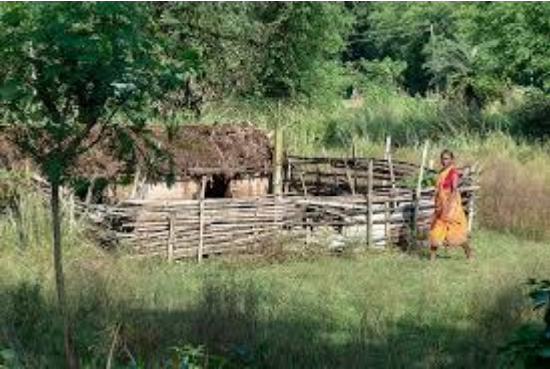
The Ministry of Tribal Affairs (MoTA) is restructuring its administrative framework for tribal welfare by transitioning from specialized Forest Rights Act (FRA) Cells to integrated \'One-Stop\' Project Monitoring Units (PMUs). This shift aims to consolidate various tribal policies under a single coordinating body to reduce operational costs and enhance administrative efficiency across States and Union Territories. Core Summary of the Administrative Restructuring • From Specialized to Integrated: The existing FRA Cells, originally sanctioned under the DAJGUA programme to focus solely on the Forest Rights Act, 2006, are being replaced by Project Monitoring Units (PMUs) with an expanded mandate. • Structural Composition: Each State/UT PMU will now consist of a four-member expert team covering FRA support, livelihood support, Information Technology (IT)/MIS expertise, and administrative leadership. • Ground-Level Coordination: At the district level, the new structure mandates two FRA experts and one MIS expert to ensure streamlined coordination and data management for all tribal-related policies. • Rationale for Change: The Ministry cited \'increasing costs\' and \'communication gaps\' caused by maintaining separate cells for individual policies, seeking a more unified approach to policy execution. • Digitization and Records: A primary focus of these units remains the expedited processing of forest rights claims and the digitization of existing land titles to ensure a transparent record-keeping system. • State-Level Implementation: While some states like Odisha have already begun closing subdivisionlevel FRA cells, others like Chhattisgarh are exploring ways to absorb existing cell functions into the broader PMU ambit. Key Definitions • Forest Rights Act (FRA), 2006: Formally known as The Scheduled Tribes and Other Traditional Forest Dwellers (Recognition of Forest Rights) Act, it recognizes the rights of forest-dwelling communities to land and other resources. • Project Monitoring Unit (PMU): A centralized unit responsible for the oversight, coordination, and technical support of various government projects within a specific jurisdiction. • MIS (Management Information System): An information system used for decision-making, and for the coordination, control, analysis, and visualization of information in an organization. Constitutional and Legal Provisions • Article 244(1): Relates to the administration of Scheduled Areas and Tribal Areas. The revamp of implementation cells directly impacts how these areas are governed and how rights are dispersed. • Fifth and Sixth Schedules: These provide for the administration of tribal-dominated areas in various states; the PMUs will be the primary vehicles for executing Central tribal policies in these regions. • The Forest Rights Act, 2006: The parent legislation that these cells/PMUs are designed to implement. It aims to undo \'historical injustice\' by recognizing individual and community forest rights. • PESA Act, 1996: The Provisions of the Panchayats (Extension to Scheduled Areas) Act, which empowers Gram Sabhas to manage community forest resources, a function the PMUs will need to support. Additional Key Points • DAJGUA Programme: The initial funding vehicle for FRA cells, which focused on providing human resources to states to clear the backlog of forest rights claims. • The \'One-Stop\' Concept: By including \'livelihood support\' in the PMU mandate, the government is linking land rights (FRA) with economic development (livelihood), moving beyond mere legal recognition. • Administrative Friction: The transition has caused temporary confusion at the state level regarding the status of existing staff and the potential dilution of focus on specialized forest rights claims. • Temporary Nature of Cells: The Ministry has clarified that the original FRA cells were temporary interventions, whereas PMUs represent a more permanent, integrated governance structure. Conclusion: The shift from FRA Cells to Project Monitoring Units reflects a move toward \'Minimum Government, Maximum Governance\' in tribal affairs. While the consolidation aims to improve synergy between land rights and livelihood schemes, the success of this revamp will depend on ensuring that the core objective of the Forest Rights Act—the timely settlement of claims—is not sidelined by broader administrative duties. UPSC Relevance: • GS Paper II: Welfare schemes for vulnerable sections of the population; Governance, Transparency, and Accountability; Constitutional bodies and their mandate. • GS Paper III: Land Reforms in India; Environment and Biodiversity (Community forest management); Issues related to Internal Security (Naxalism and its link to tribal land rights). • Prelims: Specifics of the Forest Rights Act, 2006, the role of the Ministry of Tribal Affairs, and the distinction between individual and community forest rights.


Address : 506, 3rd EYE THREE (III), Opp. Induben Khakhrawala, Girish Cold Drink Cross Road, CG Road, Navrangpura, Ahmedabad, 380009.
Mobile : 8469231587 / 9586028957
Telephone : 079-40098991
E-mail: dics.upsc@gmail.com
Address: A-306, The Landmark, Urjanagar-1, Opp. Spicy Street, Kudasan – Por Road, Kudasan, Gandhinagar – 382421
Mobile : 9723832444 / 9723932444
E-mail: dics.gnagar@gmail.com
Address: 2nd Floor, 9 Shivali Society, L&T Circle, opp. Ratri Bazar, Karelibaugh, Vadodara, 390018
Mobile : 9725692037 / 9725692054
E-mail: dics.vadodara@gmail.com
Address: 403, Raj Victoria, Opp. Pal Walkway, Near Galaxy Circle, Pal, Surat-394510
Mobile : 8401031583 / 8401031587
E-mail: dics.surat@gmail.com
Address: 303,305 K 158 Complex Above Magson, Sindhubhavan Road Ahmedabad-380059
Mobile : 9974751177 / 8469231587
E-mail: dicssbr@gmail.com
Address: 57/17, 2nd Floor, Old Rajinder Nagar Market, Bada Bazaar Marg, Delhi-60
Mobile : 9104830862 / 9104830865
E-mail: dics.newdelhi@gmail.com