




Ahmedabad
(Head Office)Address : 506, 3rd EYE THREE (III), Opp. Induben Khakhrawala, Girish Cold Drink Cross Road, CG Road, Navrangpura, Ahmedabad, 380009.
Mobile : 8469231587 / 9586028957
Telephone : 079-40098991
E-mail: dics.upsc@gmail.com

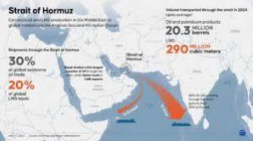
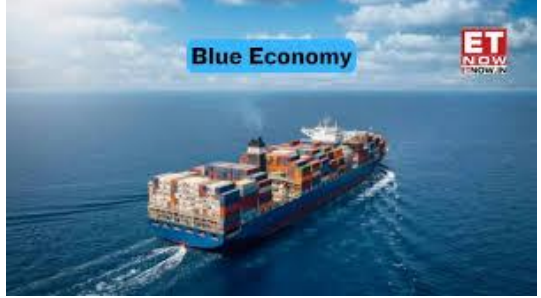
• Breakthrough Movement: The \'Shivalik\', an Indian-flagged LPG carrier owned by the Shipping Corporation of India (SCI), successfully crossed the Strait of Hormuz on Friday night, marking a critical movement amidst a regional blockade. • Strategic Cargo Volume: The Shivalik carries over 54,000 tonnes of LPG, a volume equivalent to nearly one full day of India\'s total LPG imports, highlighting the vessel\'s importance to national energy security. • Stranded Assets: Despite the Shivalik\'s transit, 23 Indian-flagged ships remain stranded west of the Strait (inside the Persian Gulf) due to the conflict initiated on February 28 and the closure threats by the Iranian leadership. • Navigational Hazards: Ships are increasingly resorting to \'digital darkness\' (switching off Automatic Identification Systems - AIS) and manual navigation to bypass GPS spoofing and jamming, which are being deployed as electronic warfare tools in the region. • Energy Security Vulnerability: India’s high dependence on the Persian Gulf for energy is underscored by the presence of 23,000 Indian nationals working on merchant ships and offshore vessels in the region, with four sailors already killed in recent attacks. • Diplomatic Efforts: Following discussions between the Indian Prime Minister and the Iranian President, industry leaders are seeking government advisories, though the Ministry of External Affairs maintains a cautious stance regarding the reopening of the Strait. Key Definitions • Strait of Hormuz: A narrow, strategically vital waterway between the Persian Gulf and the Gulf of Oman; it is the world\'s most important oil chokepoint through which approximately one-fifth of global oil consumption passes. • Automatic Identification System (AIS): An automated tracking system used on ships for identifying and locating vessels by electronically exchanging data with other nearby ships and coastal stations. • Digital Darkness/Dark Transit: The practice of a vessel turning off its AIS transponder to avoid detection by hostile actors, though this also increases the risk of collisions at sea. • GPS Spoofing: A form of electronic warfare where false satellite signals are sent to a receiver to provide incorrect location data, potentially leading a ship off course into hostile waters. Constitutional & Legal Provisions • UNCLOS, 1982: The United Nations Convention on the Law of the Sea provides the legal framework for \'Transit Passage\' through straits used for international navigation, which states cannot legally suspend even during regional tensions. • Article 51: Directive Principle of State Policy (DPSP) that promotes international peace and security and the maintenance of just and honourable relations between nations. • Merchant Shipping Act, 1958: The primary Indian legislation that governs the registration of Indian ships and ensures the safety and welfare of seafarers under the Indian flag. • Directorate General of Shipping (DGS): The statutory body under the Ministry of Ports, Shipping and Waterways responsible for maritime administration and the safety of Indian ships globally. Additional Key Points for Examination • Chokepoint Geopolitics: The \'Shadow Fleet\' (unregulated vessels) continues to operate in the region, while mainstream fleets face insurance hikes and physical threats, impacting global supply chain inflation. • Energy Diversification: The crisis reinforces the need for India to accelerate its \'Integrated Energy Policy,\' reducing reliance on the Persian Gulf by exploring the Northern Sea Route and African energy markets. • Indian Navy’s Role: While the Navy denied escorting the Shivalik, \'Operation Sankalp\' remains the standing naval mission to ensure the safety of Indian merchant vessels in the Gulf region. Conclusion The successful transit of the Shivalik, while a positive tactical sign, does not mitigate the broader strategic risk posed by the closure of the Strait of Hormuz. India’s energy security remains precariously balanced on a \'maritime tightrope,\' where electronic warfare and geopolitical maneuvers threaten the steady flow of LPG and crude oil. The situation necessitates a multi-pronged approach involving high-level diplomacy with Iran, enhanced naval presence, and the adoption of resilient navigational technologies by the merchant navy. UPSC Relevance • GS Paper II: India and its neighborhood- relations; Effect of policies and politics of developed and developing countries on India’s interests; Indian Diaspora (23,000 seafarers). • GS Paper III: Infrastructure: Energy, Ports, Shipping; Security challenges and their management in border areas; Role of external state and non-state actors in creating challenges to internal security. • Prelims Link: Map-based locations (Strait of Hormuz, Persian Gulf, Gulf of Oman, Ras Laffan); Difference between Territorial Waters and Exclusive Economic Zone (EEZ); Functions of the Shipping Corporation of India.


Address : 506, 3rd EYE THREE (III), Opp. Induben Khakhrawala, Girish Cold Drink Cross Road, CG Road, Navrangpura, Ahmedabad, 380009.
Mobile : 8469231587 / 9586028957
Telephone : 079-40098991
E-mail: dics.upsc@gmail.com
Address: A-306, The Landmark, Urjanagar-1, Opp. Spicy Street, Kudasan – Por Road, Kudasan, Gandhinagar – 382421
Mobile : 9723832444 / 9723932444
E-mail: dics.gnagar@gmail.com
Address: 2nd Floor, 9 Shivali Society, L&T Circle, opp. Ratri Bazar, Karelibaugh, Vadodara, 390018
Mobile : 9725692037 / 9725692054
E-mail: dics.vadodara@gmail.com
Address: 403, Raj Victoria, Opp. Pal Walkway, Near Galaxy Circle, Pal, Surat-394510
Mobile : 8401031583 / 8401031587
E-mail: dics.surat@gmail.com
Address: 303,305 K 158 Complex Above Magson, Sindhubhavan Road Ahmedabad-380059
Mobile : 9974751177 / 8469231587
E-mail: dicssbr@gmail.com
Address: 57/17, 2nd Floor, Old Rajinder Nagar Market, Bada Bazaar Marg, Delhi-60
Mobile : 9104830862 / 9104830865
E-mail: dics.newdelhi@gmail.com