





Ahmedabad
(Head Office)Address : 506, 3rd EYE THREE (III), Opp. Induben Khakhrawala, Girish Cold Drink Cross Road, CG Road, Navrangpura, Ahmedabad, 380009.
Mobile : 8469231587 / 9586028957
Telephone : 079-40098991
E-mail: dics.upsc@gmail.com

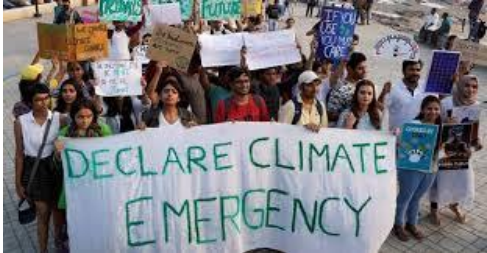
Context: While climate change is often debated through the lens of ecology and economics, its manifestation as a broad-spectrum medical crisis is becoming a present reality in India. From shifting vector-borne disease windows to heat-induced organ failure, changing planetary patterns are intensifying known illnesses and creating new healthcare vulnerabilities. Multidimensional Health Risks of Climate Change • Waterborne and Scarcity Diseases: Increasingly frequent urban waterlogging in cities like Mumbai creates breeding grounds for cholera, typhoid, and leptospirosis by overwhelming sanitation infrastructure. Conversely, drought-stricken regions face a surge in diarrheal diseases and chronic dehydration due to reliance on unsafe water sources. • Expanding Vector-Borne Windows: Rising temperatures have extended the transmission cycle of diseases like Dengue and Malaria. In Delhi-NCR, the Dengue peak has shifted from September to November, while Malaria is now being reported in historically cooler regions like Himachal Pradesh due to the widening geographic reach of mosquitoes. • The Feedback Loop of Air Pollution: Increased reliance on air conditioning during intense heatwaves drives higher energy consumption and PM2.5 emissions. These microscopic pollutants penetrate the lungs and bloodstream, causing systemic inflammation and exacerbating Chronic Obstructive Pulmonary Disease (COPD), hypertension, and kidney impairment. • Cardiovascular and Heat Stress: Elevated night-time temperatures in urban heat islands like Vidarbha and Delhi-NCR eliminate the body\'s critical recovery window. This forces the cardiovascular system to overwork for thermoregulation, disproportionately affecting manual laborers and leading to a rise in heat-stroke-related fatalities. • Maternal and Neonatal Vulnerability: Exposure to extreme heat and pollutants is increasingly linked to adverse birth outcomes, including preterm births and low birth weight. Furthermore, heat stress in livestock leads to declining milk production, directly compromising infant and child nutrition. • Nutritional Insecurity: Unseasonal rains and extreme weather disrupt agricultural cycles, leading to micronutrient deficiencies. The declining nutritional quality of staple crops under high CO2 conditions creates a \'hidden hunger\' that weakens community immunity against infectious diseases. Key Definitions • PM2.5: Fine particulate matter with a diameter of less than 2.5 micrometers. These particles are small enough to enter the alveolar region of the lungs and the vascular system, causing multi-organ damage. • Vector-Borne Diseases: Illnesses caused by pathogens and parasites in human populations, transmitted by vectors such as mosquitoes, ticks, and fleas. • Urban Heat Island (UHI): A phenomenon where urban areas experience significantly higher temperatures than surrounding rural areas due to human activities, concrete surfaces, and lack of vegetation. Constitutional and Legal Provisions • Article 21: The Right to Life includes the right to a healthy environment and healthcare. The medical crisis triggered by climate change is a direct challenge to this fundamental right. • Article 47 (DPSP): Mandates the State to regard the raising of the level of nutrition and the standard of living of its people and the improvement of public health as among its primary duties. • Article 48A: Directs the State to protect and improve the environment, which is now intrinsically linked to preserving public health. • National Action Plan on Climate Change (NAPCC): Specifically the \'National Mission on Strategic Knowledge for Climate Change\' and the \'National Health Mission,\' which must now integrate climateresilient healthcare infrastructure. Conclusion Treating climate change as a purely environmental issue overlooks the profound human cost. India must transition its healthcare strategy from reactive treatment to climate-resilient preventive care. Recognizing this as a \'Medical Emergency\' is essential for mobilizing the urgency required to upgrade urban sanitation, secure food systems, and protect the most vulnerable workers from an escalating biological and thermal crisis. UPSC Relevance • GS Paper III (Environment & Disaster Management): Impact of climate change on health; Environmental pollution and degradation; Disaster-resilient infrastructure. • GS Paper II (Social Justice): Issues relating to development and management of Social Sector/Services relating to Health and Nutrition. • GS Paper I (Geography): Changes in critical geographical features and their effects on flora and fauna (vector migration).


Address : 506, 3rd EYE THREE (III), Opp. Induben Khakhrawala, Girish Cold Drink Cross Road, CG Road, Navrangpura, Ahmedabad, 380009.
Mobile : 8469231587 / 9586028957
Telephone : 079-40098991
E-mail: dics.upsc@gmail.com
Address: A-306, The Landmark, Urjanagar-1, Opp. Spicy Street, Kudasan – Por Road, Kudasan, Gandhinagar – 382421
Mobile : 9723832444 / 9723932444
E-mail: dics.gnagar@gmail.com
Address: 2nd Floor, 9 Shivali Society, L&T Circle, opp. Ratri Bazar, Karelibaugh, Vadodara, 390018
Mobile : 9725692037 / 9725692054
E-mail: dics.vadodara@gmail.com
Address: 403, Raj Victoria, Opp. Pal Walkway, Near Galaxy Circle, Pal, Surat-394510
Mobile : 8401031583 / 8401031587
E-mail: dics.surat@gmail.com
Address: 303,305 K 158 Complex Above Magson, Sindhubhavan Road Ahmedabad-380059
Mobile : 9974751177 / 8469231587
E-mail: dicssbr@gmail.com
Address: 57/17, 2nd Floor, Old Rajinder Nagar Market, Bada Bazaar Marg, Delhi-60
Mobile : 9104830862 / 9104830865
E-mail: dics.newdelhi@gmail.com