




Ahmedabad
(Head Office)Address : 506, 3rd EYE THREE (III), Opp. Induben Khakhrawala, Girish Cold Drink Cross Road, CG Road, Navrangpura, Ahmedabad, 380009.
Mobile : 8469231587 / 9586028957
Telephone : 079-40098991
E-mail: dics.upsc@gmail.com

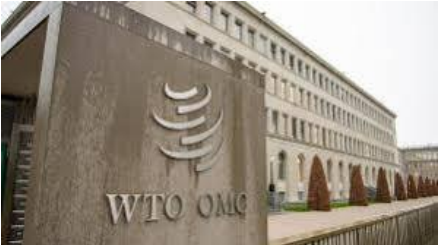
• Ministerial Deadlock and the \'Yaoundé Package\': The 14th Ministerial Conference (MC14) in Cameroon (March 2026) concluded without a consensus ministerial declaration. To avoid a total collapse, the WTO Director General introduced a \'Yaoundé Package\' of draft decisions, deferring final negotiations to the General Council in Geneva. • Lapse of the E-commerce Moratorium: For the first time since 1998, members failed to extend the moratorium on customs duties for electronic transmissions. The lapse on March 31, 2026, technically allows countries to impose tariffs on digital trade, though 66 members signed a separate E-Commerce Agreement (ECA) to maintain duty-free flows among themselves. • TRIPS and Non-Violation Complaints: The longstanding moratorium barring \'non-violation\' complaints under the TRIPS Agreement also collapsed. This opens the door for developed nations to challenge the public health laws of developing countries, arguing that such laws nullify expected IP benefits even if no specific WTO rule is broken. • Standoff over Plurilateral Agreements: India led the opposition against incorporating the Investment Facilitation for Development (IFD) agreement into the WTO rulebook. India’s stance highlights the lack of legal safeguards for \'plurilateral\' deals (supported by some, not all members) and the need for these agreements to be inclusive rather than exclusive. • Stalled Dispute Settlement Reforms: The conference failed to provide a roadmap for reviving the WTO’s Appellate Body, which has been non-functional due to US blocking of member appointments. This paralysis undermines the WTO’s role as an impartial judge in trade disputes, allowing \'might is right\' unilateralism to resurface. • Rise of Coercive Unilateralism: The failure of MC14 exacerbates the trend of major powers, particularly the US, bypassing multilateral rules. This mirrors the 1970s era of \'Section 301\' actions, where nations take unilateral trade measures against perceived unfair practices, threatening the MostFavoured Nation (MFN) principle. Key Definitions • Most-Favoured Nation (MFN): A foundational WTO principle requiring a country to provide any trade concession offered to one member to all other WTO members equally. • Plurilateral Agreement: An agreement between a subset of WTO members that is not binding on the entire 166-member body. • Non-Violation Complaint: A claim that a country\'s legal action has \'nullified or impaired\' a benefit another member expected to receive, even if the action does not technically violate a WTO agreement. Constitutional and Legal Provisions • Article 253 of the Constitution: Empowers Parliament to make laws for the whole or any part of India for implementing any treaty, agreement, or convention with any other country or at international conferences (like the WTO). • Marrakesh Agreement (1994): The treaty that established the WTO; Annex 4 specifically deals with Plurilateral Trade Agreements, which require consensus to be added to the WTO acquis. • Special and Differential Treatment (S&DT): WTO provisions that give developing countries special rights, such as longer timeframes to implement agreements and technical assistance. Additional Key Points • Digital Trade Bifurcation: The end of the e-commerce moratorium creates two legal frameworks: the standard WTO rules (allowing tariffs) and the new ECA (prohibiting them), complicating global digital business compliance. • Investment Facilitation for Development (IFD): Supported by 129 countries, this aims to simplify investment procedures but remains outside the WTO legal framework due to the \'consensus\' requirement for Annex 4. • US Trade Act of 1974 (Section 301): A US law that allows for unilateral retaliation against trade partners; its resurgence is seen as a sign of declining faith in multilateral adjudication. Conclusion The MC14 will be remembered as the moment the \'consensus-based\' model of the WTO faced its most severe fracture. The lapse of moratoriums on e-commerce and TRIPS complaints marks a shift toward a more litigious and fragmented trade environment. For India, the challenge lies in balancing its role as a defender of multilateralism and \'policy space\' for developing nations while ensuring that the rise of plurilateralism does not leave it isolated from new global trade rules. UPSC Relevance • GS Paper II: Bilateral, regional and global groupings and agreements involving India and/or affecting India’s interests; Important International institutions (WTO). • GS Paper III: Issues relating to intellectual property rights; Effects of liberalization on the economy; Changes in industrial policy.


Address : 506, 3rd EYE THREE (III), Opp. Induben Khakhrawala, Girish Cold Drink Cross Road, CG Road, Navrangpura, Ahmedabad, 380009.
Mobile : 8469231587 / 9586028957
Telephone : 079-40098991
E-mail: dics.upsc@gmail.com
Address: A-306, The Landmark, Urjanagar-1, Opp. Spicy Street, Kudasan – Por Road, Kudasan, Gandhinagar – 382421
Mobile : 9723832444 / 9723932444
E-mail: dics.gnagar@gmail.com
Address: 2nd Floor, 9 Shivali Society, L&T Circle, opp. Ratri Bazar, Karelibaugh, Vadodara, 390018
Mobile : 9725692037 / 9725692054
E-mail: dics.vadodara@gmail.com
Address: 403, Raj Victoria, Opp. Pal Walkway, Near Galaxy Circle, Pal, Surat-394510
Mobile : 8401031583 / 8401031587
E-mail: dics.surat@gmail.com
Address: 303,305 K 158 Complex Above Magson, Sindhubhavan Road Ahmedabad-380059
Mobile : 9974751177 / 8469231587
E-mail: dicssbr@gmail.com
Address: 57/17, 2nd Floor, Old Rajinder Nagar Market, Bada Bazaar Marg, Delhi-60
Mobile : 9104830862 / 9104830865
E-mail: dics.newdelhi@gmail.com