




Ahmedabad
(Head Office)Address : 506, 3rd EYE THREE (III), Opp. Induben Khakhrawala, Girish Cold Drink Cross Road, CG Road, Navrangpura, Ahmedabad, 380009.
Mobile : 8469231587 / 9586028957
Telephone : 079-40098991
E-mail: dics.upsc@gmail.com

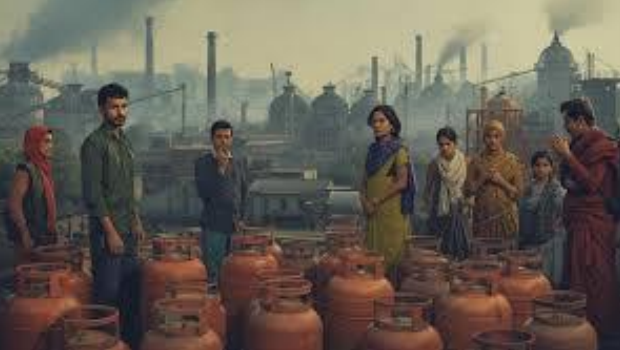
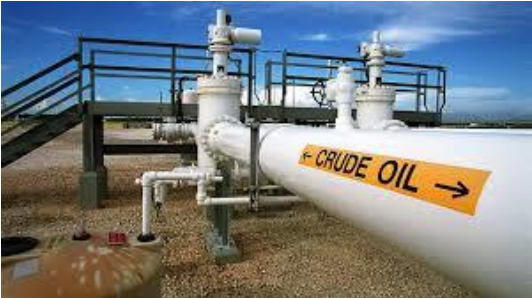
The LPG crisis triggered by the West Asian war has exposed a critical misalignment between India’s massive welfare expansion and its supply chain resilience. While the Pradhan Mantri Ujjwala Yojana (PMUY) successfully connected millions to clean fuel, the current disruption in the Strait of Hormuz reveals that a \'sovereign guarantee\' without physical infrastructure buffers remains a fragile promise. • The Chokepoint Constraint: India’s dependence on LPG imports stands at 60%, with nearly 90% of these imports transiting through the Strait of Hormuz. The lack of an LPG-specific strategic buffer— unlike the 9.5-day crude oil reserve—leaves the clean cooking transition entirely at the mercy of global commodity market stability. • Transition from State to Market: The phase-out of PDS kerosene (now \'Kerosene-free\' in 13 States) replaced an inefficient but state-controlled distribution system with a high-quality but volatile global market supply. This shift withdrew the state\'s direct supply responsibility without establishing a safety net for market failures. • The \'Last Mile\' Regression: The crisis disproportionately hits the poorest quintiles and marginalized communities. Data suggests that SC/ST households have 10% to 30% lower access due to distributor biases, and rising prices (up by ₹60 in March 2026) force the most vulnerable to revert to hazardous biomass. • Gendered Burden of Failure: While PMUY empowered women by saving approximately one hour of daily labor, the supply failure restores that drudgery. With 14% of surveyed households reverting to biomass during price spikes, women bear the physical and health costs of the state’s structural design flaws. • Strategic Redundancy Gap: The current welfare architecture measures success by \'connections delivered\' rather than \'continuity under stress.\' The absence of crisis protocols and triage rules means that when global chains snap, the institutional support for the household evaporates. • The Decentralized Solution: Experts advocate for \'targeted redundancy\' through the GOBARdhan scheme. Reviving five million dormant community biogas plants with a ₹10,000 subsidy per unit and accelerating piped natural gas (PNG) could provide a localized buffer against global shocks. Key Definitions • Strategic Petroleum Reserves (SPR): Underground rock caverns used to store crude oil to ensure energy security during supply disruptions. India currently lacks a dedicated equivalent for LPG. • Biomass Reversion: The phenomenon where households return to using traditional fuels like wood or dung cakes due to the unaffordability or unavailability of clean fuels like LPG. • Direct Benefit Transfer (DBT): A mechanism to transfer subsidies directly to the bank accounts of beneficiaries, intended to reduce leakages and ensure the \'sovereign presence\' in welfare. Constitutional and Legal Provisions • Article 47 (DPSP): Duty of the State to raise the level of nutrition and the standard of living and to improve public health. Access to clean cooking fuel is a primary component of this directive. • Article 21 (Right to Life): Interpreted by courts to include the right to a clean environment and health. Persistent exposure to indoor air pollution from biomass violates this fundamental right. • Essential Commodities Act, 1955: Provides the legal backing for the government to regulate the price and distribution of LPG during crises to prevent hoarding and ensure equitable access. Conclusion The 2026 crisis is a reminder that a durable welfare state must build \'redundancy underneath\' its delivery systems. A transformation built on unbroken global supply chains, without strategic buffers or localized alternatives like biogas, is a fragile achievement. Real energy security for the poor requires moving beyond \'branding\' to building the physical infrastructure of a sovereign guarantee. UPSC Relevance • GS Paper II (Governance & Social Justice): Issues relating to the development and management of Social Sector/Services relating to Health and Gender; Welfare schemes for vulnerable sections. • GS Paper III (Economy & Energy): Infrastructure: Energy; Security: Linked to global supply chain disruptions and energy sovereignty. • Prelims: Focus on the Strait of Hormuz geography, the PMUY eligibility criteria, and the GOBARdhan scheme\'s institutional framework.


Address : 506, 3rd EYE THREE (III), Opp. Induben Khakhrawala, Girish Cold Drink Cross Road, CG Road, Navrangpura, Ahmedabad, 380009.
Mobile : 8469231587 / 9586028957
Telephone : 079-40098991
E-mail: dics.upsc@gmail.com
Address: A-306, The Landmark, Urjanagar-1, Opp. Spicy Street, Kudasan – Por Road, Kudasan, Gandhinagar – 382421
Mobile : 9723832444 / 9723932444
E-mail: dics.gnagar@gmail.com
Address: 2nd Floor, 9 Shivali Society, L&T Circle, opp. Ratri Bazar, Karelibaugh, Vadodara, 390018
Mobile : 9725692037 / 9725692054
E-mail: dics.vadodara@gmail.com
Address: 403, Raj Victoria, Opp. Pal Walkway, Near Galaxy Circle, Pal, Surat-394510
Mobile : 8401031583 / 8401031587
E-mail: dics.surat@gmail.com
Address: 303,305 K 158 Complex Above Magson, Sindhubhavan Road Ahmedabad-380059
Mobile : 9974751177 / 8469231587
E-mail: dicssbr@gmail.com
Address: 57/17, 2nd Floor, Old Rajinder Nagar Market, Bada Bazaar Marg, Delhi-60
Mobile : 9104830862 / 9104830865
E-mail: dics.newdelhi@gmail.com