





Ahmedabad
(Head Office)Address : 506, 3rd EYE THREE (III), Opp. Induben Khakhrawala, Girish Cold Drink Cross Road, CG Road, Navrangpura, Ahmedabad, 380009.
Mobile : 8469231587 / 9586028957
Telephone : 079-40098991
E-mail: dics.upsc@gmail.com

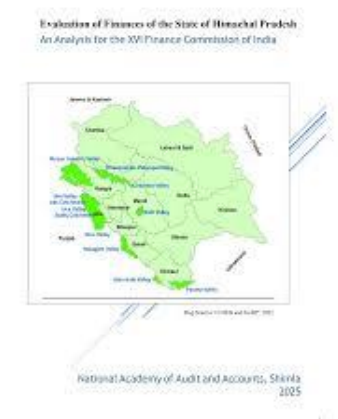
Key Summary Points • Withdrawal of Cabinet Status: The Himachal Pradesh government has officially revoked the \'Cabinet Rank\' status previously accorded to political appointees, including chairpersons and vice-chairpersons of state boards, corporations, and commissions. • Scope of De-designation: This administrative rollback extends to principal advisers and political advisers, effectively streamlining the state\'s executive hierarchy and reducing the \'inflation\' of ministerial ranks. • Salary Deferment Measures: To address the prevailing financial crunch, the government has mandated a 20% deferment of salaries and monthly emoluments for these high-ranking officials until September 30, 2026. • Reduction in Protocol Costs: The move is strategically aimed at cutting \'hidden\' costs associated with Cabinet status, such as specialized security cover, official vehicles, staff entitlements, and discretionary allowances. • Fiscal Consolidation: The decision is part of a broader \'Fiscal Prudence\' drive to bridge the state\'s budget deficit and redirect resources from administrative overheads to development projects. • Administrative Directives: All Administrative Secretaries have been tasked with the immediate enforcement of these orders, ensuring a swift transition to the new protocol standards. Constitutional & Legal Provisions • Article 163: Deals with the Council of Ministers to aid and advise the Governor. While the Constitution defines the Council, the \'Cabinet Rank\' for non-legislators is often a discretionary political entitlement. • Article 164(1A): The 91st Constitutional Amendment Act (2003) limits the size of the Council of Ministers to 15% of the total strength of the Legislative Assembly. Granting \'Cabinet status\' to political appointees is often seen as a way to bypass this ceiling, though they aren\'t part of the formal Council. • State Executive Discretion: Under the Rules of Business framed under Article 166, the State Government has the power to define the ranks and protocols of various functionaries within the executive branch. • Fiscal Responsibility and Budget Management (FRBM) Act: Statelevel versions of this act mandate governments to reduce fiscal deficits, providing a legal impetus for the austerity measures seen in Himachal Pradesh. Key Definitions • Cabinet Rank Status: A ceremonial or administrative designation given to non-ministers, granting them the same perks, salary, and protocol standing as a Cabinet Minister. • Fiscal Prudence: The exercise of extreme care and wisdom in the management of public finances to ensure long-term economic stability and debt sustainability. • Supplementary Grants: While not directly mentioned, the funding for such political offices often comes from the state budget, necessitating legislative approval if initial estimates are exceeded. Additional Strategic Keypoints The proliferation of \'Cabinet Status\' appointees has often been criticized as a \'drain on the exchequer\' and a method of political patronage. By removing these ranks, the government addresses the \'Principle of Subsidiarity\' and ensures that administrative roles are not conflated with political rewards. Furthermore, the 20% salary deferment is a rare instance of executivelevel austerity, setting a precedent for state-led financial recovery during periods of economic stress. Conclusion Himachal Pradesh’s decision to de-link political appointments from Cabinet-level protocols is a significant step toward rationalizing state expenditure. It balances the need for political advisory with the harsh realities of fiscal deficits. This reform serves as a model for \'Austerity Governance,\' demonstrating that administrative efficiency and political management can be decoupled to safeguard the public treasury. UPSC Relevance • GS Paper II: Indian Constitution (Provisions regarding the Council of Ministers); Governance (Administrative reforms and austerity measures); Statutory and Quasi-judicial bodies (Boards and Commissions). • GS Paper III: Indian Economy (Fiscal Policy, Budgeting, and FRBM Act compliance); Mobilization of resources. • Ethics (GS IV): Public Service Values and Ethics in Public Administration (Austerity vs. Political Patronage).


Address : 506, 3rd EYE THREE (III), Opp. Induben Khakhrawala, Girish Cold Drink Cross Road, CG Road, Navrangpura, Ahmedabad, 380009.
Mobile : 8469231587 / 9586028957
Telephone : 079-40098991
E-mail: dics.upsc@gmail.com
Address: A-306, The Landmark, Urjanagar-1, Opp. Spicy Street, Kudasan – Por Road, Kudasan, Gandhinagar – 382421
Mobile : 9723832444 / 9723932444
E-mail: dics.gnagar@gmail.com
Address: 2nd Floor, 9 Shivali Society, L&T Circle, opp. Ratri Bazar, Karelibaugh, Vadodara, 390018
Mobile : 9725692037 / 9725692054
E-mail: dics.vadodara@gmail.com
Address: 403, Raj Victoria, Opp. Pal Walkway, Near Galaxy Circle, Pal, Surat-394510
Mobile : 8401031583 / 8401031587
E-mail: dics.surat@gmail.com
Address: 303,305 K 158 Complex Above Magson, Sindhubhavan Road Ahmedabad-380059
Mobile : 9974751177 / 8469231587
E-mail: dicssbr@gmail.com
Address: 57/17, 2nd Floor, Old Rajinder Nagar Market, Bada Bazaar Marg, Delhi-60
Mobile : 9104830862 / 9104830865
E-mail: dics.newdelhi@gmail.com