




Ahmedabad
(Head Office)Address : 506, 3rd EYE THREE (III), Opp. Induben Khakhrawala, Girish Cold Drink Cross Road, CG Road, Navrangpura, Ahmedabad, 380009.
Mobile : 8469231587 / 9586028957
Telephone : 079-40098991
E-mail: dics.upsc@gmail.com

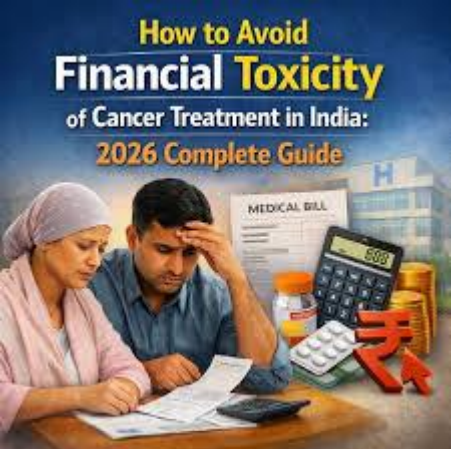
• Rising Disease Burden: India faces a critical health challenge with one in nine individuals at a lifetime risk of developing cancer, leading to increased morbidity and a surge in the demand for specialized oncology services. • The \'Financial Toxicity\' Crisis: Beyond biological impact, cancer induces severe economic strain—termed \'financial toxicity\'—forcing socioeconomically vulnerable families into debt, treatment discontinuation, or the abandonment of evidence-based care. • Out-of-Pocket Expenditure (OOPE) Gap: While many health insurance packages cover hospitalization, they frequently exclude high-cost chemotherapy drugs and advanced diagnostic tests, which constitute over 60% of total treatment costs. • The Traditional Medicine Trap: Financial distress often drives patients toward unproven traditional healers; this delay typically results in cancer progressing from curable to incurable stages, eventually leading to even higher terminal care costs. • Catastrophic Health Expenditure: A recent Lancet study identifies cancer as a primary driver of catastrophic spending in India, where the cost of life-saving medicines remains the single largest barrier to meaningful digital and health inclusion. • Systemic Need for Affordability: Bridging the gap requires a multi-stakeholder approach to lower the cost of next-generation oncology drugs, expand insurance coverage to outpatient diagnostics, and strengthen public sector infrastructure. Key Definitions • Financial Toxicity: The objective financial burden (out-of-pocket costs) and subjective financial distress experienced by patients due to the high cost of medical care, which negatively impacts their quality of life and treatment outcomes. • Out-of-Pocket Expenditure (OOPE): The direct payments made by individuals to health care providers at the time of service, excluding any third-party or government reimbursements. • Catastrophic Health Expenditure: Health spending that exceeds a certain threshold of a household\'s discretionary income (usually 10% or 25%), often forcing families to cut down on basic necessities like food or education. Constitutional & Legal Provisions • Article 21: The Supreme Court of India has consistently held that the \'Right to Life\' encompasses the \'Right to Health,\' placing a constitutional obligation on the State to provide affordable and accessible healthcare. • Article 47 (DPSP): Directs the State to regard the raising of the level of nutrition and the standard of living of its people and the improvement of public health as among its primary duties. • National Health Policy (NHP), 2017: Aims to increase government health expenditure to 2.5% of GDP and seeks to reduce catastrophic health spending by ensuring \'Universal Access to Good Quality Health Care Services.\' • Ayushman Bharat - PMJAY: The world’s largest government-funded healthcare program providing a cover of Rs 5 lakh per family per year for secondary and tertiary care, which includes various oncology packages. Additional Key Points • Drug Pricing Controls: The National Pharmaceutical Pricing Authority (NPPA) has previously invoked \'extraordinary powers\' to cap the trade margins of non-scheduled cancer drugs to make them more affordable. • Diagnostic Infrastructure: The high cost of PET-CT scans and molecular profiling remains a major hurdle; expanding the \'National Dialysis Programme\' model to oncology diagnostics could be a potential solution. • The Lancet Study Insights: Highlights that in low- and middle-income countries (LMICs), the lack of a robust primary healthcare referral system often leads to late-stage diagnosis, which is inherently more expensive to treat. Conclusion Making cancer treatment affordable in India is not merely a medical necessity but an economic imperative. While schemes like Ayushman Bharat have provided a safety net for hospitalization, the exclusion of outpatient drugs and diagnostics remains a major policy loophole. Reducing financial toxicity requires a shift toward \'value-based care,\' aggressive price capping of essential oncology drugs, and a massive scale-up of public diagnostic facilities to ensure that a diagnosis of cancer does not translate into a sentence of poverty. UPSC Relevance • GS Paper II: Issues relating to the development and management of Social Sector/Services relating to Health; Government policies and interventions for development in various sectors. • GS Paper III: Economics of health and its impact on human capital; Role of technology in healthcare. • Mains Perspective: Assessing the efficacy of the \'National Programme for Prevention and Control of Cancer, Diabetes, Cardiovascular Diseases and Stroke (NPCDCS)\' and the challenges in achieving Universal Health Coverage (UHC).


Address : 506, 3rd EYE THREE (III), Opp. Induben Khakhrawala, Girish Cold Drink Cross Road, CG Road, Navrangpura, Ahmedabad, 380009.
Mobile : 8469231587 / 9586028957
Telephone : 079-40098991
E-mail: dics.upsc@gmail.com
Address: A-306, The Landmark, Urjanagar-1, Opp. Spicy Street, Kudasan – Por Road, Kudasan, Gandhinagar – 382421
Mobile : 9723832444 / 9723932444
E-mail: dics.gnagar@gmail.com
Address: 2nd Floor, 9 Shivali Society, L&T Circle, opp. Ratri Bazar, Karelibaugh, Vadodara, 390018
Mobile : 9725692037 / 9725692054
E-mail: dics.vadodara@gmail.com
Address: 403, Raj Victoria, Opp. Pal Walkway, Near Galaxy Circle, Pal, Surat-394510
Mobile : 8401031583 / 8401031587
E-mail: dics.surat@gmail.com
Address: 303,305 K 158 Complex Above Magson, Sindhubhavan Road Ahmedabad-380059
Mobile : 9974751177 / 8469231587
E-mail: dicssbr@gmail.com
Address: 57/17, 2nd Floor, Old Rajinder Nagar Market, Bada Bazaar Marg, Delhi-60
Mobile : 9104830862 / 9104830865
E-mail: dics.newdelhi@gmail.com