


Ahmedabad
(Head Office)Address : 506, 3rd EYE THREE (III), Opp. Induben Khakhrawala, Girish Cold Drink Cross Road, CG Road, Navrangpura, Ahmedabad, 380009.
Mobile : 8469231587 / 9586028957
Telephone : 079-40098991
E-mail: dics.upsc@gmail.com

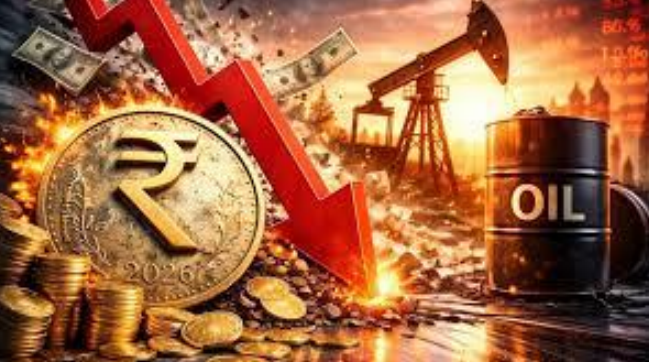
The escalation of conflict in West Asia, marked by the US and Israel targeting Iranian oil and gas infrastructure and subsequent retaliatory strikes, has pushed global crude prices beyond $110 per barrel. For India, the world’s third-largest oil consumer, this geopolitical volatility presents significant challenges to macroeconomic stability and energy security. Executive Summary • Geopolitical Trigger: Direct military strikes on Iran’s South Pars gas field and retaliatory attacks on regional facilities like Qatar’s Ras Laffan have shifted market sentiment from \'supply disruption\' to \'supply destruction.\' • Domestic Price Strategy: India has partially passed on costs via a ₹60 hike in domestic LPG and a ₹115 hike in commercial LPG (effective March 7, 2026), while maintaining a price freeze on petrol and diesel to contain inflation. • Fiscal Buffer: The government currently utilizes Excise Duty (₹19.9/litre for petrol; ₹15.8/litre for diesel) as a cushion; however, experts suggest these buffers can only fully absorb costs up to $110/barrel before retail hikes become inevitable. • Impact on OMCs: State-run Oil Marketing Companies (IOCL, BPCL, HPCL) are bearing the brunt, with margins eroding by ₹6.3 per litre for every $10 rise in crude, potentially leading to a 90% drop in earnings without retail adjustments. • Energy Security Response: India has invoked the Essential Commodities Act, 1955, prioritizing household LPG over industrial use and utilizing its Strategic Petroleum Reserves (SPR) and commercial stocks which provide roughly 74 days of total cover. • Global Context: Unlike India’s current freeze, other major economies like the US, UK, and China have already implemented significant fuel price hikes (up to 20%) to reflect the new market reality. Key Definitions • Under-recoveries: The difference between the cost price of producing fuel and the realized retail price when OMCs are restricted from raising prices by the government. • Strategic Petroleum Reserves (SPR): Emergency fuel storage maintained by Indian Strategic Petroleum Reserves Limited (ISPRL) in underground caverns (Visakhapatnam, Mangaluru, and Padur) to guard against supply chain shocks. • Strait of Hormuz: A critical maritime chokepoint between Oman and Iran through which approximately one-fifth of global oil consumption and a significant portion of India\'s LNG/LPG imports transit. Constitutional & Legal Provisions • Article 265: No tax shall be levied or collected except by authority of law; this governs the Central Government’s power to adjust Excise Duty on petroleum products. • Essential Commodities Act, 1955: Recently invoked to regulate the production, supply, and distribution of LPG, ensuring priority for domestic consumers and preventing hoarding during the crisis. • Entry 53, List I (Union List): Gives the Central Government exclusive power over the regulation and development of oilfields and mineral oil resources. Strategic Measures and Key Points • Supply Diversification: India is actively increasing the share of non-West Asian crude (e.g., Russian Urals, US shale, and African grades) to mitigate risks associated with the Strait of Hormuz. • Ethanol Blending: The government is accelerating the E20 (20% ethanol blending) target to reduce the net import bill and enhance \'Aatmanirbharta\' in the energy sector. • Subsidy Management: The PM Ujjwala Yojana subsidy of ₹300 per cylinder remains a vital tool for protecting vulnerable sections from the 7% spike in LPG costs. Conclusion While India has successfully used fiscal levers and OMC cost-absorption to shield consumers from the initial price shock, the strategy faces a \'breaking point\' if crude sustains levels above $110. A prolonged conflict in West Asia will likely necessitate a calibrated pass-through of prices to prevent a fiscal slippage and preserve the financial health of the energy PSUs. UPSC Relevance • GS Paper II: International Relations (West Asia conflict and its impact on India\'s interests). • GS Paper III: Indian Economy (Inflation, Fiscal Deficit, and External Sector), Energy Security, and Infrastructure. • Prelims: Locations of SPRs, geography of the Persian Gulf/Strait of Hormuz, and the mechanism of Excise Duty vs. GST in petroleum.


Address : 506, 3rd EYE THREE (III), Opp. Induben Khakhrawala, Girish Cold Drink Cross Road, CG Road, Navrangpura, Ahmedabad, 380009.
Mobile : 8469231587 / 9586028957
Telephone : 079-40098991
E-mail: dics.upsc@gmail.com
Address: A-306, The Landmark, Urjanagar-1, Opp. Spicy Street, Kudasan – Por Road, Kudasan, Gandhinagar – 382421
Mobile : 9723832444 / 9723932444
E-mail: dics.gnagar@gmail.com
Address: 2nd Floor, 9 Shivali Society, L&T Circle, opp. Ratri Bazar, Karelibaugh, Vadodara, 390018
Mobile : 9725692037 / 9725692054
E-mail: dics.vadodara@gmail.com
Address: 403, Raj Victoria, Opp. Pal Walkway, Near Galaxy Circle, Pal, Surat-394510
Mobile : 8401031583 / 8401031587
E-mail: dics.surat@gmail.com
Address: 303,305 K 158 Complex Above Magson, Sindhubhavan Road Ahmedabad-380059
Mobile : 9974751177 / 8469231587
E-mail: dicssbr@gmail.com
Address: 57/17, 2nd Floor, Old Rajinder Nagar Market, Bada Bazaar Marg, Delhi-60
Mobile : 9104830862 / 9104830865
E-mail: dics.newdelhi@gmail.com