


Ahmedabad
(Head Office)Address : 506, 3rd EYE THREE (III), Opp. Induben Khakhrawala, Girish Cold Drink Cross Road, CG Road, Navrangpura, Ahmedabad, 380009.
Mobile : 8469231587 / 9586028957
E-mail: dics.upsc@gmail.com

• Fiscal Policy to Stimulate Inflows: In response to a significant depletion of foreign exchange reserves (down by $38 billion in two months), the Government of India and the RBI are considering a reduction or total elimination of the withholding tax on government bonds. The current rate of 20% is among the highest globally, and reducing it aims to stabilize the capital account and prevent the Rupee depreciation.
• Maritime Security and Global Trade: During a BRICS ministerial meeting in New Delhi, India emphasized that the security of international chokepoints like the Strait of Hormuz and the Red Sea is non-negotiable for economic health. With India importing nearly 85-90% of its crude oil, any disruption in these waterways poses a direct threat to domestic energy security and inflation management.
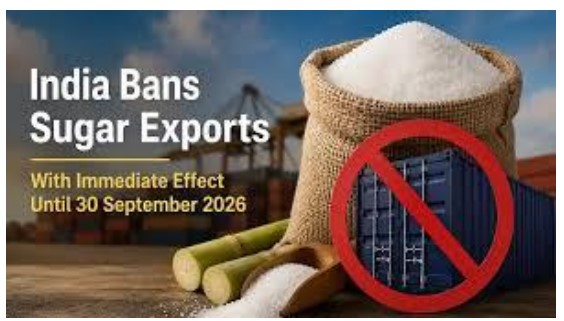
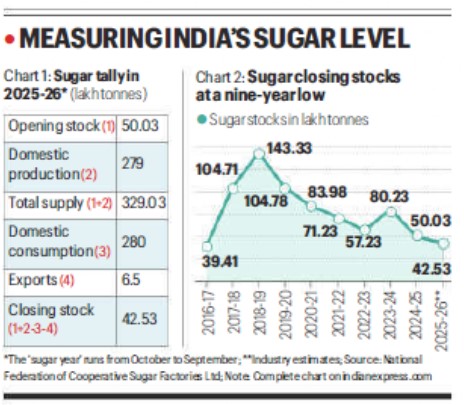
• Agricultural Trade Restrictions: The Directorate General of Foreign Trade (DGFT) has placed sugar exports in the prohibited category until September 30, 2026. This preemptive move is driven by the double threat of El Niño—which risks poor monsoon rainfall—and the West Asia conflict, which has choked the supply of essential fertilizers through maritime routes.
• Macroeconomic Stability through Austerity: Prime Minister Narendra Modi has called for national austerity measures, including reducing gold imports and promoting fuel conservation. These steps are designed to curb the drainage of foreign exchange and secure India external account against global volatility.
• Domestic Resource Management: Despite having sufficient sugar stocks for immediate needs, the government is taking no chances. Closing stocks are projected to hit a nine-year low by late 2026, necessitating a ban on exports to ensure domestic availability and prevent food inflation.
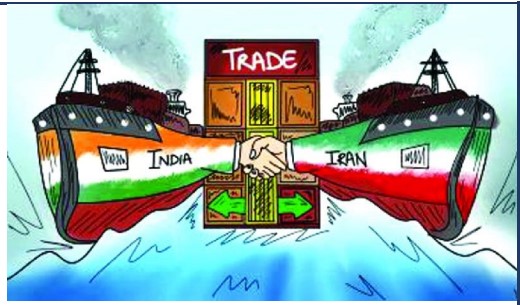
• Geopolitical Balancing in BRICS: India is leveraging the BRICS platform to seek regional stability. While engaging with Iran to ensure safe maritime flows, India remains committed to a rules-based international order, condemning attacks on commercial vessels to maintain the sanctity of global supply chains.
Key Definitions
• Withholding Tax (WHT): A tax deducted at the source of income (like interest on bonds) before it is paid to the foreign investor, acting as a tool for the government to collect revenue from non-residents.
• Strait of Hormuz: A narrow waterway between the Persian Gulf and the Gulf of Oman; it is the world\'s most vital oil transit chokepoint.
• El Niño: A climate pattern involving the warming of surface waters in the eastern Pacific Ocean, which typically leads to deficient monsoon rainfall in India.
• Capital Account: A record of all transactions between residents of one country and the rest of the world that involve changes in ownership of assets.
Constitutional and Legal Provisions
• Foreign Trade (Development and Regulation) Act, 1992: The legal framework under which the DGFT issues notifications to prohibit or restrict the export and import of goods to maintain domestic supply.
• Article 246 (Seventh Schedule): The Union List gives the Central Government exclusive power over Duties of customs including export duties and Taxes on income other than agricultural income.
• Article 51 (DPSP): Directs the State to promote international peace and security and maintain just and honorable relations between nations, providing the constitutional basis for India maritime diplomacy.
• Income Tax Act, 1961: Specifically Section 194LD, which governs the concessional tax rates for Foreign Portfolio Investors (FPIs) on interest from government securities.
Conclusion
India current policy stance is a complex interplay of fiscal maneuvering, diplomatic engagement, and preemptive trade restrictions. By considering tax cuts for foreign investors and banning essential food exports, the government is attempting to build a firewall around the domestic economy. The success of these measures depends heavily on the de-escalation of conflicts in West Asia and the actual intensity of the El Niño phenomenon in the coming seasons.
UPSC Relevance
This multi-dimensional topic is highly relevant for General Studies Paper III (Economy & Environment) and General Studies Paper II (International Relations). In the Preliminary Examination, questions may arise regarding the mechanics of withholding tax, the geography of maritime chokepoints, or the impact of El Niño on agriculture. For the Main Examination, it provides excellent material for answers on India Energy Security, Inflation Management, and Bilateral Relations with West Asia. The integration of fiscal policy with geopolitical strategy is a recurring theme in the UPSC syllabus, emphasizing the need for a holistic understanding of how global events dictate domestic economic priorities.


Address : 506, 3rd EYE THREE (III), Opp. Induben Khakhrawala, Girish Cold Drink Cross Road, CG Road, Navrangpura, Ahmedabad, 380009.
Mobile : 8469231587 / 9586028957
E-mail: dics.upsc@gmail.com
Address: A-306, The Landmark, Urjanagar-1, Opp. Spicy Street, Kudasan – Por Road, Kudasan, Gandhinagar – 382421
Mobile : 9723832444 / 9723932444
E-mail: dics.gnagar@gmail.com
Address: 2nd Floor, 9 Shivali Society, L&T Circle, opp. Ratri Bazar, Karelibaugh, Vadodara, 390018
Mobile : 9725692037 / 9725692054
E-mail: dics.vadodara@gmail.com
Address: 403, Raj Victoria, Opp. Pal Walkway, Near Galaxy Circle, Pal, Surat-394510
Mobile : 8401031583 / 8401031587
E-mail: dics.surat@gmail.com
Address: 303,305 K 158 Complex Above Magson, Sindhubhavan Road Ahmedabad-380059
Mobile : 9974751177 / 8469231587
E-mail: dicssbr@gmail.com
Address: 57/17, 2nd Floor, Old Rajinder Nagar Market, Bada Bazaar Marg, Delhi-60
Mobile : 9104830862 / 9104830865
E-mail: dics.newdelhi@gmail.com