

Ahmedabad
(Head Office)Address : 506, 3rd EYE THREE (III), Opp. Induben Khakhrawala, Girish Cold Drink Cross Road, CG Road, Navrangpura, Ahmedabad, 380009.
Mobile : 8469231587 / 9586028957
E-mail: dics.upsc@gmail.com

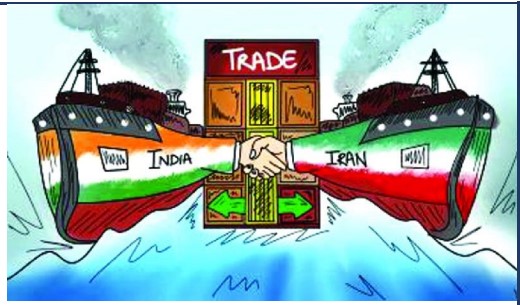
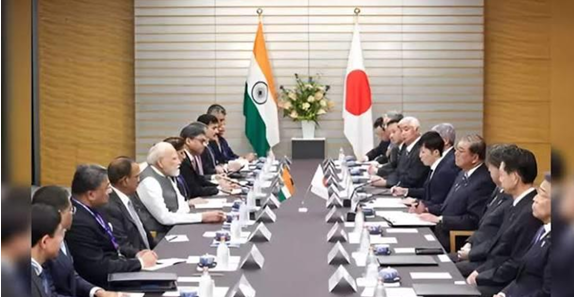
• Bilateral Engagement at BRICS 2026: On the sidelines of the BRICS Foreign Ministers Meeting in New Delhi (May 2026), India External Affairs Minister S. Jaishankar held high-level talks with Iranian FM Seyed Abbas Araghchi. The discussions centered on the considerable flux in global relations and the intensifying conflict in West Asia.
• Securing Global Maritime Arteries: India emphasized the critical need for safe and uninterrupted maritime flows through the Strait of Hormuz and the Red Sea. These waterways are vital for India energy security, as the country imports nearly 85-90% of its crude oil, much of which transits through the Persian Gulf.
• Response to Maritime Threats: Following recent attacks on merchant vessels, including an Indian-flagged ship off the coast of Oman, India has reiterated its stance against the targeting of commercial shipping. New Delhi continues to push for a rules-based order to prevent the weaponization of maritime chokepoints.
• Energy Infrastructure Stability: The ongoing tensions have driven significant volatility in oil and gas markets. India and Iran discussed the fragility of energy infrastructure and the impact of the regional foreign capital strike on emerging economies, seeking ways to stabilize supply chains amidst US-Israel-Iran tensions.
• Strategic Connectivity Projects: Both nations reviewed the progress of the Chabahar Port, a cornerstone of India Connect Central Asia policy. The port serves as a vital gateway for trade with landlocked Afghanistan and Central Asian Republics, bypassing traditional land routes.
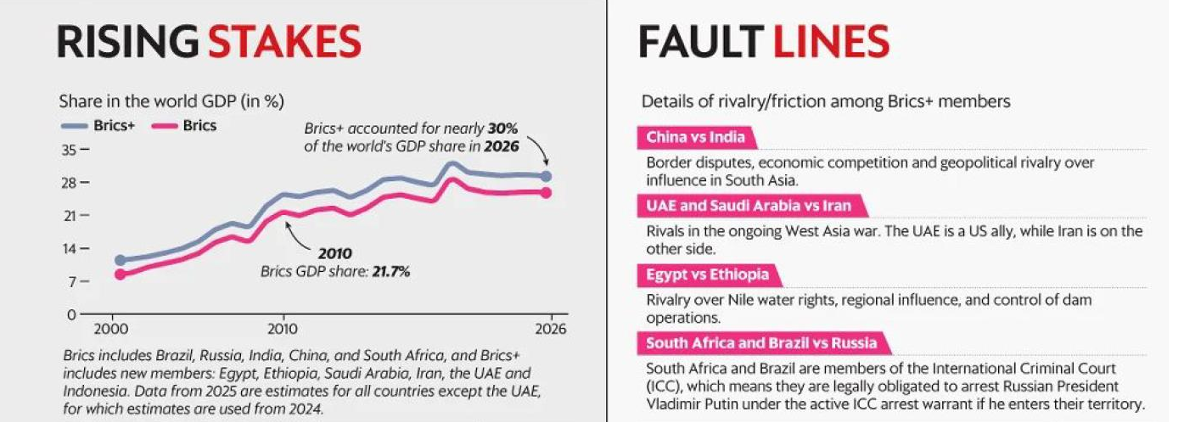
• Multilateral Coordination via BRICS: Under India 2026 chairship, the BRICS platform is being utilized to foster consensus on regional stability. While Iran seeks formal condemnation of external aggression, India is focusing on diplomacy, de-escalation, and safeguarding the interests of the Global South.
Key Definitions
• Strait of Hormuz: A narrow, strategically vital waterway between the Persian Gulf and the Gulf of Oman. It is the world most important oil transit chokepoint, through which roughly 20% of global oil consumption passes.
• Maritime Security: The protection of a nation maritime domain, including its sovereign waters and international sea lines of communication (SLOCs), from threats such as piracy, terrorism, and state-sponsored disruptions.
• Chokepoint: A geographical feature on land or at sea, such as a narrow strait, which an armed force is forced to pass, significantly decreasing its combat power and making trade routes vulnerable.
• Global South: A term used to describe developing and emerging economies in Africa, Asia, and Latin America that often share common challenges regarding global governance and economic equity.
Constitutional and Legal Provisions
• Article 51 of the Indian Constitution: A Directive Principle of State Policy (DPSP) that mandates the State to promote international peace and security, maintain just and honorable relations between nations, and encourage settlement of international disputes by arbitration.
• UNCLOS (United Nations Convention on the Law of the Sea): Often referred to as the Constitution of the Oceans, it provides the legal framework for all activities in the oceans and seas, including rights of innocent passage through territorial waters.
• Income Tax Act, 1961 (Section 194LD): While primarily fiscal, such provisions relate to foreign investments (FPIs) in government securities, which are often discussed in bilateral economic dialogues to stabilize capital flows during regional crises.
• India-Iran 10-year Chabahar Agreement: The bilateral legal framework that allows India to operate and develop the Shahid Beheshti terminal, ensuring long-term strategic and economic presence in the region.
Conclusion
The evolving security landscape in West Asia necessitates a calibrated diplomatic approach from India. By balancing its strategic partnership with Iran alongside its commitment to maritime stability, India aims to protect its national energy interests while positioning itself as a stabilizing force in a multipolar world. The focus remains on ensuring that regional conflicts do not lead to a permanent disruption of global trade corridors or energy supplies.
UPSC Relevance
This topic is integral to General Studies Paper II (International Relations), specifically concerning Bilateral, regional and global groupings and agreements involving India. It is also highly relevant for General Studies Paper III (Internal Security & Economy) regarding maritime security challenges and energy security. Aspirants should focus on the geography of the Strait of Hormuz for the Preliminary exam and the strategic implications of the International North-South Transport Corridor (INSTC) and Chabahar Port for the Main examination.


Address : 506, 3rd EYE THREE (III), Opp. Induben Khakhrawala, Girish Cold Drink Cross Road, CG Road, Navrangpura, Ahmedabad, 380009.
Mobile : 8469231587 / 9586028957
E-mail: dics.upsc@gmail.com
Address: A-306, The Landmark, Urjanagar-1, Opp. Spicy Street, Kudasan – Por Road, Kudasan, Gandhinagar – 382421
Mobile : 9723832444 / 9723932444
E-mail: dics.gnagar@gmail.com
Address: 2nd Floor, 9 Shivali Society, L&T Circle, opp. Ratri Bazar, Karelibaugh, Vadodara, 390018
Mobile : 9725692037 / 9725692054
E-mail: dics.vadodara@gmail.com
Address: 403, Raj Victoria, Opp. Pal Walkway, Near Galaxy Circle, Pal, Surat-394510
Mobile : 8401031583 / 8401031587
E-mail: dics.surat@gmail.com
Address: 303,305 K 158 Complex Above Magson, Sindhubhavan Road Ahmedabad-380059
Mobile : 9974751177 / 8469231587
E-mail: dicssbr@gmail.com
Address: 57/17, 2nd Floor, Old Rajinder Nagar Market, Bada Bazaar Marg, Delhi-60
Mobile : 9104830862 / 9104830865
E-mail: dics.newdelhi@gmail.com