



Ahmedabad
(Head Office)Address : 506, 3rd EYE THREE (III), Opp. Induben Khakhrawala, Girish Cold Drink Cross Road, CG Road, Navrangpura, Ahmedabad, 380009.
Mobile : 8469231587 / 9586028957
E-mail: dics.upsc@gmail.com

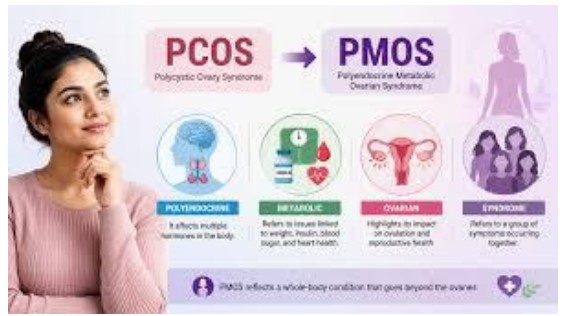
• Evolution of Nomenclature: Polycystic Ovary Syndrome (PCOS) is being globally renamed to Polyendocrine Metabolic Ovarian Syndrome (PMOS). This shift reflects a move away from focusing solely on ovarian cysts to recognizing the condition as a complex, multisystem disorder.
• Prevalence in India: Experts estimate the prevalence of this condition in India to be between 16% and 18%. Given the genetic predisposition of Indians to heart disease and diabetes, early and accurate diagnosis is critical for long-term health management.
• Broad Spectrum of Symptoms: PMOS encompasses endocrine, metabolic, reproductive, psychological, and dermatological features. It includes risks such as obesity, Type 2 diabetes, hypertension, and metabolic dysfunction-associated steatotic liver disease (MASLD).
• Misleading Traditional Labels: The term PCOS was often misleading because many affected women do not actually have ovarian cysts. By emphasizing the metabolic and endocrine nature, the new name, PMOS, helps prevent delayed diagnosis and improves patient communication.
• Multidisciplinary Management: The renaming encourages clinicians to adopt a more comprehensive approach, focusing on lifestyle modifications and screening for cardiovascular risks, rather than treating infertility or irregular periods in isolation.
• Global Implementation: The new terminology is part of a major global shift in medical science and will be introduced globally over the next three years to reduce stigma and improve the quality of patient care.
Key Definitions
• Polyendocrine Metabolic Ovarian Syndrome (PMOS): The new medical term for PCOS, highlighting its nature as a multisystem disorder affecting metabolism and multiple endocrine glands, not just the ovaries.
• Androgens: A group of hormones, such as testosterone, that regulate masculine characteristics. In PMOS, excess androgens lead to symptoms like acne and hirsutism (excessive hair growth).
• Metabolic Syndrome: A cluster of conditions—including increased blood pressure, high blood sugar, and abnormal cholesterol levels—that occur together, increasing the risk of heart disease and stroke.
• Ovulatory Dysfunction: A condition where ovulation (the release of an egg) is infrequent or irregular, which is a primary cause of infertility in women with PMOS.
Legal and Policy Context
• National Programme for Prevention and Control of NCDs (NP-NCD): PMOS management aligns with India national policy to curb Non-Communicable Diseases, as it is a major precursor to diabetes and cardiovascular ailments.
• Pre-Conception and Pre-Natal Diagnostic Techniques (PCPNDT) Act, 1994: While primarily for preventing sex selection, the use of ultrasound for PMOS diagnosis must adhere to the regulatory frameworks of this Act regarding the registration of imaging centers.
• Maternal Health Guidelines: The Ministry of Health and Family Welfare (MoHFW) includes screenings for gestational diabetes and hypertension, both of which are high-risk factors for pregnant women with PMOS.
• Right to Health: Though not a standalone Fundamental Right, the Supreme Court has interpreted Article 21 (Right to Life) to include the right to health, necessitating public awareness and accessible diagnostic facilities for widespread conditions like PMOS.
Conclusion
The transition from PCOS to PMOS signifies a landmark shift in the medical community understanding of women health. By treating the condition as a metabolic and endocrine challenge rather than just a reproductive one, healthcare systems can better address the root causes of associated lifestyle diseases. For a country like India, this terminology change is a vital step toward reducing the long-term burden of chronic illnesses and improving the reproductive and psychological well-being of millions of women.
UPSC Relevance
This topic is highly relevant for General Studies Paper II (Social Justice - Health) and General Studies Paper III (Science and Technology). In the Preliminary Examination, questions may focus on the biological aspects of endocrine disorders or the prevalence of NCDs in India. For the Main Examination, it serves as an excellent case study for Issues relating to the development and management of Social Sector/Services relating to Health and the impact of nomenclature on public health policy. Aspirants should be prepared to discuss the socio-economic implications of high NCD prevalence and the importance of gender-specific health interventions in the Indian context.


Address : 506, 3rd EYE THREE (III), Opp. Induben Khakhrawala, Girish Cold Drink Cross Road, CG Road, Navrangpura, Ahmedabad, 380009.
Mobile : 8469231587 / 9586028957
E-mail: dics.upsc@gmail.com
Address: A-306, The Landmark, Urjanagar-1, Opp. Spicy Street, Kudasan – Por Road, Kudasan, Gandhinagar – 382421
Mobile : 9723832444 / 9723932444
E-mail: dics.gnagar@gmail.com
Address: 2nd Floor, 9 Shivali Society, L&T Circle, opp. Ratri Bazar, Karelibaugh, Vadodara, 390018
Mobile : 9725692037 / 9725692054
E-mail: dics.vadodara@gmail.com
Address: 403, Raj Victoria, Opp. Pal Walkway, Near Galaxy Circle, Pal, Surat-394510
Mobile : 8401031583 / 8401031587
E-mail: dics.surat@gmail.com
Address: 303,305 K 158 Complex Above Magson, Sindhubhavan Road Ahmedabad-380059
Mobile : 9974751177 / 8469231587
E-mail: dicssbr@gmail.com
Address: 57/17, 2nd Floor, Old Rajinder Nagar Market, Bada Bazaar Marg, Delhi-60
Mobile : 9104830862 / 9104830865
E-mail: dics.newdelhi@gmail.com