




Ahmedabad
(Head Office)Address : 506, 3rd EYE THREE (III), Opp. Induben Khakhrawala, Girish Cold Drink Cross Road, CG Road, Navrangpura, Ahmedabad, 380009.
Mobile : 8469231587 / 9586028957
E-mail: dics.upsc@gmail.com

Core Summary
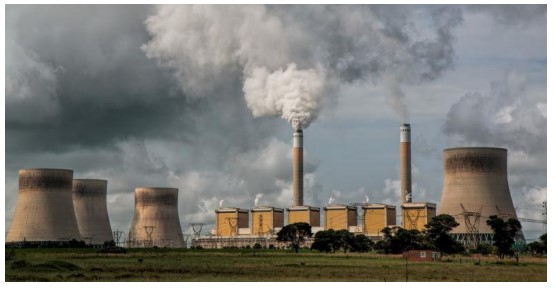
• Health Impact: A recent IIT Delhi study published in Nature reveals that India could prevent approximately 1,24,564 premature deaths annually by fully mitigating Sulphur Dioxide (SO₂) emissions from coal-fired thermal power plants (CFPPs).
• PM2.5 Correlation: CFPPs emit SO₂ which reacts in the atmosphere to form secondary inorganic aerosols like sulfates and nitrates; these are major precursors to fine particulate matter (PM2.5) linked to cardiovascular and respiratory diseases.
• Geographic Sensitivity: Maharashtra, Tamil Nadu, and Karnataka are estimated to have the highest number of avoidable deaths due to high population density, while Chhattisgarh and Odisha would see the most significant air quality improvements.
• Economic Viability: The study argues that the health-related monetary gains and lives saved would significantly outweigh the high costs associated with installing emission-control technologies like Flue Gas Desulphurization (FGD).
• Environmental Equity: Vulnerable groups, including Scheduled Castes (SC), Scheduled Tribes (ST), and lower-income brackets, are disproportionately affected by pollution, making SO₂ mitigation a critical issue of environmental justice.
• Policy Relaxation: Despite rising emissions (India’s SO₂ increased from 2.36 million tonnes in 2005 to 5.05 million tonnes in 2021), the Centre recently relaxed 2015 norms, exempting nearly 79% of coal-fired units from immediate FGD installation.
Key Definitions
• Flue Gas Desulphurization (FGD): A set of technologies used to remove sulphur dioxide (SO₂) from exhaust flue gases of fossil-fuel power plants and from the processes of other sulphur oxide emitting processes.
• Secondary Aerosols: Particles formed in the atmosphere through chemical reactions of gaseous precursors (like SO₂ and NOx) rather than being emitted directly from a source.
• Amnonium Aerosols: Chemical compounds formed when ammonia reacts with acidic gases like sulfuric acid or nitric acid, contributing to atmospheric haze and PM2.5.
Constitutional & Legal Provisions
• Article 21: The Right to Life includes the right to a healthy environment and clean air, as interpreted by the Supreme Court in various landmark judgments.
• Article 48A: A Directive Principle mandate stating that the State shall endeavor to protect and improve the environment and safeguard forests and wildlife.
• Article 51A(g): A Fundamental Duty of every citizen to protect and improve the natural environment.
• The Air (Prevention and Control of Pollution) Act, 1981: The primary legal framework under which the Central Pollution Control Board (CPCB) sets emission standards for thermal power plants.
• Environment (Protection) Rules, 1986: The source of the 2015 emission norms which introduced mandatory limits for SO₂, NOx, and mercury for the first time in India.
Additional Key Insights
• The Coal Dilemma: Indian coal has relatively low sulphur content (approx. 0.5%), which was historically used as an argument against expensive FGD systems; however, the sheer volume of coal burnt compensates for low concentration, leading to high total emissions.
• Hotspot Prioritization: Experts suggest that instead of a blanket relaxation, the government should prioritize FGD installation in hotspot sub-regions where population exposure and emission density are highest.
• Global Trend: While global SO₂ emissions from CFPPs declined between 2005 and 2021, India’s emissions moved in the opposite direction, increasing by nearly 30% even as recently as 2023.
Conclusion
The IIT Delhi study underscores that the cost of compliance for thermal power plants is a secondary concern compared to the cost of inaction regarding public health. While energy security remains a priority, the persistent delays in implementing FGD technology represent a significant public health risk. Bridging the gap between energy production and environmental safety requires a renewed commitment to the 2015 emission standards and a shift toward cleaner coal technologies alongside renewable integration.
UPSC Relevance
• GS Paper II: Government policies and interventions for development in various sectors; Issues arising out of their design and implementation.
• GS Paper III: Environmental pollution and degradation; Environmental Impact Assessment (EIA); Infrastructure: Energy.
• Key Theme: The conflict between Ease of Doing Business (relaxing norms for power plants) and the Right to Health (mitigating deadly emissions).


Address : 506, 3rd EYE THREE (III), Opp. Induben Khakhrawala, Girish Cold Drink Cross Road, CG Road, Navrangpura, Ahmedabad, 380009.
Mobile : 8469231587 / 9586028957
E-mail: dics.upsc@gmail.com
Address: A-306, The Landmark, Urjanagar-1, Opp. Spicy Street, Kudasan – Por Road, Kudasan, Gandhinagar – 382421
Mobile : 9723832444 / 9723932444
E-mail: dics.gnagar@gmail.com
Address: 2nd Floor, 9 Shivali Society, L&T Circle, opp. Ratri Bazar, Karelibaugh, Vadodara, 390018
Mobile : 9725692037 / 9725692054
E-mail: dics.vadodara@gmail.com
Address: 403, Raj Victoria, Opp. Pal Walkway, Near Galaxy Circle, Pal, Surat-394510
Mobile : 8401031583 / 8401031587
E-mail: dics.surat@gmail.com
Address: 303,305 K 158 Complex Above Magson, Sindhubhavan Road Ahmedabad-380059
Mobile : 9974751177 / 8469231587
E-mail: dicssbr@gmail.com
Address: 57/17, 2nd Floor, Old Rajinder Nagar Market, Bada Bazaar Marg, Delhi-60
Mobile : 9104830862 / 9104830865
E-mail: dics.newdelhi@gmail.com