

Ahmedabad
(Head Office)Address : 506, 3rd EYE THREE (III), Opp. Induben Khakhrawala, Girish Cold Drink Cross Road, CG Road, Navrangpura, Ahmedabad, 380009.
Mobile : 8469231587 / 9586028957
E-mail: dics.upsc@gmail.com


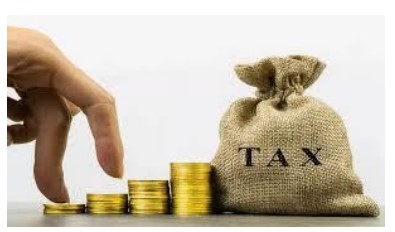
In early February 2026, the Steel Secretary, Sandeep Poundrik, confirmed that despite a recent trade deal between India and the European Union (EU), Indian steel exports will face sustained pressure from the EU’s Carbon Border Adjustment Mechanism (CBAM). This policy, which effectively functions as a carbon tax on imports, poses a structural challenge for India\'s carbon-intensive manufacturing sectors. • Impact on Primary Export Market: Europe accounts for approximately two-thirds of India\'s total steel exports. The operationalization of CBAM from January 1, 2026, forces Indian mills to either pay steep carbon levies or risk losing market share in their most critical destination. • Technological Vulnerability: Most Indian steel is produced via the Blast Furnace–Basic Oxygen Furnace (BF–BOF) route, which is significantly more carbonintensive than the Electric Arc Furnace (EAF) route common in the EU. This technological gap translates into a direct fiscal penalty under CBAM. • Economic Cost and Competitiveness: Projections suggest that the carbon tax could increase the landed cost of Indian steel in the EU by 15–22%. This price shock threatens the thin margins of Indian exporters and may lead to a shift in trade flows toward regions with less stringent climate-linked trade barriers, such as Africa and the Middle East. • Inclusion in Trade Negotiations: While the India-EU Free Trade Agreement (FTA) framework signed in late January 2026 slashed tariffs on over 90% of goods, CBAM remained a non-negotiable \'climate measure\' from the EU\'s perspective, leaving Indian steel without a \'green carve-out.\'• Government Support and \'Green Steel\': The Ministry of Steel has signaled intervention through incentives for decarbonization, support for MSMEs in carbon accounting, and a push for \'Made-inIndia\' branded green steel to meet global environmental standards. Key Definitions • Carbon Border Adjustment Mechanism (CBAM): A climate-linked trade tool that imposes a levy on imported goods (like steel, cement, and aluminum) equivalent to the carbon price paid by domestic EU producers under the EU Emissions Trading System (ETS). • Carbon Leakage: A situation where companies move production to countries with laxer emission constraints to avoid carbon costs, potentially leading to a global increase in total emissions. • Embedded Emissions: The total greenhouse gas emissions generated during the entire production lifecycle of a product, including raw material extraction and manufacturing. Constitutional & Legal Provisions • Article 253: Grants Parliament the power to make laws for implementing international treaties or agreements, which is crucial for aligning domestic industrial policy with global climate and trade obligations. • Article 51-A(g): Specifies the Fundamental Duty of citizens to protect and improve the natural environment, providing a moral and constitutional basis for the industry’s green transition. • Environment (Protection) Act, 1986: The primary legislative framework under which the Indian government can regulate industrial emissions and mandate \'green\' manufacturing standards. • WTO Principles (GATT Article XX): India has frequently cited the \'General Exceptions\' clause, arguing that climate measures like CBAM must not be used as \'disguised protectionism\' or arbitrary trade barriers. UPSC Relevance • GS Paper II: Bilateral and global agreements; effect of policies of developed countries on India’s interests (Non-tariff barriers). • GS Paper III: Indian Economy (Export-led growth); Infrastructure (Steel sector); Environment (Climate change and international trade). • Mains Analysis: The conflict between \'Common But Differentiated Responsibilities\' (CBDR) and unilateral trade-linked climate policies. Conclusion CBAM represents a paradigm shift where environmental compliance is now a prerequisite for market access. For India, the challenge is two-fold: defending its trade rights at multilateral forums like the WTO while simultaneously accelerating the high-cost transition to low-carbon technology to protect its industrial competitiveness.


Address : 506, 3rd EYE THREE (III), Opp. Induben Khakhrawala, Girish Cold Drink Cross Road, CG Road, Navrangpura, Ahmedabad, 380009.
Mobile : 8469231587 / 9586028957
E-mail: dics.upsc@gmail.com
Address: A-306, The Landmark, Urjanagar-1, Opp. Spicy Street, Kudasan – Por Road, Kudasan, Gandhinagar – 382421
Mobile : 9723832444 / 9723932444
E-mail: dics.gnagar@gmail.com
Address: 2nd Floor, 9 Shivali Society, L&T Circle, opp. Ratri Bazar, Karelibaugh, Vadodara, 390018
Mobile : 9725692037 / 9725692054
E-mail: dics.vadodara@gmail.com
Address: 403, Raj Victoria, Opp. Pal Walkway, Near Galaxy Circle, Pal, Surat-394510
Mobile : 8401031583 / 8401031587
E-mail: dics.surat@gmail.com
Address: 303,305 K 158 Complex Above Magson, Sindhubhavan Road Ahmedabad-380059
Mobile : 9974751177 / 8469231587
E-mail: dicssbr@gmail.com
Address: 57/17, 2nd Floor, Old Rajinder Nagar Market, Bada Bazaar Marg, Delhi-60
Mobile : 9104830862 / 9104830865
E-mail: dics.newdelhi@gmail.com