Ahmedabad
(Head Office)Address : 506, 3rd EYE THREE (III), Opp. Induben Khakhrawala, Girish Cold Drink Cross Road, CG Road, Navrangpura, Ahmedabad, 380009.
Mobile : 8469231587 / 9586028957
E-mail: dics.upsc@gmail.com

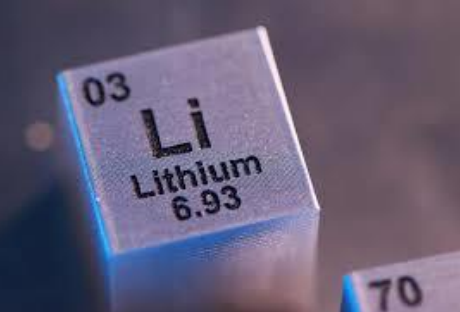
India has officially decided to pull out of a critical lithium exploration project in Mali, which was being developed in collaboration with Russia’s Rosatom. The decision highlights the growing challenges India faces in securing \'critical minerals\' from politically volatile regions, specifically the \'coup belt\' of West Africa, where rising militancy and internal instability threaten foreign investments.Key Highlights of the Withdrawal • Security Imperatives: The primary driver for the withdrawal is the deteriorating security environment in Mali, characterized by a surge in al-Qaeda-linked militancy and internal civil unrest. • Collaboration with Rosatom: The project was an rare instance of Indo-Russian collaboration in a third country (West Africa), intended to leverage Russian state nuclear corporation Rosatom’s expertise in mineral extraction. • Critical Mineral Strategy: The exit is a strategic setback for India’s \'Mission Critical Minerals,\' which aims to secure lithium—the \'White Gold\'—essential for the domestic electric vehicle (EV) industry and battery storage goals. • Western Diplomatic Influence: The move coincides with urgent advisories from Western nations for their citizens to evacuate Mali, indicating a consensus on the unviability of long-term commercial projects in the current climate. • Risk Mitigation Policy: New Delhi is shifting its focus toward \'safer\' geographies like the \'Lithium Triangle\' in South America (Argentina, Bolivia, and Chile) and Australia to ensure a stable supply chain. • Geopolitical Balancing: Pulling out of a Russian-backed project in a conflict zone reflects India’s pragmatic approach to avoid being embroiled in regional African power struggles involving Russian mercenaries (Wagner Group) and local insurgents. Constitutional & Legal Provisions • Article 73: Extends the Executive power of the Union to international trade and the protection of Indian state-backed investments abroad. • National Mineral Policy, 2019: Emphasizes the need for securing strategic minerals through overseas acquisitions to ensure national industrial security. • KABIL (Khanij Bidesh India Ltd): A joint venture of three CPSEs (NALCO, HCL, and MECL) formed specifically to identify and acquire strategic mineral assets overseas; this entity is the lead negotiator for such international lithium deals. • Foreign Policy Directives: Decisions regarding exits from sovereign projects are guided by the Ministry of External Affairs (MEA) and the Ministry of Mines, balancing economic needs with the safety of Indian personnel. Definitions of Key Terms • Lithium (White Gold): A soft, silvery-white alkali metal, critical for making rechargeable batteries for mobile phones, laptops, and electric vehicles. • Critical Minerals: Metallic or non-metallic elements that are essential for modern technologies, economy, or national security, and have a supply chain at risk of disruption. • Coup Belt: A geopolitical term used to describe the region across the Sahel in Africa (including Mali, Niger, and Burkina Faso) that has experienced a series of military takeovers in recent years. • Sovereign Risk: The risk that a foreign central bank or government will alter its laws or default on its obligations, impacting foreign investments and projects. Conclusion The withdrawal from the Mali project underscores the \'risk-return\' dilemma in India’s energy diplomacy. While Mali holds significant lithium potential, the physical risk to assets and personnel outweighed the strategic benefits. This development will likely accelerate India\'s diplomatic outreach to the \'Lithium Triangle\' in South America and strengthen the Mineral Security Partnership (MSP) with Western allies to diversify sourcing away from high-conflict zones. UPSC Relevance• Prelims: Geography of Mali (Landlocked status, Sahel region, border countries); Identification of \'Critical Minerals\' by the Ministry of Mines; KABIL and its mandate. • Mains (GS Paper II & III): India’s interests in Africa and the impact of regional instability; Energy Security and the transition to Green Energy; Supply chain resilience for high-tech manufacturing; Geopolitics of mineral resources.


Address : 506, 3rd EYE THREE (III), Opp. Induben Khakhrawala, Girish Cold Drink Cross Road, CG Road, Navrangpura, Ahmedabad, 380009.
Mobile : 8469231587 / 9586028957
E-mail: dics.upsc@gmail.com
Address: A-306, The Landmark, Urjanagar-1, Opp. Spicy Street, Kudasan – Por Road, Kudasan, Gandhinagar – 382421
Mobile : 9723832444 / 9723932444
E-mail: dics.gnagar@gmail.com
Address: 2nd Floor, 9 Shivali Society, L&T Circle, opp. Ratri Bazar, Karelibaugh, Vadodara, 390018
Mobile : 9725692037 / 9725692054
E-mail: dics.vadodara@gmail.com
Address: 403, Raj Victoria, Opp. Pal Walkway, Near Galaxy Circle, Pal, Surat-394510
Mobile : 8401031583 / 8401031587
E-mail: dics.surat@gmail.com
Address: 303,305 K 158 Complex Above Magson, Sindhubhavan Road Ahmedabad-380059
Mobile : 9974751177 / 8469231587
E-mail: dicssbr@gmail.com
Address: 57/17, 2nd Floor, Old Rajinder Nagar Market, Bada Bazaar Marg, Delhi-60
Mobile : 9104830862 / 9104830865
E-mail: dics.newdelhi@gmail.com