Ahmedabad
(Head Office)Address : 506, 3rd EYE THREE (III), Opp. Induben Khakhrawala, Girish Cold Drink Cross Road, CG Road, Navrangpura, Ahmedabad, 380009.
Mobile : 8469231587 / 9586028957
E-mail: dics.upsc@gmail.com

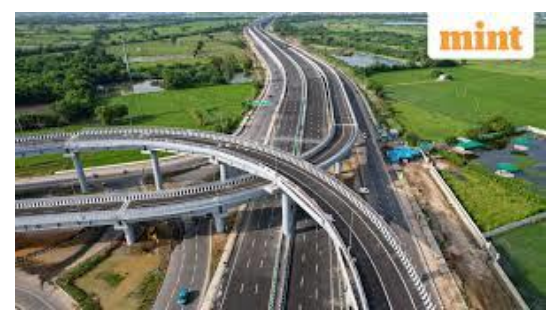
Summary of Key Highlights • Policy Shift in Highway Bidding: The Ministry of Road Transport and Highways (MoRTH) is finalizing a new Model Concession Agreement (MCA) to allow Private Equity (PE) firms, pension funds, and sovereign wealth funds to bid for greenfield highway projects at the initial auction stage• Entry of Financial Investors: Historically, financial investors could only enter once a project was operational; the new tweak allows cash-rich investors to participate from the start, even if they lack direct construction experience, provided they have technical partnerships. • Aggressive BOT Targets: The government plans a \'sharp pivot\' toward the Build-Operate-Transfer (BOT) model, targeting 5,000 km of national highway projects worth ₹75,000 crore in FY27, accounting for nearly 50% of all highway projects for that year. • Risk Rationalization: To prevent the stalling of projects seen in the late 2000s, the new MCA will offer greater flexibility in equity structuring and clearer provisions regarding traffic risk-sharing and termination payments. • Addressing Balance Sheet Constraints: By widening the competitive landscape, the government aims to bypass the financial limitations of traditional construction firms whose balance sheets have been stretched by heavy debt. • Streamlined Legal Protections: The framework includes enhanced protections against \'change-in-law\' scenarios and provides for stricter dispute resolution timelines to ensure investor confidence. Key Definitions • Build-Operate-Transfer (BOT): A project delivery model where a private entity receives a concession from the public sector to finance, design, construct, and operate a facility for a specific period (usually 20-30 years) before transferring it back to the government. • Greenfield Project: A project that is built from scratch on unused land, as opposed to \'brownfield\' projects which involve upgrading existing infrastructure. • Model Concession Agreement (MCA): The core legal document that sets the terms and conditions, risk allocation, and responsibilities between the government authority and the private developer. Constitutional & Legal Provisions • Article 257 (1): Empowers the Union to give directions to a State as to the construction and maintenance of means of communication declared to be of national or military importance. • National Highways Act, 1956: The primary legislation providing for the declaration of certain highways to be national highways and for matters connected therewith, including land acquisition and toll collection. • National Highways Authority of India (NHAI) Act, 1988: Established NHAI as an autonomous body to develop, maintain, and manage the national highway network. Comparison of Infrastructure Investment Models
Important Keypoints for UPSC • Infrastructure Pipeline: Strengthening BOT is crucial for the National Infrastructure Pipeline (NIP) and the PM Gati Shakti National Master Plan. • Private Capital Mobilization: Reducing the government\'s fiscal burden by shifting from EPC (where the state pays 100% of costs) to BOT (where the private sector brings the capital). • Asset Monetization: The move complements the National Asset Monetization Pipeline (NMP) by creating a pipeline of \'ready-to-invest\' assets for global funds. • Historical Context: Learning from the \'Twin Balance Sheet\' crisis of the 2010s, where aggressive bidding in BOT projects led to massive Non-Performing Assets (NPAs) in the banking sector. Conclusion The proposed overhaul of the BOT framework signifies a strategic transition in India’s infrastructure financing. By decoupling technical construction expertise from financial capacity, the government is inviting global institutional capital to play a foundational role in nation-building. Success will depend on how effectively the new MCA mitigates \'traffic risk\'—the primary deterrent for private players—and ensures that the competitive landscape remains sustainable rather than predatory. UPSC Relevance • GS Paper III: Indian Economy and issues relating to planning, mobilization of resources, growth, development, and employment; Infrastructure: Energy, Ports, Roads, Airports, Railways etc. • GS Paper II: Government policies and interventions for development in various sectors and issues arising out of their design and implementation. • Prelims: Concepts like BOT, HAM, EPC, and the roles of NHAI and MeitY in national development.


Address : 506, 3rd EYE THREE (III), Opp. Induben Khakhrawala, Girish Cold Drink Cross Road, CG Road, Navrangpura, Ahmedabad, 380009.
Mobile : 8469231587 / 9586028957
E-mail: dics.upsc@gmail.com
Address: A-306, The Landmark, Urjanagar-1, Opp. Spicy Street, Kudasan – Por Road, Kudasan, Gandhinagar – 382421
Mobile : 9723832444 / 9723932444
E-mail: dics.gnagar@gmail.com
Address: Tithi Commercial Complex, 401/402 Productivity Road, Opp. Productivity House, Alkapuri, Vadodara, Gujarat – 390007
Mobile : 9725692037 / 9725692054
E-mail: dics.vadodara@gmail.com
Address: 403, Raj Victoria, Opp. Pal Walkway, Near Galaxy Circle, Pal, Surat-394510
Mobile : 8401031583 / 8401031587
E-mail: dics.surat@gmail.com
Address: 303,305 K 158 Complex Above Magson, Sindhubhavan Road Ahmedabad-380059
Mobile : 9974751177 / 8469231587
E-mail: dicssbr@gmail.com
Address: 57/17, 2nd Floor, Old Rajinder Nagar Market, Bada Bazaar Marg, Delhi-60
Mobile : 9104830862 / 9104830865
E-mail: dics.newdelhi@gmail.com