
Ahmedabad
(Head Office)Address : 506, 3rd EYE THREE (III), Opp. Induben Khakhrawala, Girish Cold Drink Cross Road, CG Road, Navrangpura, Ahmedabad, 380009.
Mobile : 8469231587 / 9586028957
E-mail: dics.upsc@gmail.com


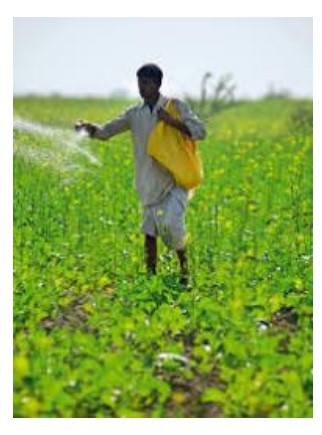
The recently announced India-US interim trade deal has brought Distillers Dried Grains with Solubles (DDGS) into the spotlight. While the deal aims to boost bilateral trade, the inclusion of this protein-rich byproduct has triggered a significant debate regarding Genetically Modified (GM) imports and their impact on Indian agriculture.• Market Access and Tariff Rationalization: Under the February 2026 pact, India has agreed to reduce or eliminate tariffs on several US agricultural products, including DDGS, red sorghum for animal feed, and soybean oil, while the US has lowered tariffs on Indian exports like textiles, leather, and seafood to 18%. • The GM Contention: The primary concern stems from the fact that US-produced DDGS is derived from Genetically Modified (GM) corn. While India prohibits the cultivation of GM food crops (allowing only GM cotton), this deal marks a significant shift by facilitating the entry of GM-linked products into the animal feed supply chain. • Impact on Domestic Farmers: Farmer organizations, including the RSS-linked Bharatiya Kisan Sangh (BKS), fear that cheap, high-quality US imports will depress domestic farm-gate prices for maize and soybean—the primary raw materials for Indian animal feed. • Support for Livestock Sector: Proponents, including the poultry and dairy industries, welcome the move. They argue that US DDGS is nutritionally superior (higher protein, lower aflatoxins) and more cost-effective than domestic alternatives, which could reduce the overall cost of milk and meat production. • Regulatory Safeguards: The Government of India has maintained a \'red line\' on direct GM grain imports (maize/soybean for human consumption) and dairy products. It asserts that processed items like DDGS and soybean oil do not carry \'live\' modified organisms and are safe under existing FSSAI guidelines. Key Definitions • Distillers Dried Grains with Solubles (DDGS): A high-protein byproduct of the ethanol fermentation process. It is used as a nutrient-dense substitute for soybean meal or corn in poultry, cattle, and aqua feed. • Transgenics (GM Crops): Organisms whose genetic material has been altered using genetic engineering techniques to include specific traits like pest resistance or herbicide tolerance. • Farm-gate Price: The market value of a product minus the selling costs (transport, marketing, etc.); essentially the net price a farmer receives for their produce. Constitutional & Legal Provisions • Article 21 (Right to Life): Interpreted by the Judiciary to include the right to safe and wholesome food, often cited in petitions against unregulated GM imports. • Environment (Protection) Act, 1986: The umbrella legislation under which the 1989 Rules govern the manufacture, use, import, and export of hazardous microorganisms or genetically engineered organisms. • Genetic Engineering Appraisal Committee (GEAC): The apex body under the Ministry of Environment, Forest and Climate Change (MoEFCC) responsible for approving the environmental release and import of GMOs.• Food Safety and Standards Act, 2006: Empowering the FSSAI to regulate the safety and labeling of GM-derived food products. FSSAI recently mandated a \'GM-free\' certificate for 24 specific food imports. UPSC Relevance • GS Paper II: Statutory, regulatory, and various quasi-judicial bodies (GEAC, FSSAI); Bilateral agreements involving India and their impact on India’s interests. • GS Paper III: Issues related to direct and indirect farm subsidies and minimum support prices; Technology missions; Economics of animal-rearing; Awareness in the fields of Bio-technology. Conclusion The India-US interim deal represents a delicate balancing act between diplomatic trade interests and domestic food sovereignty. While the import of DDGS may modernize India\'s livestock industry by providing cheaper, high-quality feed, it necessitates a robust regulatory framework to prevent \'backdoor\' GM entry and to protect the livelihoods of millions of maize and soybean farmers. The long-term success of such deals depends on transparent scientific risk assessments and ensuring that technological advancements do not undermine rural economic stability.


Address : 506, 3rd EYE THREE (III), Opp. Induben Khakhrawala, Girish Cold Drink Cross Road, CG Road, Navrangpura, Ahmedabad, 380009.
Mobile : 8469231587 / 9586028957
E-mail: dics.upsc@gmail.com
Address: A-306, The Landmark, Urjanagar-1, Opp. Spicy Street, Kudasan – Por Road, Kudasan, Gandhinagar – 382421
Mobile : 9723832444 / 9723932444
E-mail: dics.gnagar@gmail.com
Address: 2nd Floor, 9 Shivali Society, L&T Circle, opp. Ratri Bazar, Karelibaugh, Vadodara, 390018
Mobile : 9725692037 / 9725692054
E-mail: dics.vadodara@gmail.com
Address: 403, Raj Victoria, Opp. Pal Walkway, Near Galaxy Circle, Pal, Surat-394510
Mobile : 8401031583 / 8401031587
E-mail: dics.surat@gmail.com
Address: 303,305 K 158 Complex Above Magson, Sindhubhavan Road Ahmedabad-380059
Mobile : 9974751177 / 8469231587
E-mail: dicssbr@gmail.com
Address: 57/17, 2nd Floor, Old Rajinder Nagar Market, Bada Bazaar Marg, Delhi-60
Mobile : 9104830862 / 9104830865
E-mail: dics.newdelhi@gmail.com