




Ahmedabad
(Head Office)Address : 506, 3rd EYE THREE (III), Opp. Induben Khakhrawala, Girish Cold Drink Cross Road, CG Road, Navrangpura, Ahmedabad, 380009.
Mobile : 8469231587 / 9586028957
E-mail: dics.upsc@gmail.com

.png)
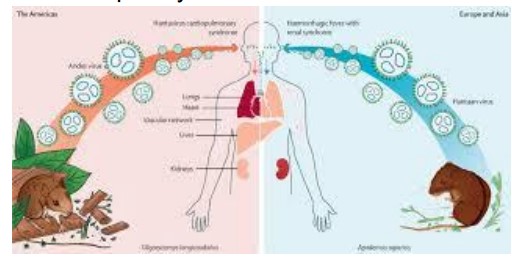
The Indian Council of Medical Research (ICMR) has achieved a major milestone in public health by initiating Phase I human clinical trials for an improved, indigenous vaccine against Kyasanur Forest Disease (KFD). Developed in collaboration with the National Institute of Virology (NIV), Pune, and Indian Immunologicals Limited (IIL), this vaccine represents a strategic effort to combat a neglected zoonotic disease endemic to India’s Western Ghats.• Indigenous Development: The new vaccine is a \'two-dose adjuvanted inactivated vaccine\' administered 28 days apart. Unlike the older formalininactivated versions which faced efficacy and production issues, this version utilizes Good Laboratory Practice (GLP)-grade material designed for higher immunogenicity. • Pre-clinical Success: Comprehensive animal challenge and toxicity studies have already been completed, demonstrating the vaccine\'s safety and ability to trigger a protective immune response before moving to human subjects. • Regional Strategic Importance: KFD, often called \'Monkey Fever,\' primarily affects five states—Karnataka, Kerala, Tamil Nadu, Goa, and Maharashtra. The development was fast-tracked following a specific request from the Karnataka government due to rising cases in the Malnad region. • Clinical Trial Roadmap: Following approval from the Central Drugs Standard Control Organization (CDSCO), Phase I trials will evaluate safety in healthy volunteers. Success here will lead to Phase II and III trials to confirm efficacy in endemic populations. • Addressing One Health Challenges: As a tick-borne zoonotic disease, KFD exemplifies the \'One Health\' approach, where human health is inextricably linked to animal health (monkeys/ticks) and the environment (Western Ghats forests). Key Definitions • Kyasanur Forest Disease (KFD): A tick-borne viral hemorrhagic fever caused by the KFD virus (KFDV), a member of the Flaviviridae family. It was first identified in 1957 in the Kyasanur Forest of Karnataka. • Adjuvanted Inactivated Vaccine: A vaccine containing a \'killed\' version of the pathogen (inactivated) combined with a substance (adjuvant) that enhances the body\'s immune response to the antigen. • GLP (Good Laboratory Practice): A quality system of management controls for research laboratories to ensure the uniformity, consistency, and reliability of non-clinical safety tests. Constitutional & Legal Provisions • Article 47: A Directive Principle of State Policy (DPSP) that mandates the State to regard the improvement of public health as among its primary duties. • The Epidemic Diseases Act, 1897: Often invoked by states like Karnataka to manage KFD outbreaks through mandatory surveillance and vaccination drives. • Seventh Schedule (Entry 6, State List & Entry 29, Concurrent List): While \'Public health and sanitation\' is a State subject, the \'Prevention of the extension from one State to another of infectious or contagious diseases\' falls under the Concurrent List, allowing Central intervention through ICMR. Additional Key Points • The Transmission Cycle: The disease spreads via the bite of infected ticks (Haemaphysalis spinigera). Monkeys are the primary amplifying hosts; their sudden deaths in forests often serve as early warning signs for human outbreaks. • Clinical Presentation: KFD is often biphasic. The first phase involves sudden high fever, prostration, and severe muscle pain. A smaller percentage of patients enter a second phase characterized by neurological symptoms like mental confusion and tremors. Conclusion The advancement of the KFD vaccine is a testament to India\'s growing self-reliance in \'niche\' medical research. By targeting a disease that is geographically localized but high in mortality (3-10%), the ICMRNIV-IIL partnership is filling a critical gap left by global pharmaceutical entities who often overlook regional neglected diseases.• GS Paper II (Social Justice/Health): Issues relating to development and management of Social Sector/Services relating to Health; role of statutory bodies like ICMR and CDSCO. • GS Paper III (S&T): Indigenous technology and developing new technology; awareness in the fields of Bio-technology and health issues. • Prelims Factor: Location-specific endemic diseases (Western Ghats), viral family of KFD (Flavivirus), and the difference between various types of vaccines (inactivated vs. mRNA).


Address : 506, 3rd EYE THREE (III), Opp. Induben Khakhrawala, Girish Cold Drink Cross Road, CG Road, Navrangpura, Ahmedabad, 380009.
Mobile : 8469231587 / 9586028957
E-mail: dics.upsc@gmail.com
Address: A-306, The Landmark, Urjanagar-1, Opp. Spicy Street, Kudasan – Por Road, Kudasan, Gandhinagar – 382421
Mobile : 9723832444 / 9723932444
E-mail: dics.gnagar@gmail.com
Address: 2nd Floor, 9 Shivali Society, L&T Circle, opp. Ratri Bazar, Karelibaugh, Vadodara, 390018
Mobile : 9725692037 / 9725692054
E-mail: dics.vadodara@gmail.com
Address: 403, Raj Victoria, Opp. Pal Walkway, Near Galaxy Circle, Pal, Surat-394510
Mobile : 8401031583 / 8401031587
E-mail: dics.surat@gmail.com
Address: 303,305 K 158 Complex Above Magson, Sindhubhavan Road Ahmedabad-380059
Mobile : 9974751177 / 8469231587
E-mail: dicssbr@gmail.com
Address: 57/17, 2nd Floor, Old Rajinder Nagar Market, Bada Bazaar Marg, Delhi-60
Mobile : 9104830862 / 9104830865
E-mail: dics.newdelhi@gmail.com