





Ahmedabad
(Head Office)Address : 506, 3rd EYE THREE (III), Opp. Induben Khakhrawala, Girish Cold Drink Cross Road, CG Road, Navrangpura, Ahmedabad, 380009.
Mobile : 8469231587 / 9586028957
E-mail: dics.upsc@gmail.com


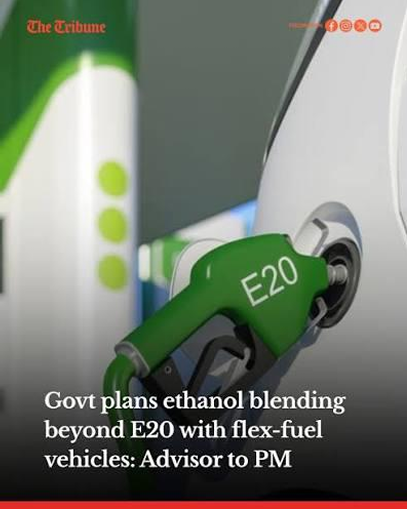
Under the recently approved BioE3 (Biotechnology for Economy, Environment and Employment) Policy (2024), India has identified bio-based chemicals and enzymes as a core thematic vertical. This strategic shift aims to transition India from a petroleum-dependent industrial base toward a Circular Bioeconomy. By leveraging biological feedstocks and advanced fermentation technologies, India seeks to decouple economic growth from fossil fuel consumption while addressing net-zero targets and reducing its multi-billion dollar import bill for industrial intermediates. • Pillar of BioE3 Policy: Bio-based chemicals and enzymes are among the six priority sectors under the BioE3 framework. The policy facilitates High-Performance Biomanufacturing by integrating \'Bio-AI Hubs\' and \'Biofoundries\' to bridge the gap between lab-scale research and commercial production. • Strategic Import Substitution: India’s heavy reliance on petrochemical imports (e.g., $479.8 million for acetic acid alone in 2023) creates a vulnerability. Domestically produced bio-based organic acids, alcohols, and solvents provide a resilient, sustainable alternative for the plastics, pharma, and textile industries. • Biocatalysis for Efficiency: Enzymes act as biological catalysts that operate at lower temperatures and pressures than traditional chemical processes. This reduces energy consumption and toxic waste, directly supporting the Mission LiFE (Lifestyle for Environment) objective of mindful resource utilization. • Agrarian Linkages: Scaling bio-based chemicals creates a high-value market for agricultural residues (biomass) and starch-rich crops. This \'Agrarian-Industrial Nexus\' boosts rural incomes and provides a decentralized manufacturing model that reduces migration pressure on metropolitan centers. • Consolidated Market Leadership: The Indian enzyme market is highly consolidated, with the top players (e.g., Novozymes, DuPont, Advance Enzyme) controlling over 75% of the share. The government aims to foster more indigenous startups (like StringBio) to democratize the technology and lower the capital expenditure barrier through shared infrastructure. • Global Competitive Landscape: While the U.S. uses the USDA BioPreferred Program and the EU follows the Bioeconomy Strategy, India’s advantage lies in its world-class fermentation expertise inherited from its generic pharmaceutical and vaccine leadership. Key Definitions • Bio-based Chemicals: Industrial chemicals derived from renewable biological resources (sugarcane, corn, biomass) rather than fossil hydrocarbons. • Enzymes: Proteins that act as biological catalysts, accelerating chemical reactions with high specificity and minimal by-products. • Biomanufacturing: The use of biological systems (microbes, plant cells, enzymes) to produce commercially important products at scale.• Biofoundries: Integrated facilities that combine automation, biology, and data science to rapidly design, build, and test new biological systems for industrial use. Constitutional & Legal Provisions • Article 48A: Directive Principle of State Policy (DPSP) mandating the State to protect and improve the environment, aligning with bio-based green chemistry. • Article 51A(g): Fundamental Duty to protect and improve the natural environment, which supports the transition from toxic petrochemicals to biodegradable bio-inputs. • The Environment (Protection) Act, 1986: Provides the overarching framework for regulating industrial waste and pollution, increasingly favoring bio-based alternatives. • National Policy on Biofuels (2018): Although focused on energy, its 2022 amendments and the push for 20% ethanol blending (E20) provide the foundational infrastructure for the bio-chemical sector. Additional Key Points • The \'Cost Barrier\': Currently, bio-based chemicals often face a higher price point compared to their petroleum-derived counterparts. Government \'Green Procurement\' policies and carbon credits are essential to level the playing field. • Shared Infrastructure: The BioE3 policy emphasizes setting up Bio-Enabler Hubs in Tier-II and TierIII cities to lower the \'death valley\' risk for biotech startups that cannot afford private large-scale fermentation plants. • Circular Economy: Bio-based chemicals are inherently regenerative; their waste is often biodegradable or can be recycled back into the agricultural system as bio-fertilizers. Conclusion The shift toward bio-based chemicals and enzymes is not merely a scientific endeavor but a macroeconomic necessity for India. By integrating the BioE3 Policy with its existing pharmaceutical prowess, India is positioned to lead the Global South in sustainable industrialization. The success of this transition will depend on the effective rollout of Biofoundries and a regulatory framework that incentivizes green alternatives over traditional petrochemicals. UPSC Relevance • GS Paper II: Government policies and interventions for development in various sectors; Issues arising out of their design and implementation. • GS Paper III: Science and Technology- developments and their applications and effects in everyday life; Conservation, environmental pollution and degradation; Economy (Import substitution, net-zero targets). • Mains Context: Questions often focus on \'Biotechnology as a driver of Green Growth,\' \'Circular Bioeconomy,\' and \'Role of bio-manufacturing in achieving $5 trillion economy.\'


Address : 506, 3rd EYE THREE (III), Opp. Induben Khakhrawala, Girish Cold Drink Cross Road, CG Road, Navrangpura, Ahmedabad, 380009.
Mobile : 8469231587 / 9586028957
E-mail: dics.upsc@gmail.com
Address: A-306, The Landmark, Urjanagar-1, Opp. Spicy Street, Kudasan – Por Road, Kudasan, Gandhinagar – 382421
Mobile : 9723832444 / 9723932444
E-mail: dics.gnagar@gmail.com
Address: 2nd Floor, 9 Shivali Society, L&T Circle, opp. Ratri Bazar, Karelibaugh, Vadodara, 390018
Mobile : 9725692037 / 9725692054
E-mail: dics.vadodara@gmail.com
Address: 403, Raj Victoria, Opp. Pal Walkway, Near Galaxy Circle, Pal, Surat-394510
Mobile : 8401031583 / 8401031587
E-mail: dics.surat@gmail.com
Address: 303,305 K 158 Complex Above Magson, Sindhubhavan Road Ahmedabad-380059
Mobile : 9974751177 / 8469231587
E-mail: dicssbr@gmail.com
Address: 57/17, 2nd Floor, Old Rajinder Nagar Market, Bada Bazaar Marg, Delhi-60
Mobile : 9104830862 / 9104830865
E-mail: dics.newdelhi@gmail.com