


Ahmedabad
(Head Office)Address : 506, 3rd EYE THREE (III), Opp. Induben Khakhrawala, Girish Cold Drink Cross Road, CG Road, Navrangpura, Ahmedabad, 380009.
Mobile : 8469231587 / 9586028957
Telephone : 079-40098991
E-mail: dics.upsc@gmail.com


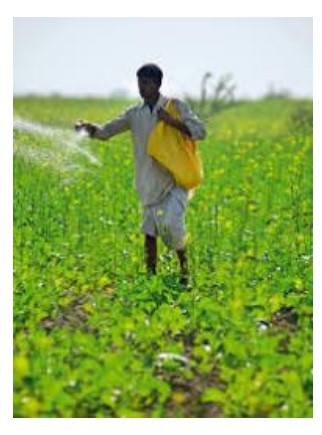
The recent U.S. retraction of specific clauses in the joint statement and factsheet highlights the sensitivities surrounding bilateral trade negotiations. The move aimed to align official documentation with the negotiated consensus, particularly regarding agricultural market access and investment commitments. Core Summary of the Development • Correction of Joint Statement: The White House removed unilateral additions to the India-U.S. joint statement that referenced specific Indian \'commitments\' and sensitive sectors not originally agreed upon. • Agricultural Sensitivities: Explicit references to \'pulses\' and specific \'agricultural products\' were dropped following concerns from New Delhi regarding domestic farm sector protections. • Investment Clarification: The U.S. corrected the narrative regarding a $500 billion investment; India clarified this was an \'intention\' or target over five years, rather than a legally binding obligation. • Digital Service Tax (DST): References to the Digital Service Tax were removed to maintain the status quo as negotiations continue under the OECD/G20 Inclusive Framework on Base Erosion and Profit Shifting (BEPS). • Tariff Rationalization: Despite the removals, the revised factsheet maintains that India will reduce or eliminate tariffs on industrial goods and specific food items like red sorghum, tree nuts, and soybean oil. • Diplomatic Recalibration: This backtracking underscores the importance of \'jointness\' in bilateral statements to prevent domestic political backlash and ensure the stability of the interim trade deal. Key Definitions • Interim Trade Agreement: Often called an \'Early Harvest Scheme,\' it is a limited-scope trade deal where two countries liberalize tariffs on a select list of goods before concluding a comprehensive Free Trade Agreement (FTA). • Digital Service Tax (DST): A tax (like India’s Equalization Levy) applied to the revenues that large multinational digital corporations earn from a country\'s users, often a point of contention with the U.S. • Dried Distillers’ Grains (DDGs): A nutrient-rich byproduct of the ethanol production process used primarily as high-protein livestock feed. Constitutional and Legal Context • Article 73: Extends the executive power of the Union of India to matters with respect to which Parliament has the power to make laws, including entering into international treaties and agreements. • Entry 14, Union List (Schedule VII): Grants the Central Government exclusive power over \'Entering into treaties and agreements with foreign countries and implementing of treaties, agreements and conventions with foreign companies.\' • Section 5 of the Customs Act, 1962: Provides the legal backing for the government to notify changes in tariff rates as per international trade commitments. Additional Key Points • Market Access vs. Sovereignty: The removal of \'commitments\' language protects India’s policy space to adjust investment flows based on domestic economic health.• The \'Pulses\' Factor: Pulses are a staple in India and a politically sensitive crop; any perceived threat to local farmers through unchecked U.S. imports could trigger significant agrarian unrest. • Strategic Partnership: The swift correction by the U.S. suggests a desire to keep the broader Initiative on Critical and Emerging Technology (iCET) and defense cooperation on track without being derailed by trade technicalities. Conclusion The U.S. administration\'s decision to revert to the original text signifies a pragmatic approach to bilateralism. By removing contentious references to digital taxes and binding investment figures, both nations have preserved the momentum of the interim deal. For India, this represents a successful assertion of its \'red lines\' in trade negotiations, ensuring that market liberalization does not come at the cost of domestic agricultural security or fiscal autonomy. UPSC Relevance • GS Paper II: Bilateral, regional, and global groupings and agreements involving India and/or affecting India’s interests. • GS Paper III: Issues related to direct and indirect farm subsidies and minimum support prices; effects of liberalization on the economy. • Mains Perspective: Understanding the nuances of \'Trade Diplomacy\' and the friction between domestic protectionism and global trade integration.


Address : 506, 3rd EYE THREE (III), Opp. Induben Khakhrawala, Girish Cold Drink Cross Road, CG Road, Navrangpura, Ahmedabad, 380009.
Mobile : 8469231587 / 9586028957
Telephone : 079-40098991
E-mail: dics.upsc@gmail.com
Address: A-306, The Landmark, Urjanagar-1, Opp. Spicy Street, Kudasan – Por Road, Kudasan, Gandhinagar – 382421
Mobile : 9723832444 / 9723932444
E-mail: dics.gnagar@gmail.com
Address: 2nd Floor, 9 Shivali Society, L&T Circle, opp. Ratri Bazar, Karelibaugh, Vadodara, 390018
Mobile : 9725692037 / 9725692054
E-mail: dics.vadodara@gmail.com
Address: 403, Raj Victoria, Opp. Pal Walkway, Near Galaxy Circle, Pal, Surat-394510
Mobile : 8401031583 / 8401031587
E-mail: dics.surat@gmail.com
Address: 303,305 K 158 Complex Above Magson, Sindhubhavan Road Ahmedabad-380059
Mobile : 9974751177 / 8469231587
E-mail: dicssbr@gmail.com
Address: 57/17, 2nd Floor, Old Rajinder Nagar Market, Bada Bazaar Marg, Delhi-60
Mobile : 9104830862 / 9104830865
E-mail: dics.newdelhi@gmail.com