

Ahmedabad
(Head Office)Address : 506, 3rd EYE THREE (III), Opp. Induben Khakhrawala, Girish Cold Drink Cross Road, CG Road, Navrangpura, Ahmedabad, 380009.
Mobile : 8469231587 / 9586028957
Telephone : 079-40098991
E-mail: dics.upsc@gmail.com

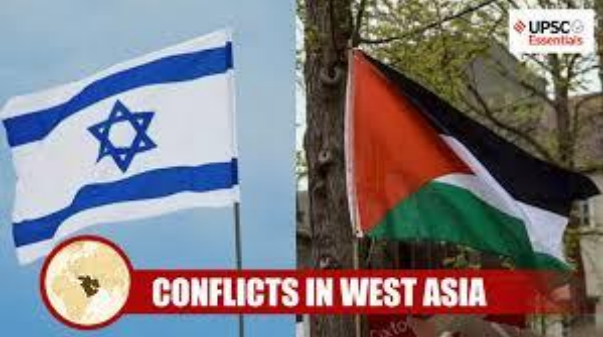
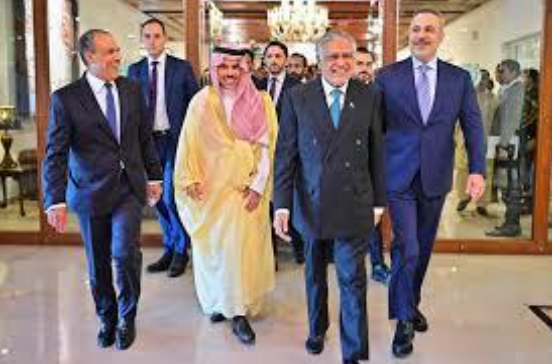
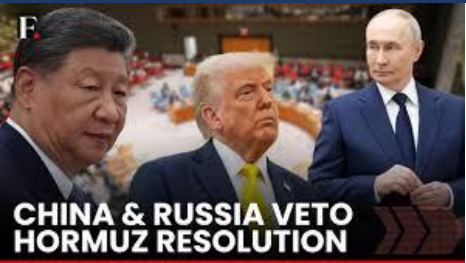
• European Strategic Autonomy and NATO Friction: Major European powers, including France, Italy, and Spain, have actively restricted US-Israeli military operations within their territories and airspace. This includes France’s refusal to permit the transport of American weapons to Israel and Italy’s denial of landing rights at the Sigonella air base in Sicily for aircraft bound for the Middle East. These actions highlight a growing rift within NATO, with US President Donald Trump publicly criticizing European allies for a perceived lack of support in the ongoing conflict with Iran. • Spain’s Legalist Stance: Spain has emerged as a vocal critic, closing its airspace to US planes involved in Iranian strikes. Foreign Minister Jose Manuel Albares cited the necessity of upholding international law, the UN Charter, and global peace as the primary drivers for this decision. This underscores a shift where middle powers are prioritizing multilateral legal frameworks over traditional bilateral military alliances. • China-Pakistan Five-Point Peace Proposal: In a diplomatic counter-move, Beijing and Islamabad have proposed a joint peace plan for West Asia. The framework emphasizes an immediate cessation of hostilities, initiation of peace talks, restoration of regional stability, ensuring safe passage through the Strait of Hormuz, and safeguarding the primacy of the UN Charter. • Sovereignty and Territorial Integrity: The joint statement by Foreign Ministers Wang Yi and Ishaq Dar stresses that the sovereignty and national independence of Iran and Gulf states must be protected. It advocates for the principle of non-intervention and the protection of civilians in conflict zones as nonnegotiable pillars of regional security. • Escalation in Lebanon: Recent Israeli strikes hitting civilian infrastructure near the Beirut airport road indicate an expansion of the kinetic theater beyond Iran, raising significant humanitarian concerns and complicating the diplomatic efforts for a ceasefire. • International Law and Multilateralism: The crisis emphasizes the tension between \'might is right\' unilateralism and the legalist approach adopted by European nations. It brings to the forefront the role of the UN Charter in regulating the use of force and the rights of transit for military supplies under international treaties. Key Definitions and Legal Provisions International Law & UN Charter: The body of rules that governs the relations between states. Article 2(4) of the UN Charter prohibits the threat or use of force against the territorial integrity or political independence of any state. Strategic Autonomy: The ability of a state or a bloc (like the EU) to pursue its own national interests and adopt its own foreign policy without being overly dependent on other states. Strait of Hormuz: A vital chokepoint between the Persian Gulf and the Gulf of Oman; it is the world\'s most important oil transit checkpoint, governed largely by the UN Convention on the Law of the Sea (UNCLOS). Sigonella Air Base: A major NATO base in Italy; the denial of its use illustrates the exercise of \'Host Nation Support\' rights, where a sovereign state restricts foreign military use of its facilities during specific conflicts. Conclusion The current geopolitical climate reflects a significant realignment of power dynamics. While the US continues to exert military pressure in West Asia, its traditional European allies are increasingly using international law as a shield to distance themselves from unilateral military engagements. Simultaneously, the China-Pakistan axis is positioning itself as a diplomatic mediator, leveraging the principles of sovereignty and the UN Charter to fill the vacuum left by fractured Western alliances. The situation remains volatile, with the potential for either a regional conflagration or a new multilateral security architecture. UPSC Relevance GS Paper II (International Relations): This topic is critical for understanding \'Effect of policies and politics of developed and developing countries on India’s interests.\' It touches upon India\'s \'Link West\' policy, the stability of energy corridors (Strait of Hormuz), and India’s stance on sovereignty versus intervention.


Address : 506, 3rd EYE THREE (III), Opp. Induben Khakhrawala, Girish Cold Drink Cross Road, CG Road, Navrangpura, Ahmedabad, 380009.
Mobile : 8469231587 / 9586028957
Telephone : 079-40098991
E-mail: dics.upsc@gmail.com
Address: A-306, The Landmark, Urjanagar-1, Opp. Spicy Street, Kudasan – Por Road, Kudasan, Gandhinagar – 382421
Mobile : 9723832444 / 9723932444
E-mail: dics.gnagar@gmail.com
Address: 2nd Floor, 9 Shivali Society, L&T Circle, opp. Ratri Bazar, Karelibaugh, Vadodara, 390018
Mobile : 9725692037 / 9725692054
E-mail: dics.vadodara@gmail.com
Address: 403, Raj Victoria, Opp. Pal Walkway, Near Galaxy Circle, Pal, Surat-394510
Mobile : 8401031583 / 8401031587
E-mail: dics.surat@gmail.com
Address: 303,305 K 158 Complex Above Magson, Sindhubhavan Road Ahmedabad-380059
Mobile : 9974751177 / 8469231587
E-mail: dicssbr@gmail.com
Address: 57/17, 2nd Floor, Old Rajinder Nagar Market, Bada Bazaar Marg, Delhi-60
Mobile : 9104830862 / 9104830865
E-mail: dics.newdelhi@gmail.com