




Ahmedabad
(Head Office)Address : 506, 3rd EYE THREE (III), Opp. Induben Khakhrawala, Girish Cold Drink Cross Road, CG Road, Navrangpura, Ahmedabad, 380009.
Mobile : 8469231587 / 9586028957
E-mail: dics.upsc@gmail.com


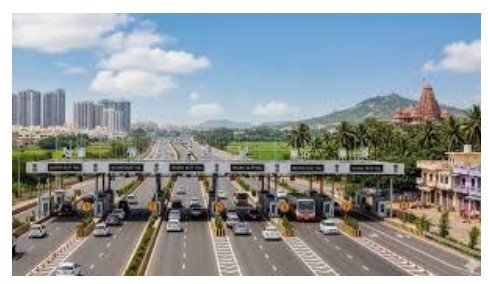
The Union Budget 2026 has introduced a paradigm shift in India’s trade ecosystem, prioritizing the removal of procedural bottlenecks and \'Inspector Raj\' at ports to integrate India into Global Value Chains (GVCs). • Customs Process Liberalization: The core of the reform lies in replacing intrusive physical inspections with technology-driven solutions. High-resolution scanners and automated registration systems are set to replace manual \'peeks\' into containers, significantly reducing dwell time at ports. • SEZ Flexibility and Domestic Access: A crucial \'one-off relief\' allows export-oriented manufacturers in Special Economic Zones (SEZs) to sell a portion of their output in the Domestic Tariff Area (DTA) at concessional duty rates, improving capacity utilization during global trade volatility. • Input Cost Optimization: To boost export competitiveness, the budget enlarges duty-free import quotas for essential inputs in high-potential sectors like leatherwear and seafood. This \'duty-free\' approach ensures that Indian exporters are not \'exporting taxes.\' • Strategic Tariff Exemptions: Tariff barriers have been eliminated for critical capital goods and components. Key beneficiaries include the aircraft manufacturing sector, nuclear power projects, and the processing of critical minerals, aligning trade policy with national energy and security goals. • Integration into Global Value Chains (GVCs): By automating clearances, India aims to meet the \'just-in-time\' requirements of modern GVCs. Easing customs friction is viewed as a prerequisite for Indian firms to compete with regional rivals like Vietnam and Thailand. • The Tariff Reduction Debate: While procedural easing is lauded, the budget maintains a cautious stance on broad-based tariff reductions. Trade economists argue that sustained export success is historically correlated with lower across-the-board import tariffs, a gap that remains in the current policy. Key Definitions • Inspector Raj: A term describing an over-regulated environment where bureaucratic hurdles and manual inspections by officials (inspectors) lead to corruption, delays, and high compliance costs. • Global Value Chains (GVCs): The international fragmented production process where different stages of production occur in different countries. • Domestic Tariff Area (DTA): An area within India that is outside the SEZs; selling from SEZ to DTA usually attracts full import duties unless concessions are granted. Constitutional and Legal Framework • Article 301-307: Deal with freedom of trade, commerce, and intercourse within the territory of India. • Customs Act, 1962: The primary legislation governing the entry and exit of goods, recently amended to accommodate \'faceless assessment\' and \'contactless customs.\' • Special Economic Zones (SEZ) Act, 2005: Provides the legal framework for the establishment and management of SEZs, focusing on export promotion. • Foreign Trade (Development and Regulation) Act, 1992: Empowers the government to formulate the Foreign Trade Policy (FTP). Additional Keypoints for Analysis• Trade Facilitation Agreement (TFA): These reforms align with India’s commitments under the WTO’s TFA, specifically regarding the \'Single Window Interface for Facilitating Trade\' (SWIFT). • Critical Minerals Focus: Exemption of duties on capital goods for critical minerals is vital for the semiconductor and EV battery ecosystem. • Logistics Cost: India’s logistics cost is approximately 13-14% of GDP; the budget aims to bring this down to a single digit via port-side automation. Conclusion While the Union Budget takes a decisive leap toward \'Trust-based Governance\' by leveraging technology to end port-level harassment, the strategy remains focused on targeted sectoral relief rather than a wholesale shift toward a low-tariff regime. For India to become a global manufacturing hub, procedural ease must eventually be coupled with a simplified and competitive tariff structure. UPSC Relevance • GS Paper II: Government policies and interventions for development in various sectors. • GS Paper III: Indian Economy and issues relating to planning, mobilization of resources, growth, development, and employment; Effects of liberalization on the economy. • Prelims: Concepts related to SEZs, Customs Duties, WTO Trade Facilitation Agreement, and Critical Minerals.


Address : 506, 3rd EYE THREE (III), Opp. Induben Khakhrawala, Girish Cold Drink Cross Road, CG Road, Navrangpura, Ahmedabad, 380009.
Mobile : 8469231587 / 9586028957
E-mail: dics.upsc@gmail.com
Address: A-306, The Landmark, Urjanagar-1, Opp. Spicy Street, Kudasan – Por Road, Kudasan, Gandhinagar – 382421
Mobile : 9723832444 / 9723932444
E-mail: dics.gnagar@gmail.com
Address: 2nd Floor, 9 Shivali Society, L&T Circle, opp. Ratri Bazar, Karelibaugh, Vadodara, 390018
Mobile : 9725692037 / 9725692054
E-mail: dics.vadodara@gmail.com
Address: 403, Raj Victoria, Opp. Pal Walkway, Near Galaxy Circle, Pal, Surat-394510
Mobile : 8401031583 / 8401031587
E-mail: dics.surat@gmail.com
Address: 303,305 K 158 Complex Above Magson, Sindhubhavan Road Ahmedabad-380059
Mobile : 9974751177 / 8469231587
E-mail: dicssbr@gmail.com
Address: 57/17, 2nd Floor, Old Rajinder Nagar Market, Bada Bazaar Marg, Delhi-60
Mobile : 9104830862 / 9104830865
E-mail: dics.newdelhi@gmail.com