


Ahmedabad
(Head Office)Address : 506, 3rd EYE THREE (III), Opp. Induben Khakhrawala, Girish Cold Drink Cross Road, CG Road, Navrangpura, Ahmedabad, 380009.
Mobile : 8469231587 / 9586028957
E-mail: dics.upsc@gmail.com

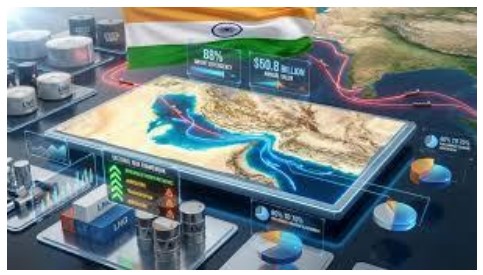
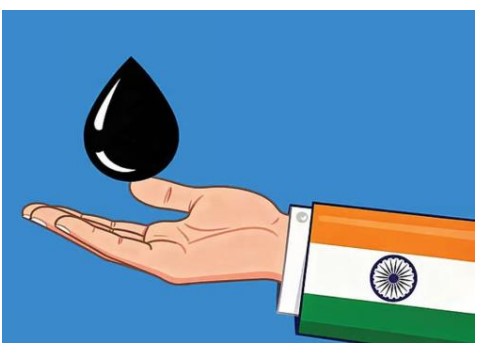
The Informal Group of Ministers (IGoM), chaired by Defence Minister Rajnath Singh, recently reviewed India preparedness regarding the escalating West Asian crisis. The assessment confirms that India maintains a robust cushion against global supply chain disruptions through strategic stockpiling and fiscal interventions.
Core Summary of India’s Preparedness
• Strategic Fuel Reserves: India currently maintains 60 days of crude oil reserves, 60 days of natural gas, and 45 days of LPG rolling stock, ensuring a buffer against immediate maritime or geopolitical blockades.
• Price Stability vs. Global Trends: While global fuel prices have surged by 30% to 70% in various nations, Indian domestic petroleum prices remain stable despite over 70 days of continuous international volatility.
• Fiscal Shielding by OMCs: Indian Oil Marketing Companies (OMCs) are absorbing significant financial pressure, with daily losses of nearly ₹1,000 crore and under-recoveries reaching approximately ₹2 lakh crore in Q1 2026 to insulate consumers.
• Strong External Sector: India foreign exchange reserves stand at a formidable $703 billion, providing the necessary firepower to manage the import bill and stabilize the Rupee if energy costs spike further.
• Commodity & Supply Chain Stability: Essential commodities remain in sufficient supply with stable logistics, prompting the government to advise against panic buying while advocating for responsible consumption.
Key Definitions & Concepts
• Strategic Petroleum Reserves (SPR): Huge stockpiles of crude oil stored in underground salt caverns or salt domes to serve as a cushion during any external supply shock.
• Under-Recoveries: The difference between the price that OMCs receive (regulated/subsidized) and the actual cost of importing and refining the crude oil.
• Informal Group of Ministers (IGoM): A high-level coordination body constituted to handle specific, often sensitive, multi-departmental issues without the rigid formalities of a permanent Cabinet Committee.
Constitutional & Legal Provisions
• Article 74: Deals with the Council of Ministers; the IGoM functions under the executive power of the Union to ensure collective responsibility in crisis management.
• Essential Commodities Act, 1955: Provides the legal framework for the government to regulate the production, supply, and distribution of petroleum and essential goods to prevent hoarding during global conflicts.
• Energy Conservation Act, 2001: While primarily focused on efficiency, it provides the basis for the government’s appeal for responsible fuel consumption to strengthen long-term energy security.
Additional Strategic Keypoints
• Diversification of Imports: Beyond the Middle East, India has increasingly looked toward Russia, the US, and Brazil to mitigate geographic concentration risk.
• Integrated Energy Management: The involvement of the Defence Ministry alongside Petroleum and Finance Ministries signifies that energy security is now viewed through the lens of National Security.
• Demand-Side Management: The Prime Minister appeal for public participation in fuel conservation marks a shift toward Jan Andolan (People Movement) for resource resilience.
Conclusion
India current stance reflects a proactive insulation strategy. By leveraging record-high Forex reserves and utilizing OMCs as a fiscal buffer, the government has successfully decoupled domestic inflation from global energy volatility. However, the staggering under-recoveries of ₹2 lakh crore suggest that while the citizen is protected, the fiscal health of energy PSUs will require mid-term recalibration if the West Asian conflict becomes a protracted war of attrition.
UPSC Relevance
• GS Paper II: Bilateral, regional, and global groupings involving India (Impact of West Asian conflict on Indian interests).
• GS Paper III: Energy Security, Mobilization of Resources, and Inflation management.
• Prelims: Data on Forex reserves, SPR locations (Visakhapatnam, Mangaluru, Padur), and the role of the Ministry of Petroleum and Natural Gas.


Address : 506, 3rd EYE THREE (III), Opp. Induben Khakhrawala, Girish Cold Drink Cross Road, CG Road, Navrangpura, Ahmedabad, 380009.
Mobile : 8469231587 / 9586028957
E-mail: dics.upsc@gmail.com
Address: A-306, The Landmark, Urjanagar-1, Opp. Spicy Street, Kudasan – Por Road, Kudasan, Gandhinagar – 382421
Mobile : 9723832444 / 9723932444
E-mail: dics.gnagar@gmail.com
Address: 2nd Floor, 9 Shivali Society, L&T Circle, opp. Ratri Bazar, Karelibaugh, Vadodara, 390018
Mobile : 9725692037 / 9725692054
E-mail: dics.vadodara@gmail.com
Address: 403, Raj Victoria, Opp. Pal Walkway, Near Galaxy Circle, Pal, Surat-394510
Mobile : 8401031583 / 8401031587
E-mail: dics.surat@gmail.com
Address: 303,305 K 158 Complex Above Magson, Sindhubhavan Road Ahmedabad-380059
Mobile : 9974751177 / 8469231587
E-mail: dicssbr@gmail.com
Address: 57/17, 2nd Floor, Old Rajinder Nagar Market, Bada Bazaar Marg, Delhi-60
Mobile : 9104830862 / 9104830865
E-mail: dics.newdelhi@gmail.com