

Ahmedabad
(Head Office)Address : 506, 3rd EYE THREE (III), Opp. Induben Khakhrawala, Girish Cold Drink Cross Road, CG Road, Navrangpura, Ahmedabad, 380009.
Mobile : 8469231587 / 9586028957
E-mail: dics.upsc@gmail.com

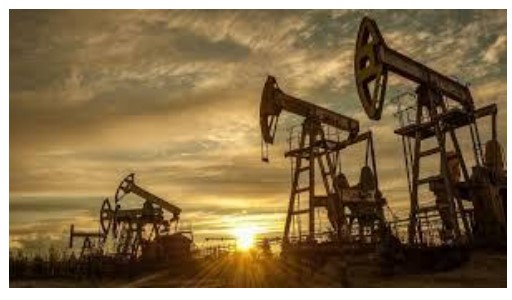
State-owned Oil Marketing Companies (OMCs), including Indian Oil, Bharat Petroleum, and Hindustan Petroleum, are currently facing significant financial strain due to a freeze on retail prices for petrol, diesel, and cooking gas. Despite rising global crude oil prices driven by the West Asia crisis, domestic retail rates have remained unchanged to protect consumers from inflationary shocks. This decoupling of domestic prices from international market trends has led to a substantial accumulation of financial losses for these entities.
Key Highlights of the Fuel Price Freeze
• Massive Under-recoveries: State-owned OMCs are estimated to be incurring underrecoveries of approximately Rs 30,000 crore per month on the sale of petrol, diesel, and cooking gas.
• Impact of Global Crisis: The surge in international oil prices is primarily attributed to the ongoing West Asia conflict and the potential closure of the Strait of Hormuz, a critical maritime oil transit route.
• Broadening Loss Spectrum: Beyond transport fuels, OMCs are also losing revenue on the sale of Aviation Turbine Fuel (ATF) for domestic flights, further impacting their balance sheets.
• Absence of Compensation: Currently, there are no immediate government plans to compensate OMCs for these ballooning losses, leading to intense speculation regarding an imminent price hike.
• LPG Intervention: While the government has previously intervened to cushion OMCs against LPG-related losses, such support for the current fiscal period remains uncertain but cannot be ruled out.
• Macroeconomic Warning: The State Bank of India (SBI) has cautioned that a prolonged war in West Asia could lead to a moderation in demand, further complicating the energy economics for India.
Definitions of Key Terms
• Oil Marketing Companies (OMCs): Entities responsible for the refining, distribution, and marketing of petroleum products to the end consumer.
• Under-recoveries: The difference between the actual retail price of fuel and the price the OMCs should ideally charge to cover import costs and refining margins.
• Aviation Turbine Fuel (ATF): A specialized type of petroleum-based fuel used to power aircraft.
• Strait of Hormuz: A strategically vital waterway between the Persian Gulf and the Gulf of Oman through which a significant portion of the world\'s oil supply passes.
Constitutional and Legal Provisions
• Article 38 & 39 (DPSP): These Directive Principles mandate the State to promote the welfare of the people and ensure that the ownership and control of material resources are distributed to best subserve the common good, often used to justify fuel subsidies.
• Petroleum Act, 1934: The primary legal framework governing the import, transport, storage, and production of petroleum and other inflammable substances in India.
• Essential Commodities Act, 1955: Empowering the government to regulate the price and distribution of petroleum products to ensure availability and prevent hoarding.
• Administered Price Mechanism (APM): Historically, the system where the government set fuel prices; though officially deregulated, informal freezes like the current one reflect a de facto APM during crises.
Additional Important Key Points
• Fiscal Deficit Concerns: If the government eventually decides to compensate OMCs, it could increase the fiscal deficit, affecting India\'s sovereign credit rating.
• Inflation Management: The price freeze is a critical tool used by the government to keep the Consumer Price Index (CPI) within the RBI’s target range of 4% (+/- 2%).
• Energy Security: The situation underscores India’s vulnerability to geopolitical tensions in the Middle East, as the country imports over 80% of its crude oil requirements.
Conclusion The current situation presents a classic Trilemma for the Indian government: balancing the financial health of state-owned OMCs, managing retail inflation for the common man, and maintaining fiscal discipline. While the freeze provides temporary relief to consumers, the sustainability of Rs 30,000 crore monthly losses is questionable. A strategic shift toward diversifying energy sources and increasing domestic production is essential to mitigate such external shocks in the long term.
UPSC Relevance
• GS Paper II: Government policies and interventions for development in various sectors and issues arising out of their design and implementation.
• GS Paper III: Indian Economy and issues relating to planning, mobilization of resources, growth, and development; Infrastructure: Energy; Effect of liberalization on the economy.
• Current Affairs: Geopolitical impacts on the Indian economy, specifically the West Asia crisis and its resonance with domestic fuel pricing and energy security.


Address : 506, 3rd EYE THREE (III), Opp. Induben Khakhrawala, Girish Cold Drink Cross Road, CG Road, Navrangpura, Ahmedabad, 380009.
Mobile : 8469231587 / 9586028957
E-mail: dics.upsc@gmail.com
Address: A-306, The Landmark, Urjanagar-1, Opp. Spicy Street, Kudasan – Por Road, Kudasan, Gandhinagar – 382421
Mobile : 9723832444 / 9723932444
E-mail: dics.gnagar@gmail.com
Address: 2nd Floor, 9 Shivali Society, L&T Circle, opp. Ratri Bazar, Karelibaugh, Vadodara, 390018
Mobile : 9725692037 / 9725692054
E-mail: dics.vadodara@gmail.com
Address: 403, Raj Victoria, Opp. Pal Walkway, Near Galaxy Circle, Pal, Surat-394510
Mobile : 8401031583 / 8401031587
E-mail: dics.surat@gmail.com
Address: 303,305 K 158 Complex Above Magson, Sindhubhavan Road Ahmedabad-380059
Mobile : 9974751177 / 8469231587
E-mail: dicssbr@gmail.com
Address: 57/17, 2nd Floor, Old Rajinder Nagar Market, Bada Bazaar Marg, Delhi-60
Mobile : 9104830862 / 9104830865
E-mail: dics.newdelhi@gmail.com