







Ahmedabad
(Head Office)Address : 506, 3rd EYE THREE (III), Opp. Induben Khakhrawala, Girish Cold Drink Cross Road, CG Road, Navrangpura, Ahmedabad, 380009.
Mobile : 8469231587 / 9586028957
Telephone : 079-40098991
E-mail: dics.upsc@gmail.com

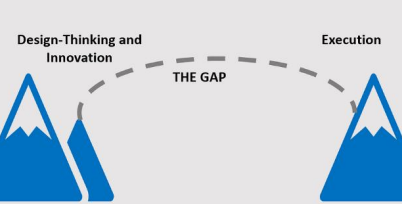
India’s Research, Development, and Innovation (RDI) landscape currently presents a stark contradiction: high policy ambition and improved global rankings alongside shallow private sector participation and weak fundamental indicators. While the government has significantly increased funding—exemplified by the ₹1,00,000 crore RDI Fund and the SHANTI Act 2025—India’s R&D intensity remains stagnant at 0.65% of GDP. To transition into a \'Viksit Bharat,\' the focus must shift from state-led initiatives to a robust, industrydriven innovation ecosystem that prioritizes long-term, high-risk research over short-term service-based models. • Stagnant R&D Intensity: India’s R&D expenditure as a percentage of GDP remains a low 0.65%, the lowest among BRICS nations except South Africa, trailing significantly behind global leaders like Japan and South Korea. • Funding vs. Outcome Gap: Despite a ₹1 trillion RDI corpus and a six-fold increase in Atal Tinkering Lab funding (to ₹3,200 crore), the translation of research into commercially viable products remains the weakest link in the RDI chain. • Patent Scale and Quality: While domestic patent filings nearly doubled to over 1,10,000 in 2024-25, India’s global presence via Patent Cooperation Treaty (PCT) applications (4,547) is a small fraction of China’s (70,000+) or the USA’s (54,000+). • Human Capital and Gender Deficit: India ranks poorly in the GII 2025 on knowledge-intensive employment (95th) and number of full-time researchers (80th), with a significant gender gap in advanced-degree employment (101st among 119 economies). • Missing Deep-Tech Frontier: Most Indian unicorns rely on labor-intensive business models (e.g., instant delivery) rather than defensible R&D-led technological breakthroughs, reflecting the private sector\'s reluctance to invest in long-gestation projects. • Regulatory Liberalization: Recent reforms, such as the SHANTI Act 2025 (permitting nuclear energy patents) and removing the three-year existence mandate for deep-tech startups, have lowered barriers to entry for private players. Key Definitions • R&D Intensity: The ratio of a country\'s total expenditure on research and development to its Gross Domestic Product (GDP), used as a proxy for innovation potential. • Deep Tech: Startups or technologies based on substantial scientific or engineering challenges, requiring lengthy R&D and significant capital before commercialization (e.g., AI, Quantum Computing, Biotech). • Standard Essential Patents (SEP): Patents that claim an invention that must be used to comply with a technical standard (like 5G or 6G), giving the patent holder significant global influence. • PCT (Patent Cooperation Treaty): An international patent law treaty that provides a unified procedure for filing patent applications to protect inventions in each of its contracting states. Constitutional & Legal Provisions • Article 51A(h): A Fundamental Duty that mandates every citizen of India to \'develop the scientific temper, humanism and the spirit of inquiry and reform.\' • SHANTI Act, 2025: The Sustainable Harnessing and Advancement of Nuclear Energy for Transforming India Act, which allows patenting for peaceful uses of nuclear energy and radiation, ending a longstanding state monopoly. • Patent Act, 1970: The primary legislation governing IPR in India; recent amendments have focused on reducing the timeline for patent examination to foster a more \'innovation-friendly\' environment. • Seventh Schedule (Union List): Entry 63, 64, 65, and 66 empower the Union to regulate and fund institutions for scientific or technical education and research of national importance. Conclusion India has successfully built the \'intent\' and \'infrastructure\' for innovation through massive capital outlays and regulatory easing. However, the private sector\'s \'wait-and-watch\' approach remains a structural barrier. The true test of India\'s RDI story will lie in its ability to produce Standard Essential Patents (SEPs) in the upcoming 6G cycle and foster an ecosystem where industry takes the lead in high-risk, high-reward deep-tech ventures, moving beyond being a consumer of technology to a creator of it. UPSC Relevance • GS Paper III: Science and Technology- developments and their applications; Issues relating to Intellectual Property Rights (IPR); Investment models and R&D funding. • GS Paper II: Government policies and interventions for development in various sectors and issues arising out of their design and implementation. • Essay/Prelims: Global Innovation Index (GII) parameters, Patent filing trends in India, and schemes like WISE-KIRAN and WIDUSHI for promoting women in STEM.


Address : 506, 3rd EYE THREE (III), Opp. Induben Khakhrawala, Girish Cold Drink Cross Road, CG Road, Navrangpura, Ahmedabad, 380009.
Mobile : 8469231587 / 9586028957
Telephone : 079-40098991
E-mail: dics.upsc@gmail.com
Address: A-306, The Landmark, Urjanagar-1, Opp. Spicy Street, Kudasan – Por Road, Kudasan, Gandhinagar – 382421
Mobile : 9723832444 / 9723932444
E-mail: dics.gnagar@gmail.com
Address: 2nd Floor, 9 Shivali Society, L&T Circle, opp. Ratri Bazar, Karelibaugh, Vadodara, 390018
Mobile : 9725692037 / 9725692054
E-mail: dics.vadodara@gmail.com
Address: 403, Raj Victoria, Opp. Pal Walkway, Near Galaxy Circle, Pal, Surat-394510
Mobile : 8401031583 / 8401031587
E-mail: dics.surat@gmail.com
Address: 303,305 K 158 Complex Above Magson, Sindhubhavan Road Ahmedabad-380059
Mobile : 9974751177 / 8469231587
E-mail: dicssbr@gmail.com
Address: 57/17, 2nd Floor, Old Rajinder Nagar Market, Bada Bazaar Marg, Delhi-60
Mobile : 9104830862 / 9104830865
E-mail: dics.newdelhi@gmail.com