



Ahmedabad
(Head Office)Address : 506, 3rd EYE THREE (III), Opp. Induben Khakhrawala, Girish Cold Drink Cross Road, CG Road, Navrangpura, Ahmedabad, 380009.
Mobile : 8469231587 / 9586028957
Telephone : 079-40098991
E-mail: dics.upsc@gmail.com

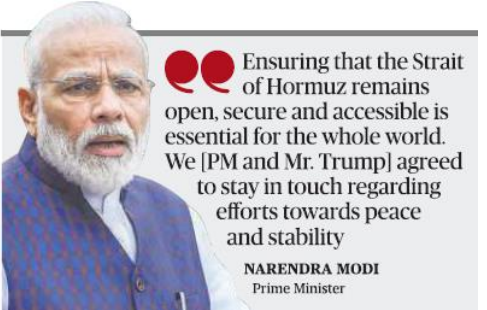
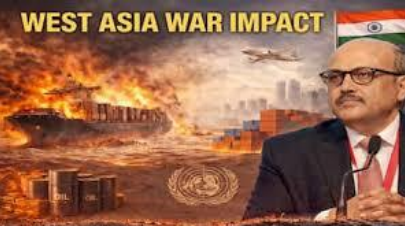
The 14th Ministerial Conference (MC14) of the World Trade Organization, scheduled for March 26–29, 2026, in Yaounde, Cameroon, arrives at a critical juncture for the multilateral trading system. Amidst rising protectionism and geopolitical crises in West Asia, the 166-member body faces the daunting task of reconciling diverging interests between developed and developing nations on systemic reforms and agricultural subsidies. • Deadlock over Public Stockholding (PSH): A primary objective for India is securing a \'permanent solution\' for food security stockpiling. Developing nations demand the right to purchase food grains at administered prices (MSP) for public distribution without the risk of legal challenges, while the Cairns Group and developed nations view these as market-distorting subsidies. • Restoration of the Dispute Settlement Body (DSB): The WTO’s \'crown jewel\'—the two-tier appellate system—has been paralyzed since 2019 due to the U.S. blocking judge appointments. India and the Global South are pushing for a fully functional, independent appellate body, whereas some developed nations advocate for more informal, alternative litigation methods. • E-commerce Moratorium and Digital Divide: WTO members must decide whether to extend the 1998 moratorium on customs duties for electronic transmissions. India has flagged significant revenue losses from digital imports (movies, music, software) and seeks to end the moratorium to provide policy space for domestic digital industrialization. • Fisheries Subsidies (Phase 2): Following the 2022 agreement, MC14 aims to finalize \'additional disciplines\' to curb overcapacity and overfishing. India\'s stance focuses on \'Special and Differential Treatment\' (S&DT) to protect the livelihoods of small-scale, traditional fishers while disciplining large-scale industrial fleets from distant-water fishing nations. • Investment Facilitation for Development (IFD): A China-led plurilateral initiative, supported by 128 members, seeks to integrate investment facilitation into the WTO framework. India and South Africa have historically opposed its inclusion as a formal WTO agreement, arguing that it lacks a multilateral mandate and could erode the organization\'s foundational consensus-based nature. • Geopolitical Disruptions: The conference is overshadowed by the West Asia crisis and unilateral trade measures by major economies. These disruptions have increased shipping costs and insurance premiums, necessitating a WTO response to ensure \'level playing field\' issues in maritime and energy trade. Key Definitions • Ministerial Conference: The highest decision-making body of the WTO, established under the Marrakesh Agreement (1994), mandated to meet at least once every two years. • Special Safeguard Mechanism (SSM): A tool sought by developing countries to temporarily raise tariffs to protect domestic farmers from sudden import surges or price drops. • E-commerce Moratorium: A long-standing agreement not to impose customs duties on electronic transmissions (digital products) during the transition between ministerial meetings. Constitutional & Legal Provisions • Marrakesh Agreement Establishing the WTO: The foundational international treaty that provides the legal personality to the WTO. In India, international treaties are signed under the executive power of the Union (Article 73). • Article 253 of the Indian Constitution: Empowers Parliament to make laws for implementing international agreements. Any outcome at MC14 requiring domestic legislative change (like tariff adjustments) would be processed under this article. • The \'Peace Clause\': A temporary legal shield established at the 2013 Bali Ministerial that prevents WTO members from challenging India\'s food procurement programs, even if they breach the 10% subsidy ceiling. Additional Keypoints • Joint Statement Initiatives (JSIs): These are plurilateral negotiations (like those on E-commerce or IFD) that occur among a subset of WTO members. India remains wary of JSIs, viewing them as a threat to the multilateral, consensus-driven spirit of the WTO. • S&DT Provisions: Special and Differential Treatment provisions allow developing and least-developed countries (LDCs) longer timeframes for implementing agreements and greater flexibilities in trade commitments. • Global South Leadership: India’s role at MC14 is increasingly defined by its leadership of the G-33 and the African Group, advocating for \'development-centric\' outcomes that prioritize poverty alleviation over market access for advanced economies. Conclusion The Yaounde Ministerial represents a test of the WTO\'s relevance in a fragmented world. While developed nations are pushing for \'modernization\' and digital trade expansion, India and its peers are fighting for \'traditional\' issues like food security and dispute resolution restoration. A failure to achieve a permanent solution on PSH or a roadmap for the Appellate Body could further undermine faith in the rules-based multilateral trading system. UPSC Relevance • General Studies II: Important International institutions, agencies and fora—their structure, mandate; Bilateral, regional and global groupings and agreements involving India. • General Studies III: Issues related to direct and indirect farm subsidies and minimum support prices; Public Distribution System- objectives, functioning, limitations, revamping; Issues of food security. • Economic Diplomacy: The evolution of India\'s stance from the Doha Development Agenda to the current MC14 agenda.


Address : 506, 3rd EYE THREE (III), Opp. Induben Khakhrawala, Girish Cold Drink Cross Road, CG Road, Navrangpura, Ahmedabad, 380009.
Mobile : 8469231587 / 9586028957
Telephone : 079-40098991
E-mail: dics.upsc@gmail.com
Address: A-306, The Landmark, Urjanagar-1, Opp. Spicy Street, Kudasan – Por Road, Kudasan, Gandhinagar – 382421
Mobile : 9723832444 / 9723932444
E-mail: dics.gnagar@gmail.com
Address: 2nd Floor, 9 Shivali Society, L&T Circle, opp. Ratri Bazar, Karelibaugh, Vadodara, 390018
Mobile : 9725692037 / 9725692054
E-mail: dics.vadodara@gmail.com
Address: 403, Raj Victoria, Opp. Pal Walkway, Near Galaxy Circle, Pal, Surat-394510
Mobile : 8401031583 / 8401031587
E-mail: dics.surat@gmail.com
Address: 303,305 K 158 Complex Above Magson, Sindhubhavan Road Ahmedabad-380059
Mobile : 9974751177 / 8469231587
E-mail: dicssbr@gmail.com
Address: 57/17, 2nd Floor, Old Rajinder Nagar Market, Bada Bazaar Marg, Delhi-60
Mobile : 9104830862 / 9104830865
E-mail: dics.newdelhi@gmail.com