





Ahmedabad
(Head Office)Address : 506, 3rd EYE THREE (III), Opp. Induben Khakhrawala, Girish Cold Drink Cross Road, CG Road, Navrangpura, Ahmedabad, 380009.
Mobile : 8469231587 / 9586028957
Telephone : 079-40098991
E-mail: dics.upsc@gmail.com

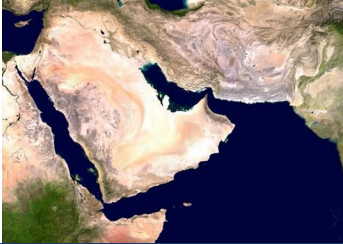
• Failure of External Security Guarantees: The second week of the U.S.-Israel-Iran conflict has exposed the fragility of the \'security umbrella\' promised by the U.S. to Gulf monarchies. Despite decades of assurances, U.S. missile interceptors have reportedly run out, with supplies prioritized for Israel, leaving Gulf partners vulnerable to Iranian strikes on \'safe\' assets. • Geopolitical Realignment: The crisis has sparked a sense of helplessness in the region, leading countries like Saudi Arabia, the UAE, and Qatar to reconsider their alliance with Washington. Reports suggest these nations are exploring the removal of American military bases, potentially marking the most significant shift in regional security in 50 years. • Historical Context of Dependency: The existing security arrangement dates back to the 1980 \'Carter Doctrine,\' which viewed any attempt to control the Persian Gulf as an assault on vital U.S. interests. However, the failure of subsequent initiatives like the \'Middle East Strategic Alliance\' (MESA) has highlighted the unreliability of outsourced defense. • Iranian Counter-Offensive: Iran has effectively expanded the war zone by targeting U.S. bases across the Gulf (Qatar, Bahrain, UAE, etc.) and closing the Strait of Hormuz. This asymmetric response has successfully challenged the perceived technological superiority of the joint U.S.-Israel offensive. • India’s Path to Atma Nirbharta: The conflict reinforces the importance of India’s shift toward selfreliance in defense. Since 2014, India has aggressively reduced import percentages to 25%-30% and achieved record defense exports of ₹23,622 crore (approx. $2.78 billion) in FY 2024-25, mitigating the risks of supply chain disruptions during global crises. • Core Strategic Takeaway: The primary lesson from the ongoing West Asian escalation is that national security is a sovereign responsibility that cannot be bought or outsourced; domestic industrial capacity and strategic autonomy are the only true safeguards against external aggression. Key Definitions • Carter Doctrine: A U.S. foreign policy initiative (1980) stating that the U.S. would use military force, if necessary, to defend its national interests in the Persian Gulf region. • Strategic Autonomy: The ability of a state to pursue its national interests and adopt its preferred foreign policy without being constrained by other states or dependent on external powers for its security. • Asymmetric Warfare: A type of conflict where the relative military power of belligerents differs significantly, and the weaker party uses unconventional tactics (e.g., closing maritime chokepoints) to exploit the stronger party\'s vulnerabilities. Constitutional & Legal Framework • Article 51: Directive Principle of State Policy (DPSP) that guides India’s international relations, emphasizing the promotion of international peace and security. • Seventh Schedule (List I, Entry 1 & 2): Grants the Union Government exclusive power over the \'Defence of India\' and the \'Naval, military and air forces; any other armed forces of the Union.\' • Defence Acquisition Procedure (DAP) 2020: The legal and administrative framework designed to promote \'Make in India\' in the defense sector by prioritizing indigenous design and manufacturing (IDDM). • The Aircraft Act, 1934 & Arms Act, 1959: Provide the regulatory basis for the manufacturing and export of military hardware and ammunition within India. Additional Important Keypoints • Supply Chain Vulnerability: The depletion of interceptors in the Gulf highlights the \'Just-in-Time\' inventory risks in modern warfare, where demand far outstrips production capacity during active highintensity conflicts. • Kargil Review Committee (1999): The seminal report that first officially highlighted India’s dangerous reliance on foreign arms and spearheaded the modern push for indigenous defense production. • Regional Strategic Shifts: The potential \'Arab NATO\' or MESA failed largely due to intra-regional disputes (like the Qatar blockade), proving that external security umbrellas cannot resolve internal regional fractures. Conclusion The ongoing conflict in Iran serves as a stark warning to nations reliant on foreign security guarantees. For India, it validates the strategic necessity of the \'Atma Nirbhar Bharat\' initiative. The transition of the Gulf states from U.S. dependents to seekers of alternate security arrangements suggests a move toward a multipolar world where regional powers must develop indigenous military and technological depth to survive. UPSC Relevance • GS Paper II: Effect of policies and politics of developed and developing countries on India’s interests; Bilateral, regional and global groupings and agreements involving India. • GS Paper III: Security challenges and their management in border areas; Indigenization of technology and developing new technology in the defense sector. • Prelims: Mapping of the Persian Gulf (Strait of Hormuz, Gulf of Oman), Carter Doctrine, and current trends in India\'s defense exports/imports.


Address : 506, 3rd EYE THREE (III), Opp. Induben Khakhrawala, Girish Cold Drink Cross Road, CG Road, Navrangpura, Ahmedabad, 380009.
Mobile : 8469231587 / 9586028957
Telephone : 079-40098991
E-mail: dics.upsc@gmail.com
Address: A-306, The Landmark, Urjanagar-1, Opp. Spicy Street, Kudasan – Por Road, Kudasan, Gandhinagar – 382421
Mobile : 9723832444 / 9723932444
E-mail: dics.gnagar@gmail.com
Address: 2nd Floor, 9 Shivali Society, L&T Circle, opp. Ratri Bazar, Karelibaugh, Vadodara, 390018
Mobile : 9725692037 / 9725692054
E-mail: dics.vadodara@gmail.com
Address: 403, Raj Victoria, Opp. Pal Walkway, Near Galaxy Circle, Pal, Surat-394510
Mobile : 8401031583 / 8401031587
E-mail: dics.surat@gmail.com
Address: 303,305 K 158 Complex Above Magson, Sindhubhavan Road Ahmedabad-380059
Mobile : 9974751177 / 8469231587
E-mail: dicssbr@gmail.com
Address: 57/17, 2nd Floor, Old Rajinder Nagar Market, Bada Bazaar Marg, Delhi-60
Mobile : 9104830862 / 9104830865
E-mail: dics.newdelhi@gmail.com