



Ahmedabad
(Head Office)Address : 506, 3rd EYE THREE (III), Opp. Induben Khakhrawala, Girish Cold Drink Cross Road, CG Road, Navrangpura, Ahmedabad, 380009.
Mobile : 8469231587 / 9586028957
Telephone : 079-40098991
E-mail: dics.upsc@gmail.com

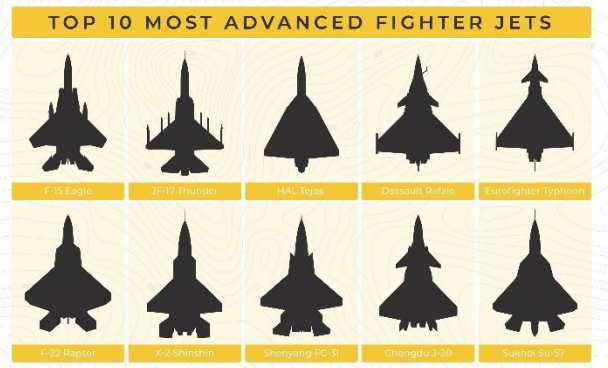
• Record-Breaking Deals: Pakistan has secured a historic $4.6 billion arms deal with Libya’s LNA and is negotiating a $1.5 billion to $4 billion deal with Sudan, marking a massive shift in its defense export trajectory • The JF-17 Factor: Central to these deals is the JF-17 Thunder fighter jet (developed with China). Pakistan is leveraging its \'combat-proven\' narrative from the May 2025 conflict to market these platforms to the Global South and conflict-ridden Arab states. • Third-Party Financing: A unique feature of these transactions is financing by Gulf monarchies (UAE for Libya, Saudi Arabia for Sudan), allowing Pakistan to earn hard currency and strategic leverage without \'boots on the ground.\' • Challenges to India\'s Parity: Pakistan’s emerging role as a \'net security provider\' to the Gulf could dilute India\'s economic advantage in the region, potentially emboldening Rawalpindi to revive crossborder provocations under the cover of newfound diplomatic legitimacy. • Operational Silos vs. Unified Pitch: Unlike India’s bureaucratic hurdles, Pakistan’s military leadership (GHQ Rawalpindi) directly leads sales negotiations, integrating diplomacy, military-to-military links, and aggressive pricing. • Strategic Challenge for India: While India’s defense exports reached $2.8 billion in 2024-25, Pakistan’s cumulative claimed deals of $13 billion signal a need for India to leverage its status as a top crude importer to \'offset\' trade imbalances through defense sales. Key Definitions • Force Multiplier: A factor or a combination of factors that gives personnel or an organization the ability to accomplish greater things than without it (e.g., advanced technology or strategic alliances). • Net Security Provider: A state that possesses the capacity and the will to deploy military assets to maintain regional stability and provide assistance to other nations. • Strategic Autonomy: The ability of a state to pursue its national interests and adopt its preferred foreign policy without being constrained by other states. Constitutional & Legal Provisions • Article 51: Promotion of international peace and security; while India adheres to UN arms embargoes (relevant to Libya/Sudan), it must balance ethical exports with national interest. • The Arms Act, 1959: Governs the manufacturing, sale, and export of arms in India, currently being streamlined to support the \'Atmanirbhar Bharat\' initiative in defense. • UN Arms Embargoes: International legal restrictions that Pakistan is allegedly bypassing or navigating through third-party deals, posing a challenge to the rules-based international order. Additional Key Points • The China-Türkiye Nexus: Pakistan’s production capacity relies heavily on Chinese hardware and Turkish subsystems, creating a \'low-cost, high-tech\' alternative for developing nations. • Trump-Munir \'Bromance\': The transactional nature of U.S. foreign policy under President Trump may favor Pakistan as a regional subcontractor, despite concerns over Chinese technology transfers. • India’s Export Potential: India ranks as the world\'s 2nd largest importer but lags in the top 25 exporters. Bridging this gap requires a \'nimble defense export promotion organization\' as suggested by experts. Conclusion Pakistan’s \'turbocharged\' defense diplomacy represents a paradigm shift from seeking financial handouts to becoming a military-industrial hub for regional proxies. While Pakistan’s reliance on foreign components and legal embargoes remains a vulnerability, its aggressive salesmanship has tilted the regional Geopolitical balance. India must respond by institutionalizing its defense exports and using its massive market power (as a top energy consumer) to secure long-term defense partnerships. UPSC Relevance • GS Paper II: India and its neighborhood relations; Bilateral, regional, and global groupings involving India; Effect of policies of developed/developing countries on India’s interests. • GS Paper III: Indigenization of technology and developing new technology; Security challenges and their management in border areas; Linkages between development and spread of extremism. • Mains Perspective: Analyzing the \'Military-Industrial Complex\' as a tool of foreign policy and the challenges of \'Strategic Parity\' in South Asia.


Address : 506, 3rd EYE THREE (III), Opp. Induben Khakhrawala, Girish Cold Drink Cross Road, CG Road, Navrangpura, Ahmedabad, 380009.
Mobile : 8469231587 / 9586028957
Telephone : 079-40098991
E-mail: dics.upsc@gmail.com
Address: A-306, The Landmark, Urjanagar-1, Opp. Spicy Street, Kudasan – Por Road, Kudasan, Gandhinagar – 382421
Mobile : 9723832444 / 9723932444
E-mail: dics.gnagar@gmail.com
Address: 2nd Floor, 9 Shivali Society, L&T Circle, opp. Ratri Bazar, Karelibaugh, Vadodara, 390018
Mobile : 9725692037 / 9725692054
E-mail: dics.vadodara@gmail.com
Address: 403, Raj Victoria, Opp. Pal Walkway, Near Galaxy Circle, Pal, Surat-394510
Mobile : 8401031583 / 8401031587
E-mail: dics.surat@gmail.com
Address: 303,305 K 158 Complex Above Magson, Sindhubhavan Road Ahmedabad-380059
Mobile : 9974751177 / 8469231587
E-mail: dicssbr@gmail.com
Address: 57/17, 2nd Floor, Old Rajinder Nagar Market, Bada Bazaar Marg, Delhi-60
Mobile : 9104830862 / 9104830865
E-mail: dics.newdelhi@gmail.com