



Ahmedabad
(Head Office)Address : 506, 3rd EYE THREE (III), Opp. Induben Khakhrawala, Girish Cold Drink Cross Road, CG Road, Navrangpura, Ahmedabad, 380009.
Mobile : 8469231587 / 9586028957
Telephone : 079-40098991
E-mail: dics.upsc@gmail.com

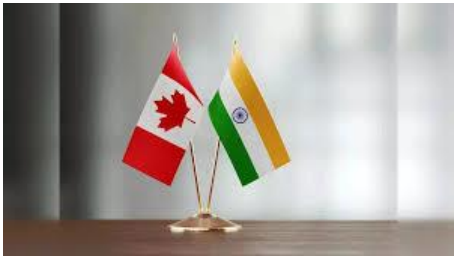
• Diplomatic Realignment: The visit of Canadian PM Mark Carney (Feb 27–March 2, 2026) marks a significant \'pragmatic turnaround\' in bilateral ties, moving past the diplomatic friction of the previous administration toward a focus on high-value deliverables. • CEPA Roadmap: A major highlight was the signing of the terms of agreement for the Comprehensive Economic Partnership Agreement (CEPA), establishing a structured roadmap for future trade negotiations and market access. • Energy Security & Nuclear Cooperation: India’s Department of Atomic Energy secured a long-term commercial contract with Canada’s Cameco for uranium ore concentrates, essential for India’s goal of achieving 100GW nuclear capacity by 2047. • Critical Minerals & Pax Silica: An MoU on critical minerals aligns India and Canada with the U.S.-led \'Pax Silica\' coalition, aiming to diversify supply chains away from Chinese dominance in sectors vital for AI and semiconductors. • Trilateral Tech Innovation: The Australia-CanadaIndia Technology and Innovation Partnership was strengthened to bolster long-term cooperation in research, cultural exchange, and food nutrition across the Indo-Pacific. • Geopolitical Convergence: Amidst global \'tariff wars\' and supply chain disruptions, both nations expressed a shared interest in trade diversification and \'strategic decoupling\' from volatile regions to ensure economic momentum. Key Definitions • CEPA (Comprehensive Economic Partnership Agreement): A broad-based trade agreement that covers negotiation on trade in services and investment, and other areas of economic partnership beyond just goods/tariffs. • Critical Minerals: Metallic or non-metallic elements (like Lithium, Cobalt, RARE earths) that are essential for modern technology and national security, but have supply chains vulnerable to disruption. • Pax Silica: A strategic framework or coalition (often involving the US and allies) focused on securing the semiconductor supply chain and maintaining dominance in silicon-based technologies. • Uranium Ore Concentrates: Also known as \'yellowcake,\' it is the intermediate step in the processing of uranium used as fuel in nuclear reactors. Constitutional & Legal Provisions • Article 51: A Directive Principle of State Policy (DPSP) that promotes international peace and security and encourages the settlement of international disputes by arbitration. • Article 253: Empowers Parliament to make any law for the whole or any part of the territory of India for implementing any treaty, agreement, or convention with any other country. • SHANTI Bill, 2025 (Sustainable Harnessing and Advancement of Nuclear Energy for Transforming India): A domestic legislative framework designed to accelerate the deployment of nuclear reactors and streamline the procurement of nuclear fuel. • Atomic Energy Act, 1962: The primary legal framework for the development, control, and use of atomic energy for the welfare of the people of India and for other peaceful purposes. Additional Key Points for Examination • The \'Carney Effect\': Unlike the \'no-nonsense\' or ideological style of the past, the current Canadian leadership is prioritizing \'economic pragmatism\' to insulate its trade from U.S. tariff pressures and European instability. • Indo-Pacific Strategy: Canada’s pivot toward India is a core component of its broader Indo-Pacific Strategy, recognizing India as a vital democratic anchor in the region. • Energy Transition: The uranium deal is crucial for India’s Net Zero targets, as nuclear energy provides the \'base load\' power necessary to supplement intermittent renewable sources like solar and wind. Conclusion The 2026 India-Canada summit represents the transition of a relationship from \'legacy issues\' to \'future-ready sectors.\' By securing long-term fuel supplies for nuclear energy and collaborating on critical minerals, India is effectively hedging against global geopolitical volatility. This \'deliverableoriented\' diplomacy ensures that even as global supply chains fragment, India retains access to the resources necessary for its high-tech industrialization and sustainable energy goals. UPSC Relevance • GS Paper II: Bilateral, regional and global groupings and agreements involving India and/or affecting India’s interests; Effect of policies and politics of developed/developing countries (U.S. tariffs, Pax Silica). • GS Paper III: Infrastructure: Energy (Nuclear); Science and Technology- developments and their applications (Semiconductors, AI); Conservation, environmental pollution and degradation (Net Zero targets). • Prelims Link: Locations (Kananaskis, Johannesburg); Details of the SHANTI Bill 2025; Major uranium producing countries; Members of Pax Silica coalition.


Address : 506, 3rd EYE THREE (III), Opp. Induben Khakhrawala, Girish Cold Drink Cross Road, CG Road, Navrangpura, Ahmedabad, 380009.
Mobile : 8469231587 / 9586028957
Telephone : 079-40098991
E-mail: dics.upsc@gmail.com
Address: A-306, The Landmark, Urjanagar-1, Opp. Spicy Street, Kudasan – Por Road, Kudasan, Gandhinagar – 382421
Mobile : 9723832444 / 9723932444
E-mail: dics.gnagar@gmail.com
Address: 2nd Floor, 9 Shivali Society, L&T Circle, opp. Ratri Bazar, Karelibaugh, Vadodara, 390018
Mobile : 9725692037 / 9725692054
E-mail: dics.vadodara@gmail.com
Address: 403, Raj Victoria, Opp. Pal Walkway, Near Galaxy Circle, Pal, Surat-394510
Mobile : 8401031583 / 8401031587
E-mail: dics.surat@gmail.com
Address: 303,305 K 158 Complex Above Magson, Sindhubhavan Road Ahmedabad-380059
Mobile : 9974751177 / 8469231587
E-mail: dicssbr@gmail.com
Address: 57/17, 2nd Floor, Old Rajinder Nagar Market, Bada Bazaar Marg, Delhi-60
Mobile : 9104830862 / 9104830865
E-mail: dics.newdelhi@gmail.com