







Ahmedabad
(Head Office)Address : 506, 3rd EYE THREE (III), Opp. Induben Khakhrawala, Girish Cold Drink Cross Road, CG Road, Navrangpura, Ahmedabad, 380009.
Mobile : 8469231587 / 9586028957
Telephone : 079-40098991
E-mail: dics.upsc@gmail.com

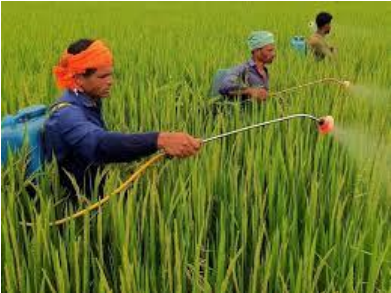
The intensifying conflict in West Asia, characterized by disruptions in the Persian Gulf and geopolitical volatility, has severely impacted India’s domestic fertilizer production. As natural gas—the primary feedstock for urea—becomes scarce or prohibitively expensive due to supply chain snarls, India has formally approached China to facilitate the sale of urea cargoes. This move underscores the critical intersection of energy security and food security, forcing India to navigate complex bilateral relations with China to ensure the availability of agricultural inputs for the upcoming cropping seasons. • Energy-Fertilizer Linkage: Natural gas accounts for nearly 70-80% of the cost of urea production; the current gas crunch caused by regional instability has led to a significant drop in domestic manufacturing capacity. • Dependence on China: Despite efforts to achieve \'Atmanirbharata\' (self-reliance) in fertilizers, China remains one of the world\'s largest exporters of urea, making it a vital partner when traditional Middle Eastern supply routes are compromised. • Supply Chain Disruptions: Recent military escalations in the West Asian region have obstructed key maritime trade routes, delaying shipments and increasing freight and insurance costs for essential commodities. • Food Security Imperative: The government\'s request to China is a proactive measure to prevent any shortage of urea, which could otherwise lead to reduced crop yields and subsequent food inflation in the domestic market. • Strategic Flexibility: The move signals a pragmatic shift in India’s trade diplomacy, where immediate domestic requirements (agricultural stability) take precedence over broader geopolitical friction in the short term. • Buffer Stock Management: To mitigate future shocks, the government is focusing on diversifying import sources beyond West Asia and accelerating the revival of domestic fertilizer units like those in Talcher and Ramagundam. Key Definitions • Urea: A nitrogenous fertilizer widely used in India, essential for the growth of cereal crops. It is produced by reacting ammonia with carbon dioxide, with natural gas serving as the primary source of hydrogen. • Feedstock: Raw materials used in an industrial process to be converted into a finished product; for the fertilizer industry, Liquefied Natural Gas (LNG) is the critical feedstock. • Commodity Diplomacy: The use of trade in essential goods (like food, fuel, or fertilizer) as a tool for a nation\'s foreign policy to ensure domestic stability or exert international influence. Constitutional & Legal Provisions • Article 39(b): A Directive Principle of State Policy (DPSP) stating that the State shall direct its policy toward ensuring that the ownership and control of the material resources of the community are so distributed as best to subserve the common good. Ensuring fertilizer availability for farmers aligns with this principle. • Essential Commodities Act (ECA), 1955: Fertilizers are classified as an \'essential commodity\' under this Act, allowing the government to regulate their production, supply, and distribution to prevent hoarding and price spikes. • Fertilizer (Control) Order, 1985: Issued under the ECA, this order ensures the timely availability of fertilizers of standard quality at fair prices to the farming community. • Union List (Seventh Schedule): Entry 52 (Industries) and Entry 41 (Trade and Commerce with foreign countries) empower the Central Government to manage international procurement and domestic industrial regulation of fertilizers. Conclusion The current crisis highlights India\'s \'vulnerability gap\' in the fertilizer sector, where external energy shocks directly threaten domestic agricultural productivity. While approaching China is a necessary short-term tactical move, it emphasizes the urgent need for India to decouple its fertilizer production from volatile imported gas. Transitioning toward \'Green Urea\' (using green hydrogen) and expanding coal-gasification-based plants will be essential to achieving true strategic autonomy in the agricultural sector. UPSC Relevance • GS Paper II: India and its neighborhood- relations; Bilateral, regional and global groupings and agreements involving India and/or affecting India’s interests. • GS Paper III: Issues related to direct and indirect farm subsidies; Issues of food security; Infrastructure: Energy. • Geography (Mapping): Geographical significance of West Asian maritime routes (Strait of Hormuz, Red Sea) and their role in India\'s energy and commodity imports.


Address : 506, 3rd EYE THREE (III), Opp. Induben Khakhrawala, Girish Cold Drink Cross Road, CG Road, Navrangpura, Ahmedabad, 380009.
Mobile : 8469231587 / 9586028957
Telephone : 079-40098991
E-mail: dics.upsc@gmail.com
Address: A-306, The Landmark, Urjanagar-1, Opp. Spicy Street, Kudasan – Por Road, Kudasan, Gandhinagar – 382421
Mobile : 9723832444 / 9723932444
E-mail: dics.gnagar@gmail.com
Address: 2nd Floor, 9 Shivali Society, L&T Circle, opp. Ratri Bazar, Karelibaugh, Vadodara, 390018
Mobile : 9725692037 / 9725692054
E-mail: dics.vadodara@gmail.com
Address: 403, Raj Victoria, Opp. Pal Walkway, Near Galaxy Circle, Pal, Surat-394510
Mobile : 8401031583 / 8401031587
E-mail: dics.surat@gmail.com
Address: 303,305 K 158 Complex Above Magson, Sindhubhavan Road Ahmedabad-380059
Mobile : 9974751177 / 8469231587
E-mail: dicssbr@gmail.com
Address: 57/17, 2nd Floor, Old Rajinder Nagar Market, Bada Bazaar Marg, Delhi-60
Mobile : 9104830862 / 9104830865
E-mail: dics.newdelhi@gmail.com