



Ahmedabad
(Head Office)Address : 506, 3rd EYE THREE (III), Opp. Induben Khakhrawala, Girish Cold Drink Cross Road, CG Road, Navrangpura, Ahmedabad, 380009.
Mobile : 8469231587 / 9586028957
Telephone : 079-40098991
E-mail: dics.upsc@gmail.com

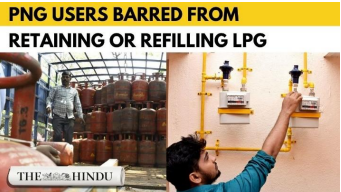
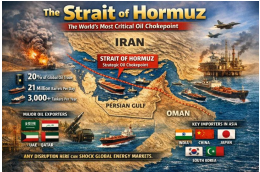
• Mandatory Surrender of LPG: The Ministry of Petroleum and Natural Gas, through a notification dated 14 March 2026, has barred households with Piped Natural Gas (PNG) connections from holding or obtaining subsidised domestic Liquefied Petroleum Gas (LPG) connections. • Amendment to LPG Order: The government has amended the Liquefied Petroleum Gas (Regulation of Supply and Distribution) Order, 2000. This legal change makes it mandatory for consumers to surrender their cylinders once a PNG connection is functional at their premises. • Supply Chain Optimization: The move aims to rationalise the distribution of cooking gas and reduce the fiscal burden of dual subsidies on the same household. It ensures that the limited supply of subsidised LPG is diverted to rural and remote areas where piped infrastructure is not feasible. • Addressing Global Disruptions: Amidst the ongoing West Asia conflict and disruptions in the Strait of Hormuz (from where India imports a significant portion of its LPG), the regulator is pushing City Gas Distribution (CGD) companies to accelerate PNG rollouts to decrease import dependency on bottled gas. • Efficiency in Energy Mix: PNG is considered safer, more convenient, and more environmentally friendly than LPG cylinders. By forcing a transition in urban pockets, the government seeks to meet its target of increasing natural gas share in the energy basket to 15% by 2030. • Regulatory Push for CGD: The Petroleum and Natural Gas Regulatory Board (PNGRB) is incentivising distributors to achieve 100% saturation in authorized geographical areas, viewing PNG as a permanent solution to the logistical challenges of cylinder delivery. Key Definitions • Piped Natural Gas (PNG): Natural gas (primarily methane) supplied through a network of pipelines directly to the consumer\'s kitchen, eliminating the need for storage cylinders. • Liquefied Petroleum Gas (LPG): A flammable mixture of hydrocarbon gases (propane and butane) stored in pressurized cylinders, largely used as a cooking fuel in India. • City Gas Distribution (CGD): The network that reticulates gas through pipelines to domestic, commercial, and industrial consumers within a specific geographic area. Constitutional and Legal Provisions • Essential Commodities Act, 1955: The amendment was issued under this Act, which empowers the Union to regulate the production, supply, and distribution of \'essential\' items (including petroleum products) to prevent hoarding and ensure equitable distribution. • LPG (Regulation of Supply and Distribution) Order, 2000: The specific statutory order that governs how LPG is sold in India. This order carries the force of law, and non-compliance (holding both PNG and LPG) can lead to penalties or disconnection. • Article 39(b) (DPSP): Directs the State to ensure that the \'ownership and control of the material resources of the community are so distributed as best to subserve the common good.\' Rationalising fuel supply for the needy over the affluent urban consumer aligns with this principle. • Petroleum and Natural Gas Regulatory Board (PNGRB) Act, 2006: Provides the legal framework for the regulator to oversee the CGD sector and protect the interests of consumers while ensuring fair competition among gas companies. Additional Key Points for Examination • Fiscal Impact: This policy will help in \'subsidy leakage\' prevention. Since PNG is generally cheaper and more efficient, the government aims to stop the diversion of subsidised LPG cylinders to the commercial sector by urban households. • Ujjwala Connection Priority: By freeing up LPG stocks from urban areas, the government can better support the Pradhan Mantri Ujjwala Yojana (PMUY) which targets BPL households in rural India. • Infrastructure Challenges: While the mandate is clear, the \'last-mile\' connectivity for PNG remains a challenge in congested urban clusters, making the transition difficult for some old housing colonies. Conclusion The de-linking of LPG from PNG-enabled households marks a significant step toward \'Energy Justice.\' It forces a transition toward a more modern and stable piped-gas economy while simultaneously insulating the government’s subsidy bill from volatile international LPG prices. This regulatory shift is a pragmatic response to the current geopolitical instability in energy-exporting regions, ensuring that domestic resources are used where they are most needed. UPSC Relevance • GS Paper II: Government policies and interventions for development in various sectors; Issues arising out of their design and implementation. • GS Paper III: Indian Economy (Energy sector and Subsidies); Infrastructure (Energy pipelines); Environmental impact of cleaner fuels. • Prelims: Essential Commodities Act, 1955; Distinction between LPG and PNG; Role of PNGRB; Current targets for India\'s natural gas energy mix.


Address : 506, 3rd EYE THREE (III), Opp. Induben Khakhrawala, Girish Cold Drink Cross Road, CG Road, Navrangpura, Ahmedabad, 380009.
Mobile : 8469231587 / 9586028957
Telephone : 079-40098991
E-mail: dics.upsc@gmail.com
Address: A-306, The Landmark, Urjanagar-1, Opp. Spicy Street, Kudasan – Por Road, Kudasan, Gandhinagar – 382421
Mobile : 9723832444 / 9723932444
E-mail: dics.gnagar@gmail.com
Address: 2nd Floor, 9 Shivali Society, L&T Circle, opp. Ratri Bazar, Karelibaugh, Vadodara, 390018
Mobile : 9725692037 / 9725692054
E-mail: dics.vadodara@gmail.com
Address: 403, Raj Victoria, Opp. Pal Walkway, Near Galaxy Circle, Pal, Surat-394510
Mobile : 8401031583 / 8401031587
E-mail: dics.surat@gmail.com
Address: 303,305 K 158 Complex Above Magson, Sindhubhavan Road Ahmedabad-380059
Mobile : 9974751177 / 8469231587
E-mail: dicssbr@gmail.com
Address: 57/17, 2nd Floor, Old Rajinder Nagar Market, Bada Bazaar Marg, Delhi-60
Mobile : 9104830862 / 9104830865
E-mail: dics.newdelhi@gmail.com