

Ahmedabad
(Head Office)Address : 506, 3rd EYE THREE (III), Opp. Induben Khakhrawala, Girish Cold Drink Cross Road, CG Road, Navrangpura, Ahmedabad, 380009.
Mobile : 8469231587 / 9586028957
E-mail: dics.upsc@gmail.com

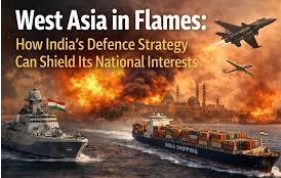
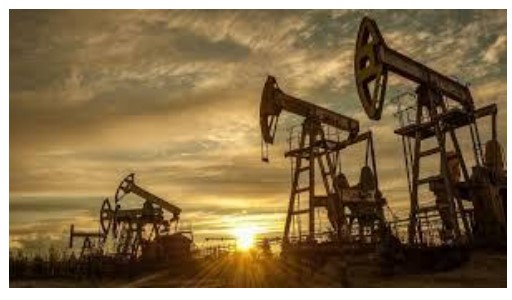
• Balanced Diplomatic Stance: The Union Government has defended its \'calculated silence\' on recent West Asia developments, emphasizing that maintaining a balanced position is essential for the safety of nearly one crore Indian expatriates and India’s vast economic interests in the region. • Mediation and Neighborhood Policy: Addressing Opposition concerns regarding Pakistan’s reported role as a mediator between the U.S. and Iran, the External Affairs Minister noted that such \'intermediary\' roles by the neighboring country have a historical precedent dating back to 1981 and do not diminish India\'s unique direct communication channels with all parties. • Energy Security and SPR: The government assured that India maintains a Strategic Petroleum Reserve (SPR) sufficient for 74 days; while the LPG supply cycle has temporarily extended from 20 to 45 days due to regional instability, no imminent energy crisis is anticipated. • Maritime Safety: Following high-level diplomatic interventions with Iranian authorities, two Indian ships were recently permitted to transit the Strait of Hormuz, with 18 others expected to follow, highlighting India\'s ability to navigate volatile maritime corridors. • Diversified Partnerships: India’s foreign policy continues to balance complex relationships, viewing the U.S. as its largest trading partner, Israel as a critical technological collaborator, and Russia as a consistent energy supplier despite international sanctions. • Sanctions and Sovereignty: The government reiterated that U.S. sanctions have a long history and that India prioritizes its national interest and energy security— specifically regarding Russian oil imports—over external pressure. Key Definitions • Strategic Petroleum Reserve (SPR): Emergency fuel storage maintained by a country to ensure energy security during supply disruptions or geopolitical crises. • Strait of Hormuz: A vital maritime chokepoint between the Persian Gulf and the Gulf of Oman; it is one of the world\'s most strategically important oil transit routes. • Strategic Autonomy: A foreign policy doctrine where a state makes independent decisions based on national interest without being constrained by alliances or external powers. Constitutional and Legal Provisions • Article 51 (DPSP): The Constitution mandates that the State shall endeavor to promote international peace and security, maintain just and honorable relations between nations, and foster respect for international law. • Entry 10, List I (Seventh Schedule): Grants the Union Parliament exclusive power over \'Foreign Affairs; all matters which bring the Union into relation with any foreign country.\' • The Petroleum Act, 1934: Provides the legal framework for the import, transport, and storage of petroleum, under which the SPR initiatives are managed. • The Merchant Shipping Act, 1958: Governs the registration and safety of Indian ships, relevant to the protection of vessels in conflict zones like the Strait of Hormuz. Additional Key Points • Expatriate Welfare: The safety of the Indian diaspora in West Asia is a primary driver of India\'s nonaligned stance, as remittances from this region are a significant pillar of the Indian economy. • Trade Dynamics: While energy is a major factor, the West Asian region is also a key destination for Indian exports (food security, textiles, and services), making regional stability a non-negotiable priority. • Historical Context: The reference to the 1981 mediation role of Pakistan pertains to the aftermath of the Iranian Revolution and the Iran-Iraq war, where various nations vied for intermediary status. Conclusion India’s current approach to the West Asia crisis reflects a transition from traditional non-alignment to \'Multialignment.\' By prioritizing domestic energy security and the safety of its citizens over taking ideological sides, India leverages its unique status as a \'Vishwa-Mitra\' (Global Friend) that can engage both Western powers and regional actors like Iran. The resilience of the Strategic Petroleum Reserve and the successful negotiation for ship passage demonstrate that India\'s \'silent diplomacy\' is backed by proactive crisis management. UPSC Relevance GS Paper II: India and its Neighborhood- Relations; Bilateral, Regional and Global Groupings and Agreements involving India and/or affecting India’s interests; Effect of Policies and Politics of developed and developing countries on India’s interests (West Asia Crisis, US-Iran relations). GS Paper III: Energy Security (SPR); Infrastructure; Security challenges and their management in border/maritime areas. Prelims: Location-based questions (Strait of Hormuz), SPR locations in India (Visakhapatnam, Mangaluru, Padur), and International Organizations/Treaties.


Address : 506, 3rd EYE THREE (III), Opp. Induben Khakhrawala, Girish Cold Drink Cross Road, CG Road, Navrangpura, Ahmedabad, 380009.
Mobile : 8469231587 / 9586028957
E-mail: dics.upsc@gmail.com
Address: A-306, The Landmark, Urjanagar-1, Opp. Spicy Street, Kudasan – Por Road, Kudasan, Gandhinagar – 382421
Mobile : 9723832444 / 9723932444
E-mail: dics.gnagar@gmail.com
Address: 2nd Floor, 9 Shivali Society, L&T Circle, opp. Ratri Bazar, Karelibaugh, Vadodara, 390018
Mobile : 9725692037 / 9725692054
E-mail: dics.vadodara@gmail.com
Address: 403, Raj Victoria, Opp. Pal Walkway, Near Galaxy Circle, Pal, Surat-394510
Mobile : 8401031583 / 8401031587
E-mail: dics.surat@gmail.com
Address: 303,305 K 158 Complex Above Magson, Sindhubhavan Road Ahmedabad-380059
Mobile : 9974751177 / 8469231587
E-mail: dicssbr@gmail.com
Address: 57/17, 2nd Floor, Old Rajinder Nagar Market, Bada Bazaar Marg, Delhi-60
Mobile : 9104830862 / 9104830865
E-mail: dics.newdelhi@gmail.com