





Ahmedabad
(Head Office)Address : 506, 3rd EYE THREE (III), Opp. Induben Khakhrawala, Girish Cold Drink Cross Road, CG Road, Navrangpura, Ahmedabad, 380009.
Mobile : 8469231587 / 9586028957
Telephone : 079-40098991
E-mail: dics.upsc@gmail.com

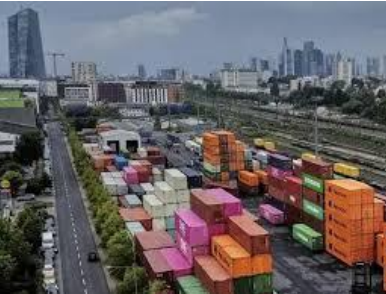
• Generational Political Shift in the Subcontinent: Recent electoral outcomes in Bangladesh, Nepal, and Sri Lanka have ushered in new leaderships—such as Tarique Rahman’s \'Bangladesh First\' approach and the rise of the Rastriya Swatantra Party in Nepal. These new regimes signal a move away from old cycles of political distrust and \'special relationships\' toward mature, unsentimental, and interest-based engagement with New Delhi. • Economic Interdependence as a Strategic Anchor: Despite political volatility, deep economic ties have survived. The current global fragmentation and the return of tariffs make the Indian market a vital scale-provider for smaller neighbors like Nepal, Bhutan, and Sri Lanka. This creates a \'new regional logic\' where India can act as a solid anchor against politically driven instability through deeper cooperation in energy and essential commodities. • Addressing the Trade Surplus Paradox: A major friction point is India’s substantial trade surplus with Bangladesh, Nepal, and Sri Lanka. While New Delhi frequently criticizes its own trade deficit with China, it has historically found it difficult to offer its neighbors the same market access it demands from Beijing. Resolving this requires India to move beyond protectionism toward importing more via stronger investment ties and modernized border infrastructure. • Modernizing Connectivity and Infrastructure: Transforming regional connectivity is no longer just about geography; it involves neutralising \'non-tariff barriers\' and poor infrastructure that currently hinder the 4,000-km border with Bangladesh and the Palk Strait connectivity with Sri Lanka. Genuine transformation requires negotiated give-andtake and institutional agility rather than just a revival of stalled forums like SAARC. • End of Clientelism and Patronage: The new electorates in Dhaka, Kathmandu, and Colombo have rejected traditional forms of dependency and \'clientelism.\' They seek partners, not patrons. Future agreements must produce visible, measurable benefits—such as jobs and growth—on both sides, grounded in mutual respect for sovereignty and political ownership. Key Definitions and Strategic Concepts Neighborhood First Policy: A core component of India\'s foreign policy that prioritizes building cordial and synergistic relations with its immediate neighbors. Trade Deficit/Surplus: The difference between the value of a country\'s imports and exports. A surplus occurs when exports exceed imports. Non-Tariff Barriers (NTBs): Trade restrictions that are not in the form of a tariff, such as quotas, embargoes, or complex sanitary/technical regulations that impede the flow of goods. Strategic Autonomy: The ability of a state to pursue its national interests and adopt its own foreign policy without being constrained by other states or international blocs. Clientelism: A social or political order governed by the exchange of goods and services for political support, often leading to asymmetrical power dynamics between a larger power and its smaller neighbors. Conclusion India stands at a rare crossroads where political shifts in the neighborhood align with a global economic fragmentation that favors regional integration. By shedding outdated protectionist instincts and viewing its neighbors as equal economic partners rather than dependents, India can create a stable, prosperous Subcontinent. This transition from \'political favor\' to \'shared economic benefit\' is essential for India to counter external influences and establish itself as a true regional leader. UPSC Relevance GS Paper II (International Relations): Directly relevant to \'India and its neighborhood relations.\' The article provides a nuanced critique of the \'Neighborhood First\' policy and offers specific solutions regarding trade and connectivity. GS Paper III (Economy): Touches upon \'External Sector\' dynamics, including trade deficits, regional trade agreements, and the impact of global supply chain shifts on the Indian economy.


Address : 506, 3rd EYE THREE (III), Opp. Induben Khakhrawala, Girish Cold Drink Cross Road, CG Road, Navrangpura, Ahmedabad, 380009.
Mobile : 8469231587 / 9586028957
Telephone : 079-40098991
E-mail: dics.upsc@gmail.com
Address: A-306, The Landmark, Urjanagar-1, Opp. Spicy Street, Kudasan – Por Road, Kudasan, Gandhinagar – 382421
Mobile : 9723832444 / 9723932444
E-mail: dics.gnagar@gmail.com
Address: 2nd Floor, 9 Shivali Society, L&T Circle, opp. Ratri Bazar, Karelibaugh, Vadodara, 390018
Mobile : 9725692037 / 9725692054
E-mail: dics.vadodara@gmail.com
Address: 403, Raj Victoria, Opp. Pal Walkway, Near Galaxy Circle, Pal, Surat-394510
Mobile : 8401031583 / 8401031587
E-mail: dics.surat@gmail.com
Address: 303,305 K 158 Complex Above Magson, Sindhubhavan Road Ahmedabad-380059
Mobile : 9974751177 / 8469231587
E-mail: dicssbr@gmail.com
Address: 57/17, 2nd Floor, Old Rajinder Nagar Market, Bada Bazaar Marg, Delhi-60
Mobile : 9104830862 / 9104830865
E-mail: dics.newdelhi@gmail.com