







Ahmedabad
(Head Office)Address : 506, 3rd EYE THREE (III), Opp. Induben Khakhrawala, Girish Cold Drink Cross Road, CG Road, Navrangpura, Ahmedabad, 380009.
Mobile : 8469231587 / 9586028957
Telephone : 079-40098991
E-mail: dics.upsc@gmail.com

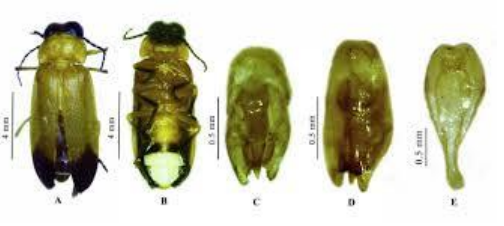
A landmark study published in the journal Zootaxa (March 2025) has consolidated over 140 years of fragmented scientific records to create the first comprehensive checklist of fireflies in India. The research, titled ‘A checklist of fireflies (Coleoptera: Lampyridae) from India,’ provides a crucial baseline for biodiversity conservation by documenting 92 species across 27 genera. Given that a significant majority of these species are endemic and many have not been sighted since the 19th century, this study addresses a massive \'taxonomic gap\' in Indian entomology. • Extensive Historical Synthesis: Researchers sifted through records dating from 1881 to 2025, utilizing global databases like the Biodiversity Heritage Library and the Zoological Record to unify scattered data. • High Endemism Levels: Out of the 92 documented species, more than 60% are endemic to India, highlighting the country\'s unique ecological role in supporting these bioluminescent beetles. • The \'Lost Species\' Concern: Over 50 species have not been recorded again in India since their original descriptions in the 1800s, suggesting a dire need for modern field surveys and conservation assessments. • Taxonomic Neglect: The study notes that many species have lacked modern taxonomic scrutiny for over a century, leaving large gaps in understanding their life cycles, habitats, and current population status. • Resource for Future Research: This checklist serves as a foundational \'remedy\' for fragmented research, providing a standardized resource for entomologists to conduct systematic studies on the Lampyridae family. • Global Significance: By documenting 27 genera, the study places Indian firefly diversity in a global context, facilitating international cooperation in monitoring insect population declines. Key Definitions • Bioluminescence: The production and emission of light by a living organism (like fireflies) resulting from a chemical reaction (typically involving luciferin and luciferase). • Endemic Species: Species that are native to a single defined geographic location, such as a specific island, nation, or other defined zone, and are not found naturally anywhere else. • Taxonomy: The branch of science concerned with classification, especially of organisms; systematics. • Genera: A principal taxonomic category that ranks above species and below family, and is designated by a capitalized Latin name. Constitutional and Legal Provisions • Article 51A(g): The Fundamental Duties of the Indian Constitution state that it is the duty of every citizen to \'protect and improve the natural environment including forests, lakes, rivers and wildlife.\' • Biological Diversity Act, 2002: Enacted to meet the obligations under the Convention on Biological Diversity (CBD), this act regulates access to biological resources and ensures the fair sharing of benefits. • Wildlife (Protection) Act, 1972: While many insects are not individually listed in the schedules, the act provides a broad framework for the protection of habitats that support endemic species like fireflies. • National Biodiversity Authority (NBA): A statutory body that performs facilitative, regulatory, and advisory functions for the Government of India on issues of conservation and sustainable use of biological resources. Conclusion The publication of the Indian firefly checklist marks a shift from fragmented observation to structured scientific documentation. The high rate of endemism coupled with the fact that many species haven\'t been seen in over a century underscores a potential \'silent extinction.\' This study acts as a clarion call for prioritizing insect conservation and integrating entomological data into India’s broader National Biodiversity Action Plan to protect these vital bio-indicators. UPSC Relevance • GS Paper III: Conservation, environmental pollution and degradation, environmental impact assessment; Biodiversity and its importance. • Prelims: Specific terminology related to taxonomy (Coleoptera, Lampyridae), concepts of endemism, and statutory bodies like the National Biodiversity Authority. • Ethics (GS Paper IV): Environmental ethics and the human responsibility toward lesser-known species that maintain ecological balance.


Address : 506, 3rd EYE THREE (III), Opp. Induben Khakhrawala, Girish Cold Drink Cross Road, CG Road, Navrangpura, Ahmedabad, 380009.
Mobile : 8469231587 / 9586028957
Telephone : 079-40098991
E-mail: dics.upsc@gmail.com
Address: A-306, The Landmark, Urjanagar-1, Opp. Spicy Street, Kudasan – Por Road, Kudasan, Gandhinagar – 382421
Mobile : 9723832444 / 9723932444
E-mail: dics.gnagar@gmail.com
Address: 2nd Floor, 9 Shivali Society, L&T Circle, opp. Ratri Bazar, Karelibaugh, Vadodara, 390018
Mobile : 9725692037 / 9725692054
E-mail: dics.vadodara@gmail.com
Address: 403, Raj Victoria, Opp. Pal Walkway, Near Galaxy Circle, Pal, Surat-394510
Mobile : 8401031583 / 8401031587
E-mail: dics.surat@gmail.com
Address: 303,305 K 158 Complex Above Magson, Sindhubhavan Road Ahmedabad-380059
Mobile : 9974751177 / 8469231587
E-mail: dicssbr@gmail.com
Address: 57/17, 2nd Floor, Old Rajinder Nagar Market, Bada Bazaar Marg, Delhi-60
Mobile : 9104830862 / 9104830865
E-mail: dics.newdelhi@gmail.com